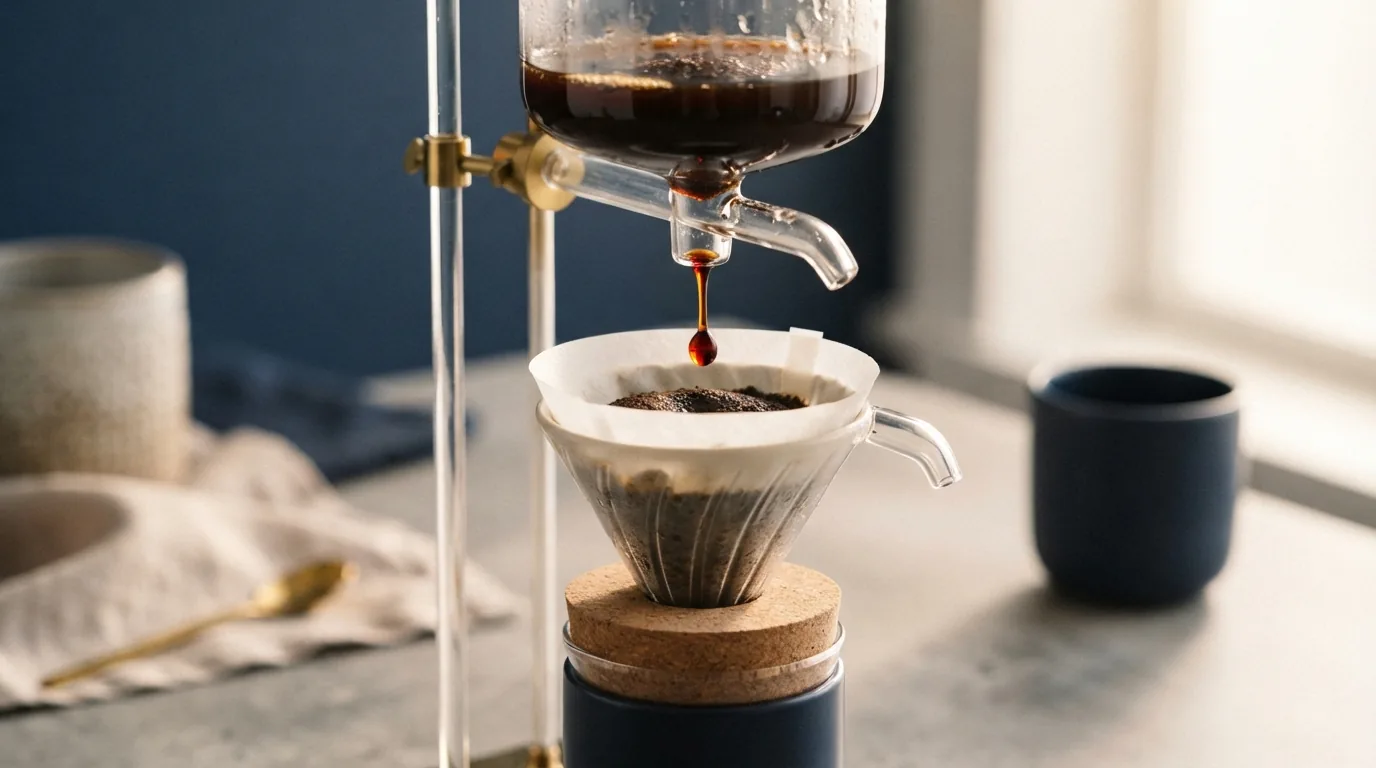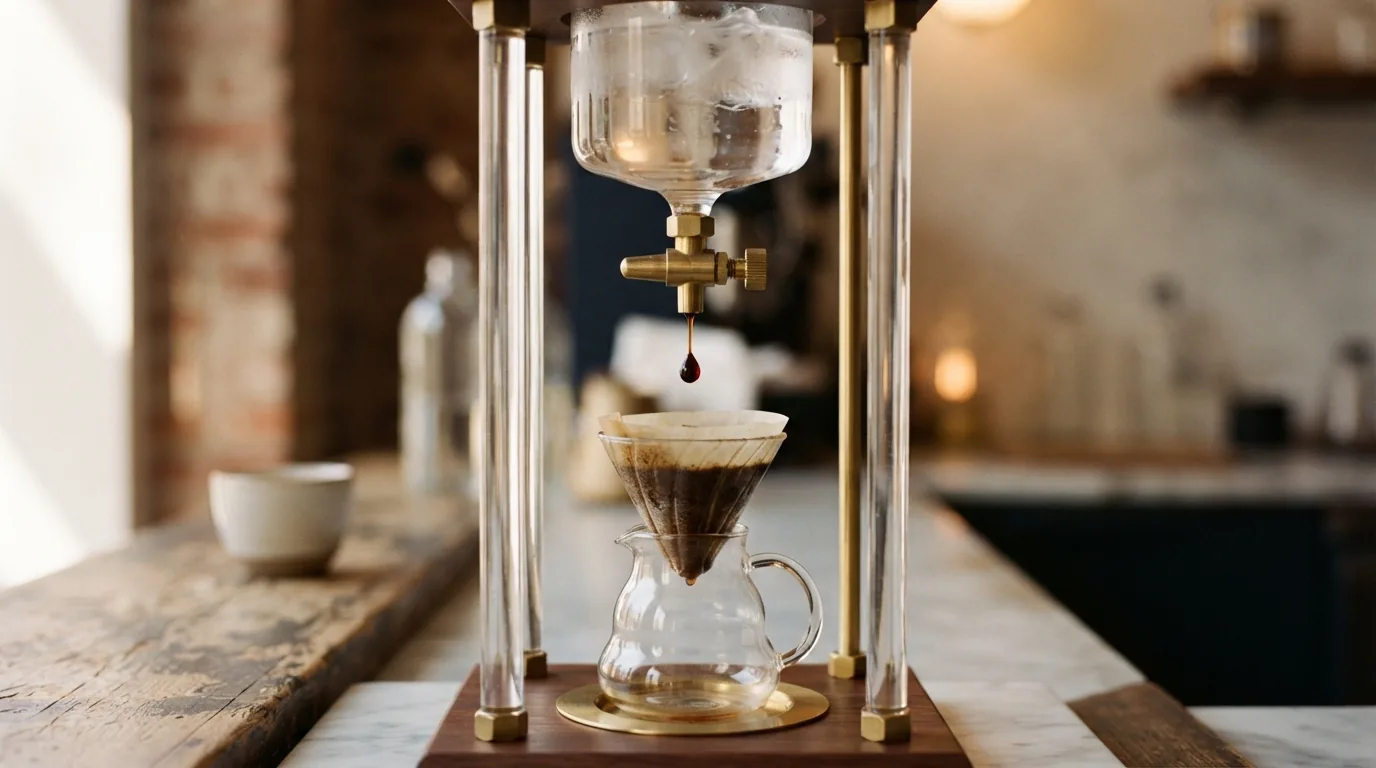
Cold brew is technically simple, coarse grounds, room-temperature or cold water, and time instead of heat, which is exactly why so many people start out making it in a mason jar with a strainer. A dedicated cold brew maker solves the one part of that process a jar genuinely struggles with: separating brewed coffee cleanly from spent grounds, without a gritty, sediment-heavy pour every time.
What a Dedicated Maker Actually Solves
A mason jar and a nut-milk bag work, but they leave fine sediment in the final brew and turn straining into its own separate, messy step. A purpose-built cold brew maker integrates filtration directly into the steeping vessel, so the grounds stay separated from the liquid the entire time, and decanting is as simple as opening a valve or lifting a filter basket out. That's the entire value proposition, and the two makers below solve it with genuinely different filtration approaches.
Best Cold Brew Makers 2026: The Rankings
1. Toddy Cold Brew System ($39.99): Best Overall
The Toddy uses a felt filter plus a paper filter pad together at the bottom of its brewing container, which pulls out more oils and fine particulate than a mesh or nylon filter alone, producing a notably smooth, low-acidity concentrate. Brewing happens in the container itself, and decanting is a single step: open the rubber stopper and let gravity do the filtering into the glass decanter below. It's a two-piece system built specifically for this one job, and it does it about as cleanly as cold brew gets at home.
Toddy Cold Brew System
Felt and paper filtration, glass decanter, produces smooth low-acidity concentrate, $39.99
2. OXO Compact Cold Brew Coffee Maker ($29.99): Best Compact, Easiest Cleanup
The OXO integrates a built-in stopper and a rainmaker lid that distributes water evenly over the grounds as you fill it, right into a single glass carafe that goes straight in the fridge. Its stainless steel mesh filter cleans up in seconds under a faucet, no separate felt or paper filter to replace or rinse, trading a small amount of the Toddy's clarity for a genuinely simpler daily routine.
OXO Compact Cold Brew Coffee Maker
Built-in rainmaker lid, stainless steel mesh filter, single glass carafe, no separate filters, $29.99
“A mason jar can steep cold brew just fine. What it can't do is separate the grounds from the coffee without leaving grit in your cup, and that's the entire job a real cold brew maker is built for.”
Steep Time and Ratio Are the Only Two Variables
Cold brew has no temperature or pressure variable to manage, which makes it one of the most forgiving methods in coffee, but it does depend heavily on the two variables it has left. A coarse grind steeped 12 to 18 hours at roughly a 1:8 coffee-to-water ratio by weight produces a concentrate; steep much past 18 hours and you start pulling out bitter, over-extracted compounds the same way an over-long espresso shot does. Our best coffee scales 2026 guide covers scales precise enough to actually hit that ratio consistently rather than eyeballing it.
Concentrate vs Ready-to-Drink
Both makers here produce a concentrate meant to be diluted, typically at a 1:1 ratio with water or milk, not a ready-to-drink cup straight out of the fridge. That's a deliberate design choice, not a limitation: a concentrate keeps for one to two weeks refrigerated and lets you adjust strength drink by drink, which a pre-diluted batch can't do once it's already mixed.
Grind Size: Coarser Than You Think
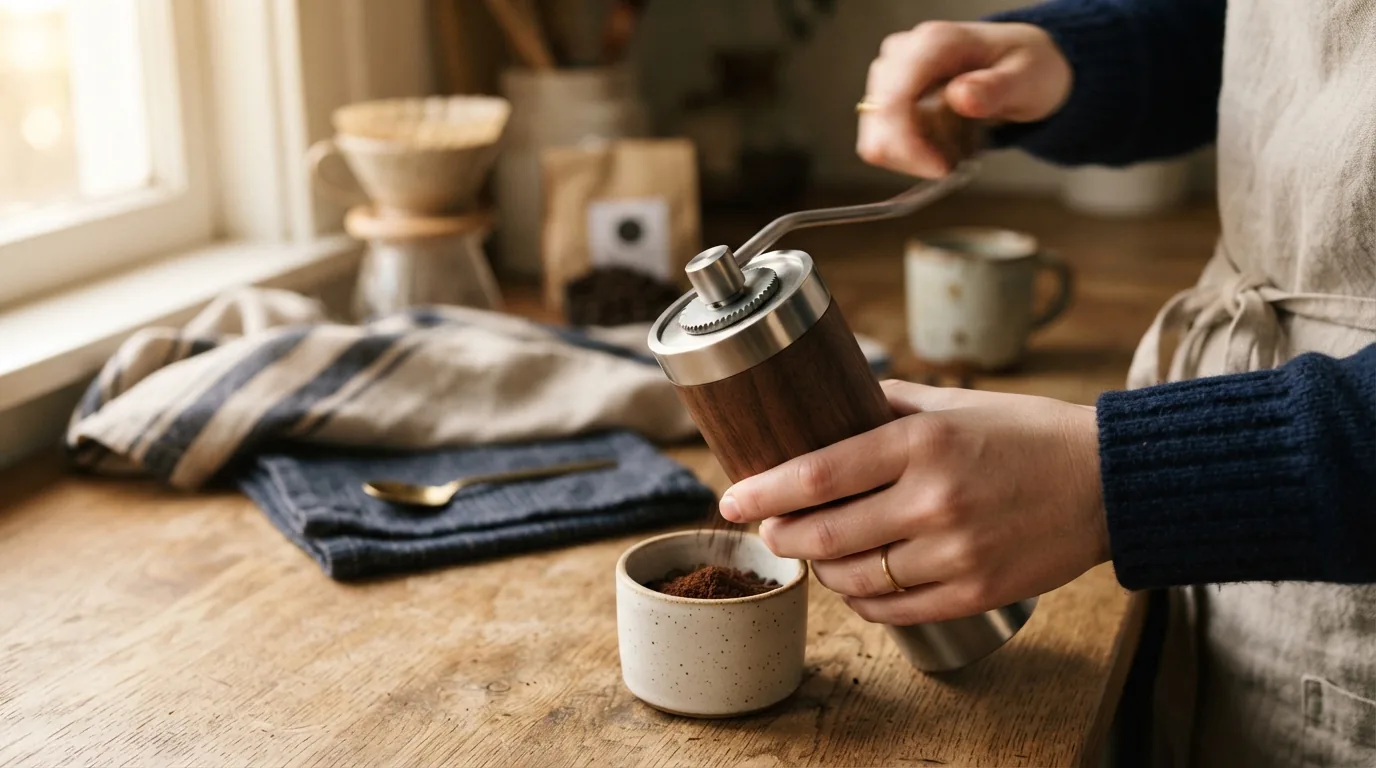
Cold brew wants a noticeably coarser grind than drip coffee, closer to coarse breadcrumbs than sand, since the long steep time would pull excessive bitterness out of a finer grind over 12-plus hours. Our best coffee grinders 2026 guide covers grinders with a wide enough range to hit this coarse setting cleanly, which matters more here than almost any other brew method, since cold brew has no way to compensate for an overly fine grind the way a shorter brew time would.
Cold Brew vs Nitro vs Japanese Iced Coffee
Cold brew is the base most other cold coffee formats build on. Our nitro cold brew at home guide covers the extra equipment that turns this same concentrate into a nitrogen-infused, cascading pour, and our iced coffee: Japanese method vs cold brew guide covers the completely different hot-brewed-then-flash-chilled alternative, which produces a genuinely different cup from either maker above.
Water Quality Matters Even More Here
A 12-to-18-hour steep gives water far more time in contact with the grounds than any hot brewing method, which means anything off about your water, chlorine, excess minerals, an odd mineral taste, has far more time to extract into the final concentrate too. Our why water quality changes your coffee guide covers what's actually in your tap water and whether filtering it is worth the extra step, a question that matters more for a 16-hour steep than for a 4-minute pour-over.
Storage and How Long Concentrate Actually Lasts
Both makers here produce a concentrate that keeps far longer than brewed hot coffee, typically one to two weeks refrigerated in a sealed container, since the cold brewing process itself extracts fewer of the oils and acids that cause hot-brewed coffee to turn stale and rancid within a day or two. That shelf life is part of the format's real appeal: batch-brew once on a weekend and have cold coffee ready on demand all week, rather than making a fresh pot every morning.