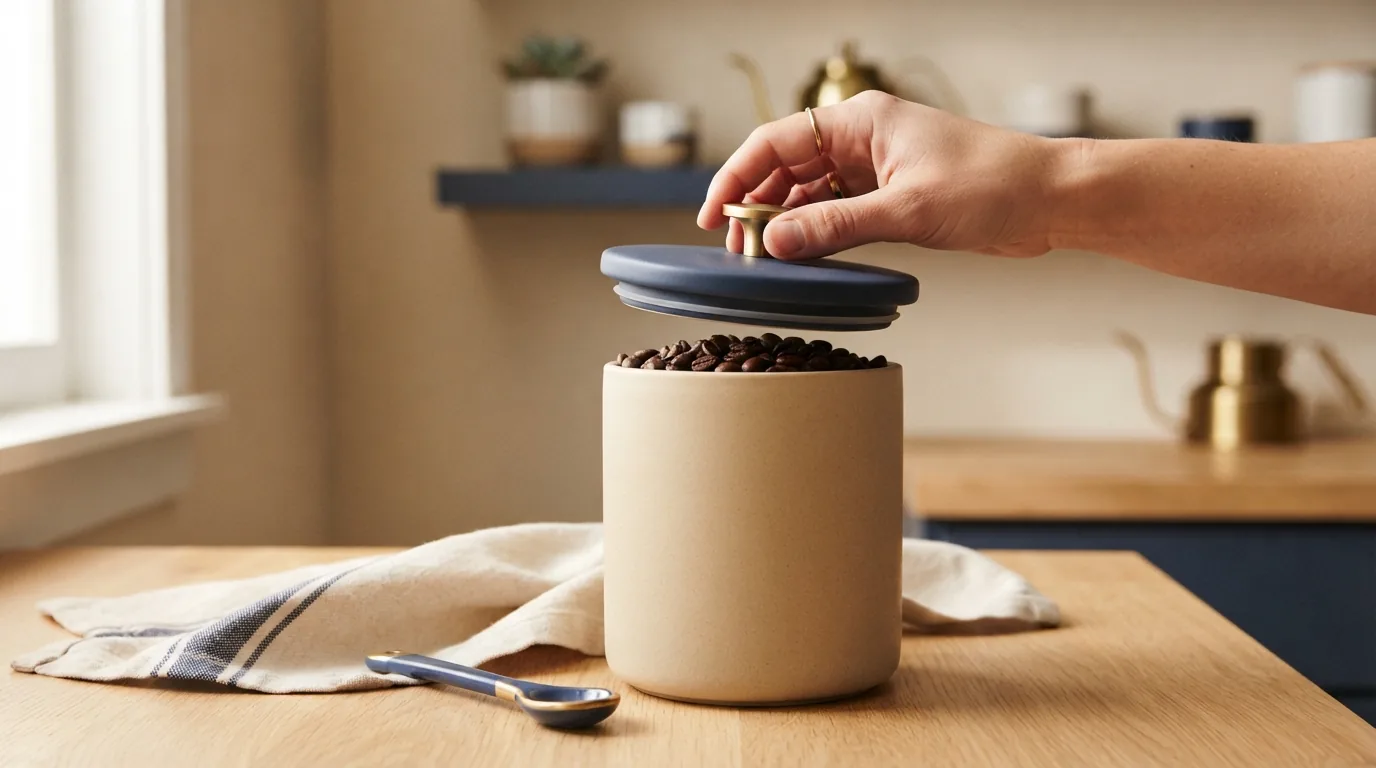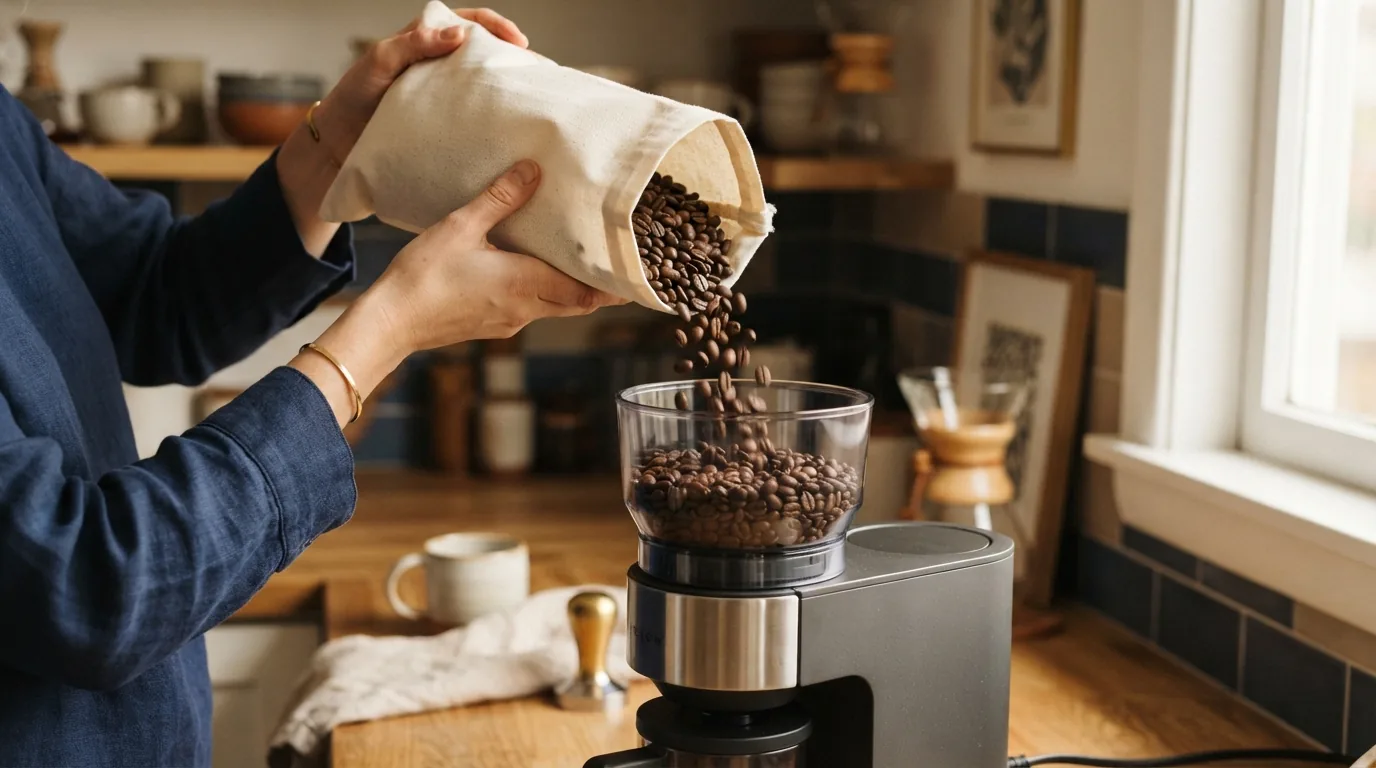
A canister can't undo staling that's already happened, and it can't make a bag of beans roasted six months ago taste fresh again. What it can genuinely do is slow the three things that actually degrade coffee after roasting, oxygen, light and moisture, which is a real, measurable effect over the two to four weeks most people take to work through a bag.
What an Airtight Canister Is Actually Fighting
Roasted beans release CO2 for days after roasting and continue slowly oxidizing for weeks after that, which is what eventually flattens aroma and turns bright acidity dull. A canister that's genuinely airtight, not just a lid that clicks shut, slows that oxidation meaningfully compared to a bag clipped shut or a standard kitchen jar. Opaque construction matters just as much as the seal, since UV and even ambient light degrade coffee's aromatic oils over time, which is why the better options here are solid-walled rather than clear glass.
Best Airtight Coffee Canisters 2026: The Rankings
1. Fellow Atmos Vacuum Canister ($37): Best Overall
The Atmos uses an actual vacuum seal, twist the lid and a valve pulls air out of the canister until it locks, rather than relying on a passive gasket alone. That's a meaningfully different mechanism from every other canister on the market, and it's genuinely effective, you can feel the vacuum resistance when you twist it open again. It comes in a few sizes and finishes, and the seal held reliably jar after jar rather than degrading with repeated use.
Fellow Atmos Vacuum Canister
Active vacuum-seal mechanism, opaque body, multiple sizes available, $37
2. Airscape Coffee Storage Canister ($49.95): Best Classic Design, Large Capacity
The Airscape uses a different but equally proven approach: an inner disc that you press down until it sits flush against the beans themselves, pushing out excess air as it descends and using a one-way valve to release built-up CO2 without letting outside air back in. It's the longer-established design of the two, widely used by roasters themselves for retail bags, and its larger capacity options fit a full 12oz to 16oz bag without needing to split beans across two containers.
Airscape Coffee Storage Canister
Press-down inner disc with one-way CO2 valve, brushed steel body, larger capacity options, $49.95
“A canister doesn't stop the clock on staling coffee. It just slows it down, and for most people that's the difference between a bag that's still good on day 20 and one that's already flat by day 10.”
Why Opaque Beats Clear Glass
A clear glass canister looks great on a counter, but light exposure is one of the three real degradation factors alongside oxygen and moisture, and a beautiful glass jar sitting in direct or even indirect kitchen light undoes some of what the seal is accomplishing. Both canisters here use solid, light-blocking construction by design, which matters more than the seal mechanism alone if your counter gets any real daylight during the day.
Should You Just Freeze Your Beans Instead
Freezing whole beans in a genuinely airtight container is a legitimate way to extend freshness well past the two-to-four-week window either canister here is built for, but it introduces its own risk: condensation forming on beans pulled in and out of the freezer repeatedly, which introduces the moisture staling actively fights against. Our coffee bean storage guide covers the full freezing debate and when it's actually worth doing versus when a good countertop canister is simply the better daily-use answer.
Sizing a Canister to How You Actually Buy Beans
A canister sized for a single 12oz bag is the wrong choice if you buy 2lb bags to save money, since splitting one bag across two smaller canisters means opening and resealing twice as often, undoing some of the benefit. Measure against your actual buying habit rather than the bag size printed on whatever you happened to buy last, and size up if there's any doubt, since a partially filled larger canister still seals fine, while an overstuffed smaller one often doesn't close cleanly at all, which defeats the entire point of buying one in the first place.
How Often You Actually Need to Refill Matters Too
Beyond raw capacity, think about how the canister fits your specific refill rhythm. Someone buying a fresh bag every week has less riding on long-term seal performance than someone buying in bulk every couple of months and expecting the canister to hold quality for that entire stretch. The Atmos's stronger active seal earns its price premium specifically for that second scenario; for weekly bag-to-bag turnover, the gap between the two canisters here matters far less, and either one will comfortably outperform a clipped-shut bag either way.
Pairing With the Rest of Your Setup
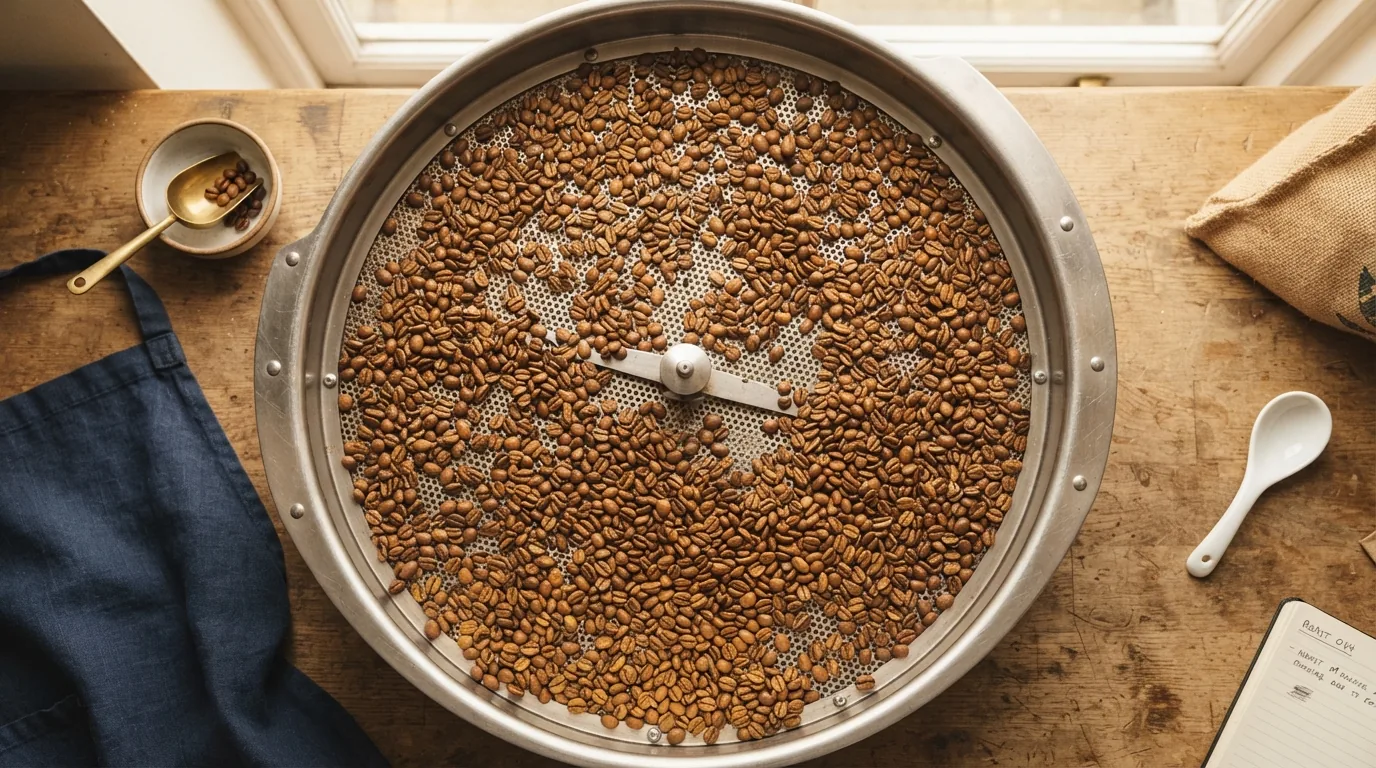
A canister protects beans you already have; it doesn't fix beans that arrived stale or sat in a warehouse for months before you bought them. Our best whole bean coffee for espresso 2026 guide covers bags worth buying in the first place, and if you're buying larger quantities specifically because a good canister lets you, our best home coffee roasting machines 2026 guide covers the next step for genuinely controlling freshness from roast date onward.