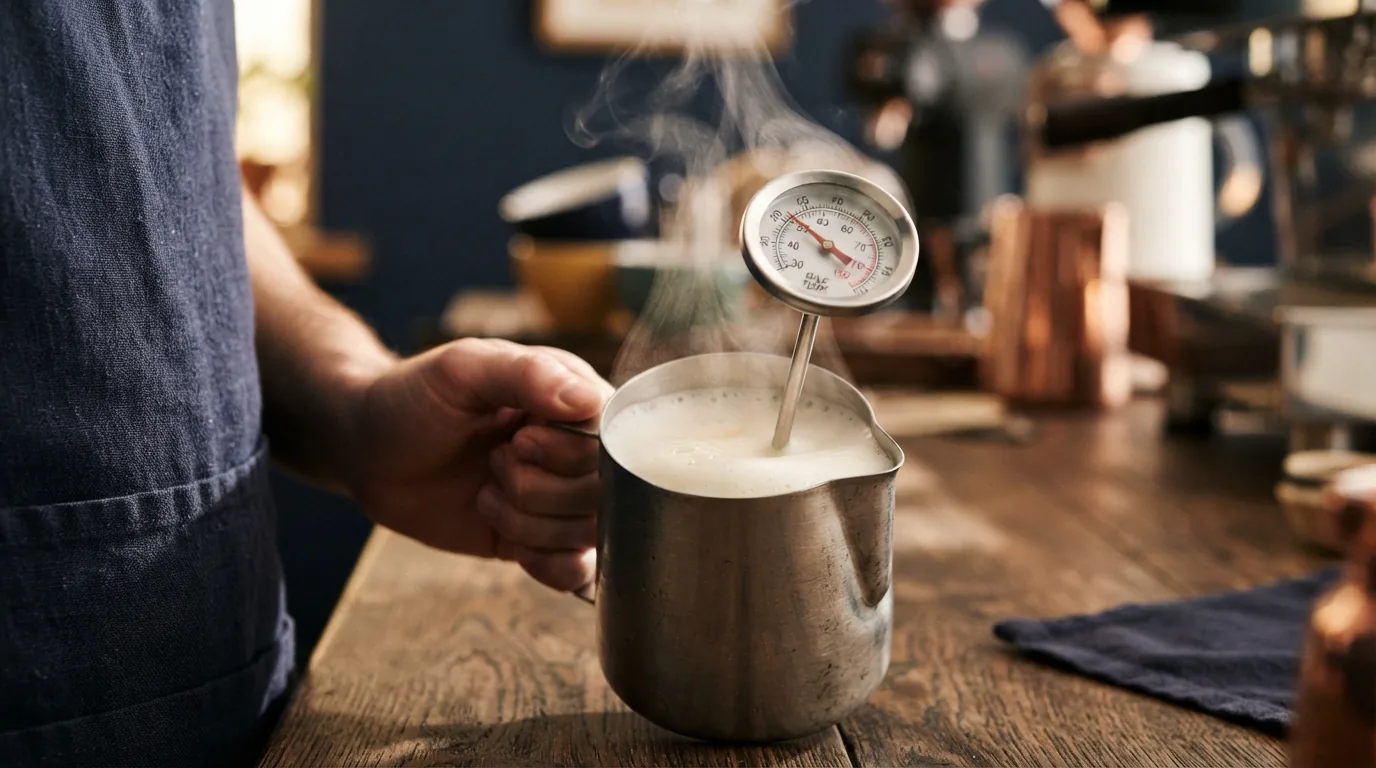
A milk frother controls how milk gets textured. A pitcher controls what happens after that, and it's the part most buying guides skip entirely. The spout shape, the size, and how the metal itself responds to heat all shape whether a well-steamed milk actually turns into a clean pour, and picking the wrong pitcher can undo good frothing technique before the milk ever leaves the jug.
Why Pitcher Size Actually Matters
A 12oz pitcher is sized for a single drink and gives you tighter control over a small volume, which makes it the better choice for practicing pour technique specifically. A 20oz pitcher handles a full latte's milk volume with room to spare for the whirlpool motion steaming requires, and it's the more practical everyday size if you're making one real drink per session rather than drilling technique. Buying too small for daily use means steaming close to the rim, which makes the whirlpool harder to control and increases the odds of overflow.
Spout Shape and Pour Control
A sharp, narrow teardrop spout is what actually lets you draw a clean line or a tight rosette; a wide, rounded spout pours a thicker stream that's harder to control for detailed pours but easier to use for simple designs like a basic heart. This single detail, spout geometry, affects pour precision more than the pitcher's material, size or price point combined.
Best Milk Pitchers 2026: The Rankings
1. Rattleware 20oz Macchiato Milk Frothing Pitcher ($24.99): Best Overall
A long-running favorite in specialty coffee training precisely because it does nothing unusual: a precise, drip-resistant spout, a comfortable handle, and stainless steel that responds predictably to heat so you can judge steaming progress by touch. It's the pitcher most home baristas graduate to once they've decided pour technique is worth taking seriously.
Rattleware 20oz Macchiato Milk Frothing Pitcher
Drip-resistant spout, comfortable handle, stainless steel, 20oz capacity, $24.99
2. Barista Space Titanium Coated Milk Pitcher, 600ml ($34.90): Best Finish
Barista Space pitchers are titanium-coated rather than bare stainless, which gives them a distinctive colored finish and a smoother surface feel, popular in competition settings partly for that reason. The core function, spout precision and steaming feel, is comparable to the Rattleware; the premium here buys a finish that stands out on a shelf, not meaningfully better pour control.
Barista Space Titanium Coated Milk Pitcher, 600ml
Titanium-coated stainless steel, precision spout, 600ml (about 20oz) capacity, $34.90
“The pitcher doesn't texture your milk. It just decides whether the good texture you already made actually makes it into the cup looking clean.”
Coatings and Long-Term Durability
Titanium and other decorative coatings look great new, but they're a thin surface layer, and some buyers report coating wear at contact points after months of daily use, most commonly right where the pitcher meets a steam wand or countertop repeatedly. Bare stainless steel, like the Rattleware, has nothing to wear off in the first place, which is worth knowing if a pristine finish years in matters more to you than the initial look.
Handle Design Matters More Than It Looks
A pitcher's handle shape changes how precisely you can control a slow, steady pour at the end of a design, and it's a detail most buyers never think to check before buying. A wide, open handle allows a relaxed grip and a fine wrist-driven pour; a small, tightly curved handle forces a stiffer grip that some baristas find actually improves control once they're used to it, and others find fatiguing during a long shift. Neither is wrong, but if you can handle a pitcher in person before buying, it's worth doing specifically to check this.
Sizing for Two-Handed vs One-Handed Pours
Larger 20oz-plus pitchers are typically poured two-handed once nearly full, since the weight of that much steamed milk plus the pitcher itself adds up quickly. If you specifically want a lighter, one-handed pour for detailed rosetta or tulip work, a smaller 12oz pitcher partially filled is more common among competition baristas than a large pitcher used the same way, even though both technically hold enough milk for a single drink.
Practicing Without Wasting Milk
Plain water with a small amount of dish soap mixed in foams similarly enough to milk for practicing pour patterns without going through a carton of milk every session. It won't teach you steaming technique, since it doesn't respond to heat the way milk does, but for drilling wrist angle and pour speed specifically, it's a genuinely useful, nearly free substitute.
Pairing a Pitcher With Actual Steaming Technique
A great pitcher still needs milk textured correctly before any of this matters. Our how to steam milk like a barista guide covers the whirlpool technique and temperature window that turn a pitcher of plain milk into something worth pouring, and our cortado vs flat white vs cappuccino vs latte guide covers how much foam each drink actually needs before you start pouring at all.
One last, easy-to-miss detail: rinse a pitcher immediately after each use rather than letting steamed milk sit and dry inside it. Dried milk residue is far harder to fully remove once it's baked onto steel by repeated reheating, and a pitcher that's never quite clean starts affecting flavor in ways that have nothing to do with your steaming technique at all.