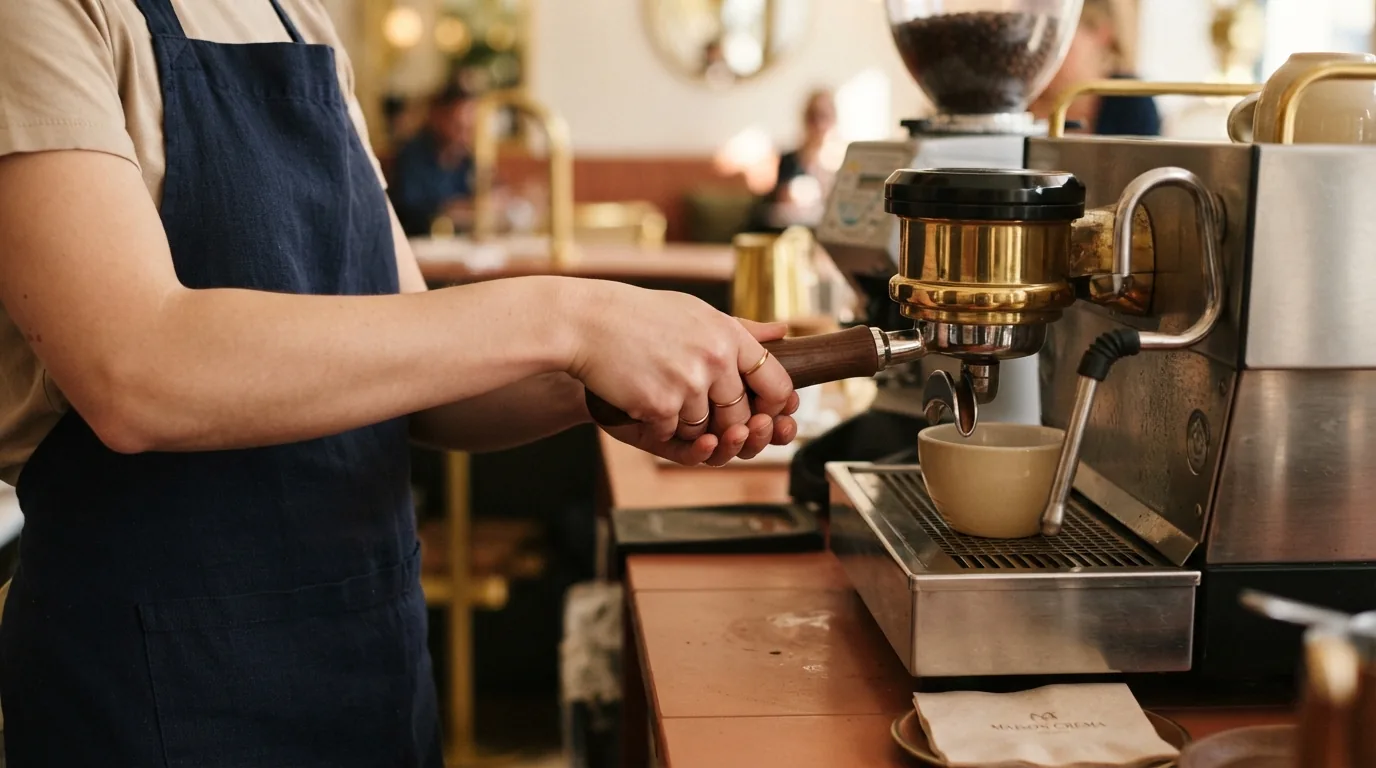
A semi-automatic espresso machine hands you the parts that actually shape a shot, grind, dose, distribution and pump timing, and gets out of the way otherwise. It's the format nearly every serious home barista eventually lands on, and once you're past the entry tier covered in our budget breakdown, two machines genuinely stand out for buyers who already know manual control is what they want.
What "Semi-Automatic" Actually Means at This Tier
Below roughly $700, semi-automatic usually means a single boiler or thermocoil sharing heat between brewing and steaming, which forces a wait between the two. Step up past that price and the format changes meaningfully: dedicated single-boiler machines built for genuine temperature stability, and heat-exchanger designs that let you steam and brew close to simultaneously. Both machines below sit in that step-up tier, and both remain fully manual, you control the shot start to finish, just with hardware that stops fighting you while you do it.
Best Semi-Automatic Machines 2026: The Rankings
1. Rancilio Silvia ($995): Best Overall
The Silvia has quietly earned a reputation as one of the most reliable machines in home espresso, and it's been in continuous production largely unchanged for a reason. A single boiler, a genuinely commercial-grade steam wand borrowed from Rancilio's café equipment, and a stainless body built to survive daily use for a decade or more. It's a single-boiler machine, so brewing and steaming still share heat, but the boiler's mass and PID-adjacent thermal design make that wait shorter and more predictable than budget-tier competitors.
Rancilio Silvia Espresso Machine
Single boiler, commercial-grade steam wand, stainless steel body built for daily long-term use, $995
2. Lelit MaraX ($1,700): Best for Steaming and Brewing Together
The MaraX is a heat-exchanger machine, a genuinely different boiler architecture from the Silvia's single boiler, built around an E61 group head and a dual-probe temperature system that lets you pull a shot and steam milk at nearly the same time. It was also the first HX machine to add selectable brew-temperature ranges, letting you fine-tune extraction temperature in a way older heat-exchanger designs never offered.
Lelit MaraX Heat Exchanger Espresso Machine
E61 group head, dual-probe temperature control, brew and steam close to simultaneously, $1,700
“A semi-automatic machine doesn't make you a better barista. It just stops the hardware from being the reason a shot goes wrong.”
Single Boiler vs Heat Exchanger, in Practice
A single boiler is simpler mechanically and generally cheaper, with the real cost being a wait of a minute or two to switch between brewing and steaming temperature. A heat exchanger runs a separate small brew-water circuit through a larger steam boiler, letting both functions stay near-ready simultaneously, useful specifically if you're making back-to-back milk drinks for more than one person most mornings. If you're the only one drinking espresso in the house, that wait rarely matters enough to justify the price jump.
What Neither Machine Includes
Unlike the Breville Barista Express Impress covered in our budget-tier guide, neither machine here includes a built-in grinder. That's typical at this tier, where the assumption is you're already committed enough to own, or plan to buy, a standalone grinder suited to the machine's actual output. See our best conical burr espresso grinders 2026 guide for grinders built specifically to pair with machines at this level.
Group Head Design: Why the E61 Keeps Showing Up
The MaraX's E61 group head is a 1960s Faema design that remains standard across prosumer machines because it thermosiphons hot water constantly through the group itself, keeping the brewing head at a stable temperature independent of the boiler cycling on and off. The Silvia uses its own simpler proprietary group instead, which is part of why it costs meaningfully less despite both machines targeting a similar serious-hobbyist buyer.
Who Should Buy at This Tier Instead of the Entry Level
If you've already spent six months to a year on an entry-level semi-automatic and know specifically what's frustrating you, slow steam recovery, temperature instability, a steam wand that can't texture milk well, either machine here directly addresses that. If you're still deciding whether manual espresso is a hobby worth keeping, the entry tier covered in our budget guide is the more sensible place to actually start.
Steam Wand Quality Matters as Much as the Boiler
Both machines here use commercial-style steam wands borrowed from café equipment rather than the simpler wands common on entry-level machines, and it's a genuinely underrated part of what you're paying for at this tier. A wand with a wider range of motion and a proper multi-hole tip makes texturing milk into real microfoam meaningfully easier than a basic single-hole wand does, independent of the boiler behind it. Our how to steam milk like a barista guide covers the technique itself once the hardware is capable of supporting it.
Long-Term Ownership and Serviceability
Both the Silvia and the MaraX are widely serviced by third-party technicians and specialty coffee retailers, with replacement parts, gaskets, group seals, steam wand tips, readily available years after purchase. That serviceability is part of why machines at this tier are often still running well a decade after buying, unlike cheaper machines where a single failed component can mean replacing the whole unit. Budget for an annual descale and an occasional gasket replacement as the real cost of ownership, not a sign anything is wrong with the machine.