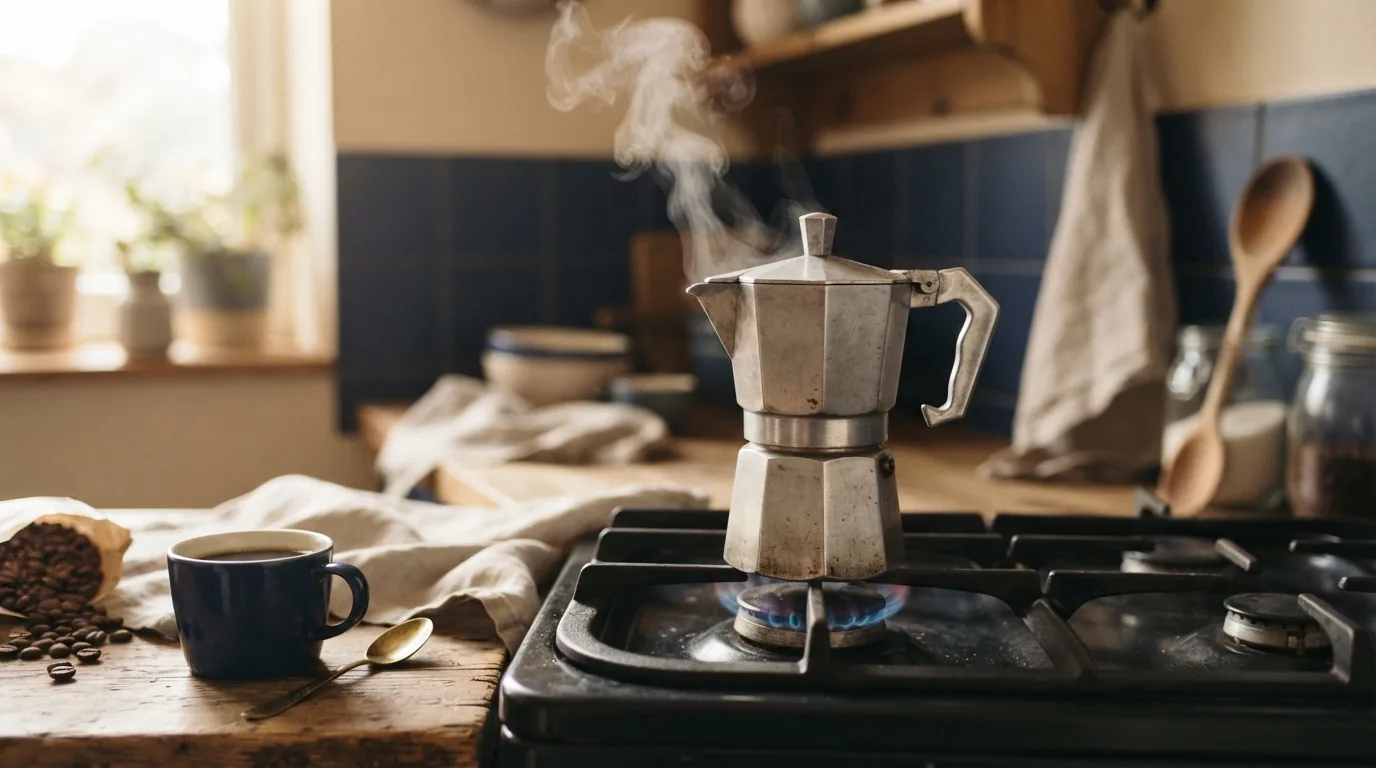
The moka pot has been sitting on Italian stovetops since 1933, and it remains one of the only pieces of coffee equipment from that era still in daily use largely unchanged. It produces something genuinely distinct. A strong, concentrated stovetop coffee that gets colloquially called "espresso" constantly, even though it technically isn't. Understanding that distinction, and how to actually use one well, is most of what separates a great cup from a bitter, over-extracted one.
How a Moka Pot Works
A moka pot has three chambers: a bottom water reservoir, a middle funnel basket filled with ground coffee, and a top collection chamber. As the water in the bottom heats, rising steam pressure, typically around 1 to 1.5 bar, forces the hot water up through the coffee grounds and into the top chamber, where it collects as finished coffee. That's meaningfully less pressure than the roughly 9 bar a true espresso machine uses, which is exactly why moka pot coffee, while strong and concentrated, isn't technically espresso by the commercial definition. It's its own format, closer to a very strong drip coffee with some crema-like foam on top, worth appreciating on its own terms rather than judging against a machine it was never trying to be.
Best Moka Pots 2026: The Rankings
1. Bialetti Moka Express, 6-Cup ($59.99): Best Classic
This is the original design, largely unchanged since 1933, made from cast aluminum with the iconic octagonal shape recognized worldwide. It heats quickly, costs little, and has a devoted following precisely because there's nothing to malfunction, no electronics, no gaskets to replace for years of normal use. The one real limitation: aluminum isn't magnetic, so this classic version won't work on an induction stovetop.
Bialetti Moka Express, 6-Cup
Original cast aluminum design since 1933, works on gas and electric coil stovetops, $59.99
2. Bialetti Venus Induction, 10-Cup ($89.99): Best for Induction Stovetops
The Venus is Bialetti's stainless steel line, built specifically to work on induction cooktops, which the classic aluminum Moka Express cannot do. It costs more than double the classic version, but that premium buys genuine cooktop compatibility for the growing number of kitchens built around induction, plus the added durability stainless steel offers over aluminum.
Bialetti Venus Induction Moka Pot, 10-Cup
18/10 stainless steel, works on all cooktops including induction, $89.99
“A moka pot isn't a cheaper espresso machine. It's a genuinely different coffee format that happens to share a stovetop and a grind size with espresso's neighborhood.”
Grind and Technique
Use a grind finer than drip coffee but coarser than true espresso. A medium-fine grind that resembles table salt is the standard target. Fill the funnel basket level with the rim without tamping it down; moka pots aren't designed for the packed, resistant puck an espresso machine needs, and tamping here just restricts water flow unevenly. Start with hot, not cold, water in the bottom chamber. It shortens the brew time and reduces the amount of time the metal base is exposed to heat before brewing even starts, which some drinkers find reduces a faint metallic taste in the finished coffee. Brew on low-to-medium heat, and pull the pot off the burner as soon as you hear the distinctive gurgling sound that signals the water has fully passed through. Letting it continue past that point scorches the last of the coffee and pushes the cup toward bitter.
Aluminum vs. Stainless Steel
Beyond induction compatibility, the two materials have real practical differences. Aluminum heats faster and costs less, but it's reactive. Avoid harsh dish soap or abrasive scrubbing, which can strip the pot's seasoning and affect flavor over time; a rinse with hot water and an occasional gentle wash is usually enough. Stainless steel is more durable, doesn't react with cleaning products the same way, and works on every cooktop type, but it's slower to heat and costs meaningfully more for an equivalent size.
For the deeper chemistry behind why grind size and water temperature change any brew method's flavor, including a moka pot's, see our science of espresso extraction guide. If you're deciding between a moka pot and other manual methods, our French press vs. pour-over vs. AeroPress comparison covers the rest of the manual brewing landscape, and moka pot coffee makes a perfectly reasonable stand-in for the espresso element of our espresso martini guide if you don't own a dedicated espresso setup.
Sizing: Don't Buy Bigger Than You'll Actually Use
Moka pots are sized by how many small demitasse-style cups they produce, not standard mug servings. A "6-cup" pot makes roughly two normal-sized mugs' worth of coffee, not six. Buying oversized on the assumption you'll grow into it is a common first-timer mistake; a moka pot brews its full rated capacity every time or the ratio of water to coffee gets thrown off, so a 10-cup pot brewed only halfway won't produce a proportionally smaller, equally good result. Match the size to how much you'll actually drink in one sitting, and brew a second batch if you want more rather than sizing up and brewing partial batches.
Gasket Maintenance
The rubber gasket that seals the middle and top chambers wears out with regular use and is the most common reason an older moka pot starts leaking steam from the sides instead of pushing water cleanly up through the funnel. Replacement gaskets are inexpensive and widely available for both aluminum and stainless models, and swapping one out restores a pot that otherwise still works perfectly. There's rarely a reason to replace the whole pot over a worn gasket alone.