Roast date matters more to flavor than almost any other factor a bag of coffee can advertise. More than origin, more than processing method, more than a "best by" date that can sit a year in the future. Specialty coffee generally peaks in flavor roughly 4 to 14 days after roasting and noticeably declines within a few weeks after that, as aromatic compounds degas and fade. Roasting at home closes that gap entirely: instead of buying beans that are already days or weeks old by the time they reach a shelf, you're brewing coffee that was green a few days ago.
Why Roast at Home
Beyond freshness, the economics are real. Unroasted green coffee beans typically cost roughly $6 to $10 a pound from specialty green-bean retailers, compared to $16 to $22 a pound for the same origin already roasted and packaged. Roasting at home also hands you direct control over roast profile. You decide how light or dark a specific origin goes, rather than accepting whatever profile a roaster chose for their whole product line.
Drum Roasters vs. Air Roasters
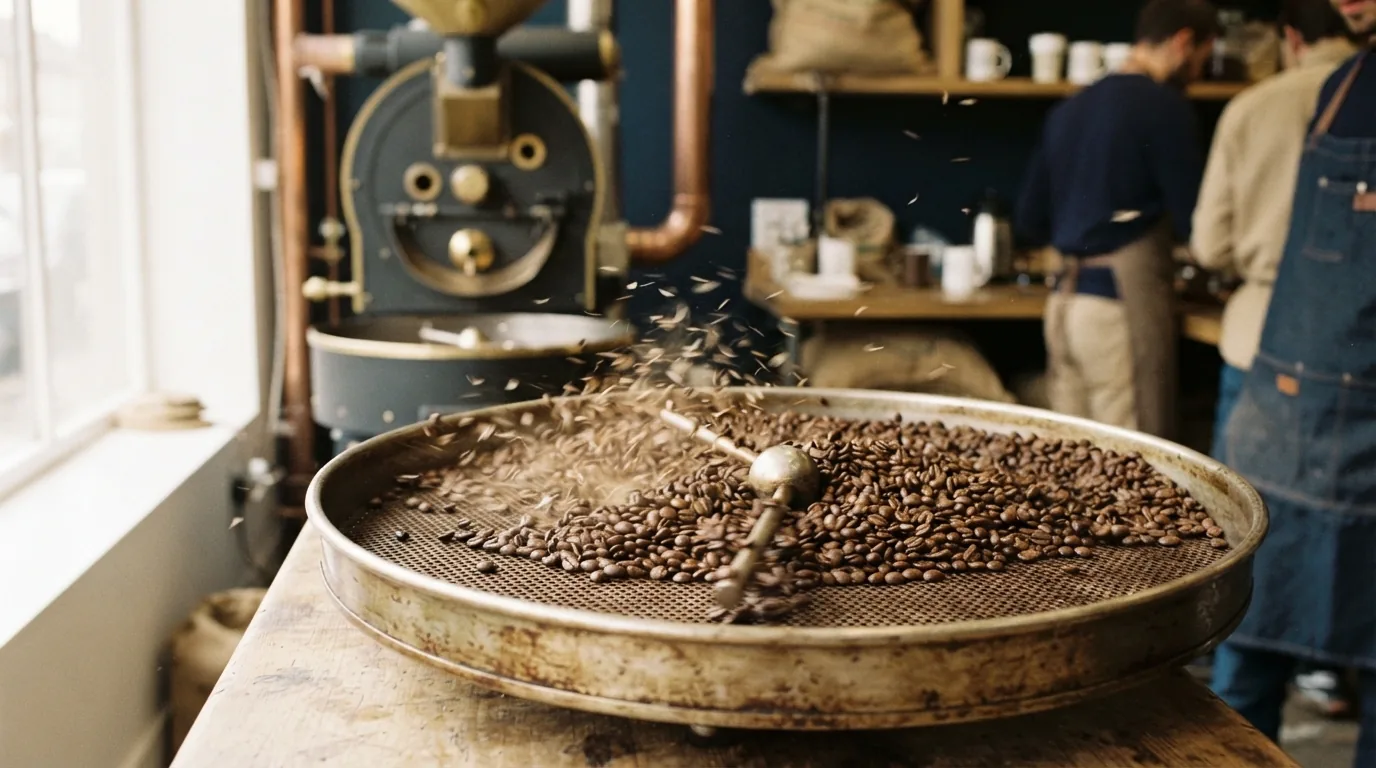
Home roasters generally fall into two mechanical categories. A drum roaster uses a rotating drum and a heating element to tumble beans continuously through consistent, indirect heat. Closer to how most commercial roasters work, and generally capable of larger batches with more repeatable, customizable time-and-temperature profiles. An air or fluid-bed roaster instead circulates hot air through a chamber to tumble the beans, usually in smaller batches, with the process visible in real time through a glass chamber, and roasts that finish noticeably faster than a drum cycle.
Neither format is objectively better. A drum roaster suits someone who wants repeatable, larger-batch profiles and doesn't mind a longer cycle; an air roaster suits someone prioritizing speed, visibility, and a smaller footprint. Whichever you choose, look specifically for a model with genuine time and temperature control rather than a single fixed cycle, since profile control is most of what separates a home roast worth drinking from an inconsistent one.
Behmor 1600 Plus Customizable Drum Coffee Roaster
Full 1-lb batch capacity, five customizable roast profiles plus manual override, smoke-suppression technology for indoor use, $399
The Roast Process, Simplified
Every roast moves through the same broad stages regardless of the machine. Beans start green and dense, and the first phase is drying. The bean sheds internal moisture as it heats toward roughly 200°F, with no real color change yet. Around 385–400°F, beans hit first crack, an audible popping sound as internal pressure releases; this is the point a bean technically becomes coffee rather than roasted-but-unusable green matter. How long you carry the roast past first crack, development time, is what separates a light roast from a medium one. Push further, toward roughly 435–445°F, and beans hit second crack, where oils begin surfacing on the bean's exterior and the roast moves into darker territory.
None of these stages represent a "correct" stopping point on their own. Roast depth is a stylistic choice tied to the bean's origin and your own taste, not a quality marker. A light roast preserves more of a bean's origin character and acidity; a darker roast trades some of that nuance for heavier body and classic roasted flavor.
“Fresh-roasted doesn't mean same-day. A bean straight out of the roaster is still releasing CO2 and needs a rest before it brews evenly. Freshness has a floor as well as a ceiling.”
Cooling and Resting
Beans need to cool immediately after roasting, which stops residual heat from continuing to cook them past your intended stopping point. Most roasters, including drum models, include a cooling cycle or tray specifically for this. After cooling, resist the urge to brew immediately. Freshly roasted beans continue releasing carbon dioxide for a day or two after roasting, and brewing too soon after roasting tends to produce excessive bloom and uneven extraction as that trapped gas interferes with water saturating the grounds evenly. Most home roasters find the real sweet spot sits somewhere between the next day and about a week after roasting, not the moment the beans finish cooling.
Sourcing Green Beans
Green, unroasted coffee is sold by specialty retailers that cater specifically to home roasters, typically listing origin, processing method, and harvest date the same way a specialty roaster would describe already-roasted beans. Buying smaller quantities more frequently, rather than a large bag that sits for months, keeps the green beans themselves fresher going into the roast. Green coffee does stale slowly over time, even before it's ever been through a roaster.
Is It Worth It?
Home roasting is a genuine hobby, not just a cost-saving hack. Each batch takes 15 to 20 minutes of active attention, produces real smoke and chaff that needs ventilation or an exhaust fan, and rewards the same kind of iterative attention that dialing in a grinder does. If the freshness, control, and cost savings genuinely appeal to you, it pays for itself quickly and changes your relationship to the bean itself. If you mainly want great coffee with the least possible hands-on effort, buying well-roasted beans from a reputable roaster and focusing your attention on grind and extraction, covered in our science of espresso extraction guide, will get you most of the benefit with far less time invested.
Once you're roasting your own beans, dialing in the right grinder matters even more, since freshly roasted beans behave differently under a burr than beans that have had weeks to degas. See our best coffee grinders 2026 guide, or browse the full origin collection for more on how roast and sourcing shape what ends up in your cup.