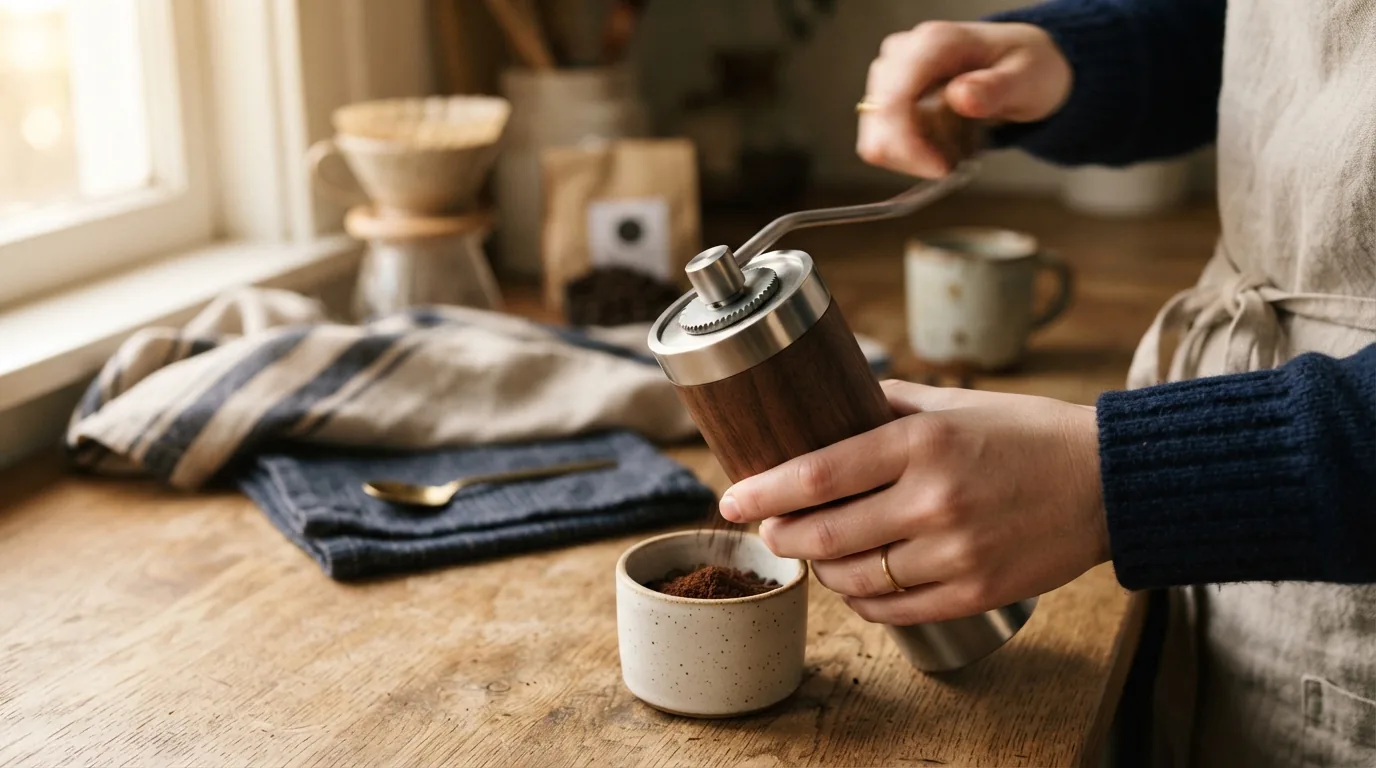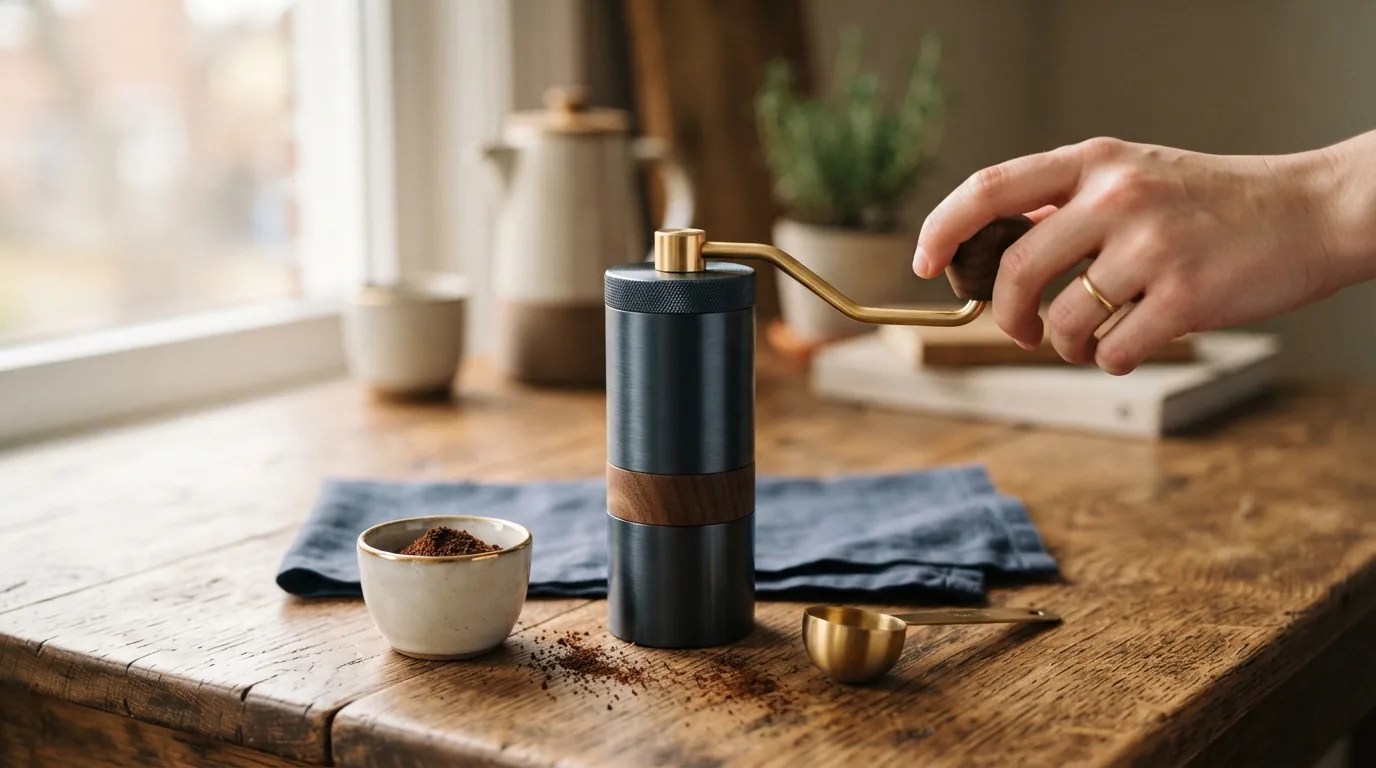
A good hand grinder isn't a compromise version of an electric one. In the sub-$300 range, several manual grinders genuinely out-grind electric competitors twice their price, simply because the mechanical simplicity of a hand crank leaves less room for the burr wobble and motor vibration that hurt particle consistency in cheaper electric units. The tradeoff is time and effort, not quality.
Why a Hand Grinder Can Outperform an Electric One
Grind consistency depends heavily on how steady the burrs stay relative to each other during grinding. A hand grinder's crank mechanism, turned at a controlled human pace, avoids the high-RPM vibration that can introduce particle-size variance in inexpensive electric grinders. Manual grinders also tend to use smaller, precisely machined burr sets that would be prohibitively expensive to spin fast enough for an electric motor's typical speed, which is part of why several sub-$300 hand grinders compete directly with electric grinders costing two to three times as much.
Best Hand Grinders 2026: The Rankings
1. Comandante C40 MK4 ($280): Best Overall
The reference point for the entire category. Hardened steel conical burrs deliver exceptional particle consistency across espresso through French press grinds, and its stepped adjustment collar is precise enough for genuine espresso dial-in, a claim most hand grinders can't back up. It's also the one grinder here you'll see recommended by name inside our Turkish coffee guide and portable espresso guide, since its consistency travels as well as it grinds.
Comandante C40 MK4 Hand Grinder
Hardened steel conical burrs, precision stepped adjustment, espresso to French press range, $280
2. Timemore Chestnut C2 ($79): Best Budget
A genuinely capable 25-gram-capacity grinder with CNC-machined stainless steel conical burrs, built around 30 internal grind settings that comfortably cover pour-over through French press. It's not tuned for the same espresso precision as the Comandante, but for filter and immersion brewing, it delivers a meaningfully better cup than any pre-ground bag at less than a third of the Comandante's price.
Timemore Chestnut C2 Hand Grinder
CNC stainless steel conical burrs, 25g capacity, 30 internal grind settings, $79
“The best hand grinder isn't the one with the most settings. It's the one whose particle consistency you can't tell apart from a $500 electric grinder in the cup.”
A Third Option Worth Knowing: Stepless Micro-Adjustment
If espresso is the primary use case and you want finer control than a stepped collar offers, the 1Zpresso JX-Pro ($139) uses a top-mounted dial with over 200 stepped micro-settings, roughly 12.5 microns per click, letting you dial in far more precisely than a coarser stepped design. It sits between the Timemore's price and the Comandante's, and it's worth considering specifically if fine-tuning espresso grind is more important to you than raw burr durability.
How Long Does It Actually Take
Be realistic about the effort involved before buying in. A single-cup dose typically takes 60 to 90 seconds of steady cranking on any of these grinders, longer for a full French press dose. That's a genuine daily time cost, not a one-time inconvenience, and it's worth trying before assuming it won't bother you on a rushed weekday morning.
Burr Material and Long-Term Consistency
All three grinders here use hardened or CNC-machined steel burrs rather than the ceramic burrs common on cheaper hand grinders. Steel burrs hold their edge longer under regular use and are far less prone to chipping from an accidentally-included stone or hard foreign object, a real risk with ceramic. That durability is part of why these specific models remain recommended years after release rather than being replaced by a newer budget pick each season.
Adjustment Mechanism: Internal vs External
Both the Timemore and the Comandante use an external or top-mounted adjustment, meaning you can change grind setting without disassembling the grinder, a genuine convenience if you switch between brew methods regularly. Older or budget hand grinder designs sometimes bury the adjustment inside the burr chamber, requiring partial disassembly to change settings, which is a real annoyance if you grind for both espresso and French press in the same week. Check for this specifically if considering a hand grinder not covered in this guide.
Who Should Actually Buy One
Hand grinders make the most sense for travelers, campers, anyone with a small kitchen that can't fit an electric grinder, or simply someone who wants one less appliance plugged in. They're also a genuinely good backup for an electric-grinder household, useful during a power outage or when a countertop grinder is mid-cleaning. If daily speed matters more than any of that, our best coffee grinders 2026 guide covers the electric alternatives at comparable price points.
Maintenance Is Genuinely Minimal
Beyond an occasional wipe-down and periodic brush-out of retained grounds, hand grinders need very little upkeep compared to an electric grinder with a motor, gears and often a dosing mechanism to worry about. There's no motor to eventually fail and no circuit board to short out, which is part of why a well-made hand grinder from a decade ago is still a perfectly usable grinder today, something that's much less reliably true of electric grinders from the same era.