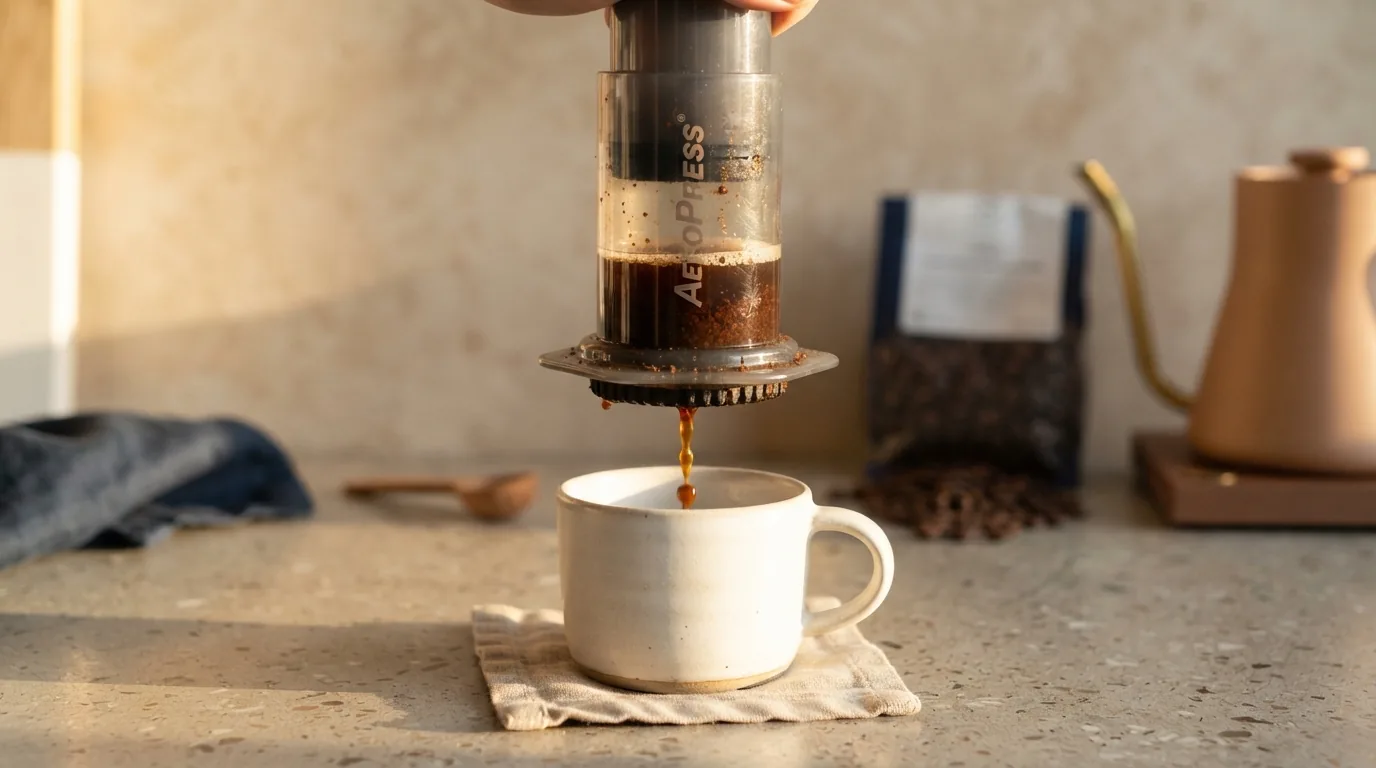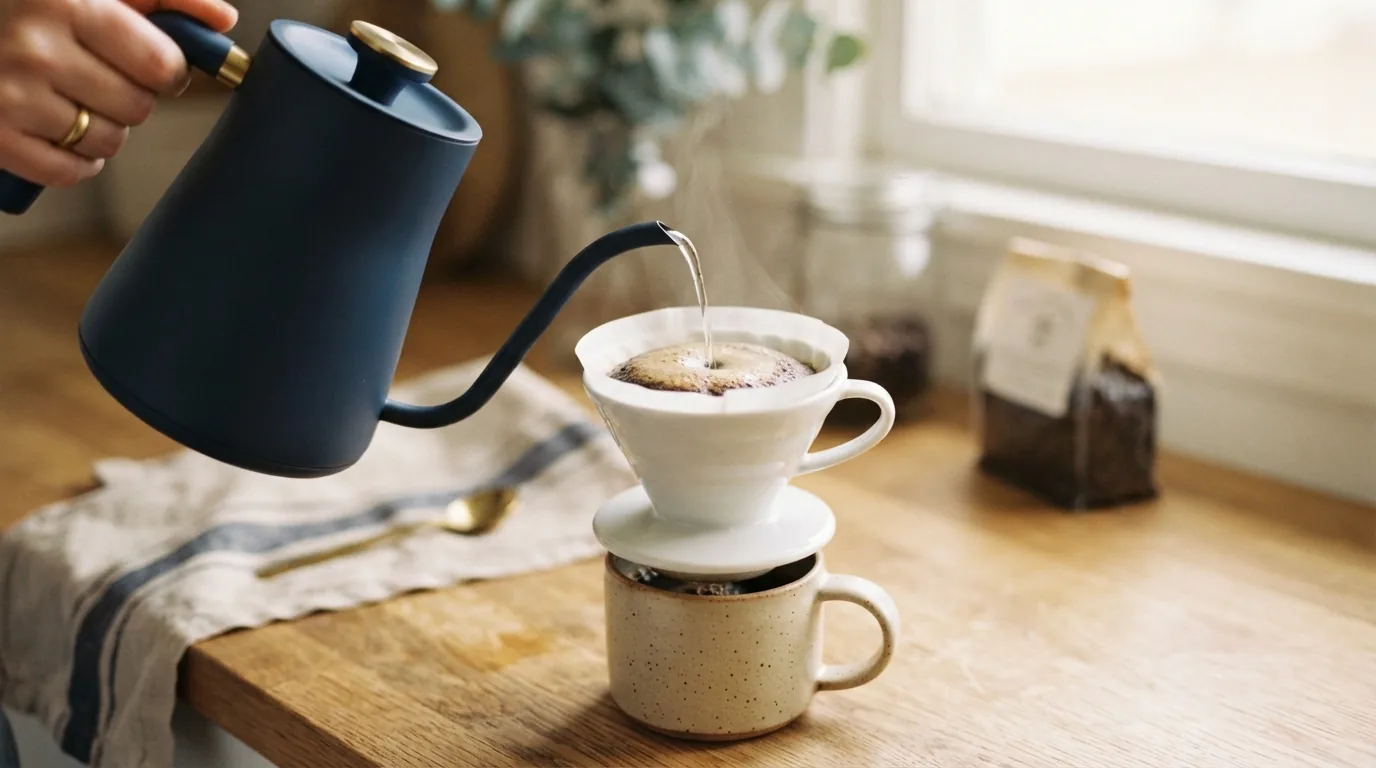
A gooseneck kettle's narrow, curved spout gives you control over pour rate and placement that a standard kettle simply can't match, which matters enormously for pour-over and matters again for consistently timing an espresso machine's water reservoir refills. Add electric temperature control, and you remove the last major variable most manual brewing guides assume you've already solved: knowing your water is actually at the temperature your recipe calls for.
Why Temperature Control Matters More Than Wattage
A kettle that boils fast is convenient, but a kettle that holds a specific target temperature accurately is what actually improves your coffee. Water that's too cool under-extracts and tastes sour and thin; water too hot pushes extraction into bitterness and can scorch delicate aromatic compounds outright. Our science of espresso extraction guide covers the 195 to 205°F target range in more depth, and both kettles below are built specifically to hit and hold a chosen temperature within that range rather than just boiling and hoping you pour fast enough.
Best Electric Gooseneck Kettles 2026: The Rankings
1. Fellow Stagg EKG ($195): Best Overall
The Stagg EKG remains the category's reference point for a reason: precise 1-degree temperature adjustability, a genuinely thin, controllable pour from its gooseneck spout, and a countdown timer built into the display for tracking bloom and pour phases without a separate stopwatch. It's the kettle referenced across our own brewing guides for exactly this reason, it's what a well-executed gooseneck kettle is actually supposed to feel like.
Fellow Stagg EKG Electric Gooseneck Kettle
1-degree temperature adjustability, built-in countdown timer, precision gooseneck pour, $195
2. Bonavita Variable Temperature Digital Kettle ($79.95): Best Budget
The Bonavita covers the fundamentals capably at less than half the Stagg's price: six preset temperatures covering the common ranges for coffee and tea, a 1200-watt element for a genuinely quick heat-up, and an LED display for confirming your setting at a glance. It lacks the Stagg's fine 1-degree adjustment and onboard timer, but for anyone mainly trying to stop eyeballing water temperature, it solves the actual problem at a third of the price.
Bonavita Variable Temperature Digital Gooseneck Kettle
6 preset temperatures, 1200-watt element, LED display, stainless steel gooseneck spout, $79.95
“A kettle that just boils water is solving half the problem. Pour control and a known, held temperature are the other half, and they matter just as much.”
Gooseneck Spout Geometry: Why It's Not Just Aesthetic
A standard kettle's wide spout releases water in an uncontrolled rush, fine for filling a French press but genuinely difficult to use for the slow, targeted circles a pour-over recipe calls for. A gooseneck's narrow, curved spout narrows that stream into something you can place precisely and pour at a controlled, steady rate, which is the entire mechanical basis for pour-over technique working at all. Our French press vs pour-over vs AeroPress guide covers why that pour control matters specifically for the pour-over method.
Beyond Pour-Over: Where Else a Gooseneck Kettle Helps
Precision pouring isn't only useful for pour-over. Filling an espresso machine's reservoir with water at a known temperature can shorten warm-up time on machines sensitive to starting water temperature, and a controllable, targeted pour also makes bypass brewing and blooming techniques for AeroPress meaningfully easier to execute consistently. It's a genuinely multi-purpose upgrade, not a single-method tool.
Hold Mode and Keeping Water Ready
Both kettles offer a hold or keep-warm function that maintains a set temperature for a period after boiling, useful if you're brewing multiple rounds or want water ready the moment you're ready to pour rather than waiting through a fresh heating cycle each time. The Stagg's hold function runs longer and holds temperature more precisely than the Bonavita's, a real practical difference if you regularly brew more than one cup back to back rather than a single pour-over and done.
Capacity and Counter Footprint
Both kettles hold roughly a liter, enough for two to three pour-over servings or a full espresso machine refill without needing a second boil. Neither takes up meaningfully more counter space than a standard electric kettle, which makes either a reasonable addition to a small kitchen rather than a specialty tool that demands dedicated storage. If counter space is genuinely tight, our home coffee bar setup guide covers layout approaches that keep a kettle, grinder and brewer all within easy reach without cluttering the counter.
Maintenance and Descaling
Mineral buildup affects electric kettles the same way it affects espresso machine boilers, gradually slowing heating and eventually affecting temperature accuracy. A monthly descaling cycle with a food-safe descaling solution, or plain white vinegar diluted with water for a kettle specifically, followed by several rinses with clean water, keeps either model performing at its rated speed and accuracy for years rather than slowly drifting out of spec.
One habit worth building regardless of which kettle you buy: empty and rinse it after each use rather than leaving standing water inside between mornings. Stagnant water sitting in a heating element overnight accelerates mineral deposit formation and can introduce a faint stale taste to your first pour, a small daily habit that meaningfully extends the interval between real descaling sessions.