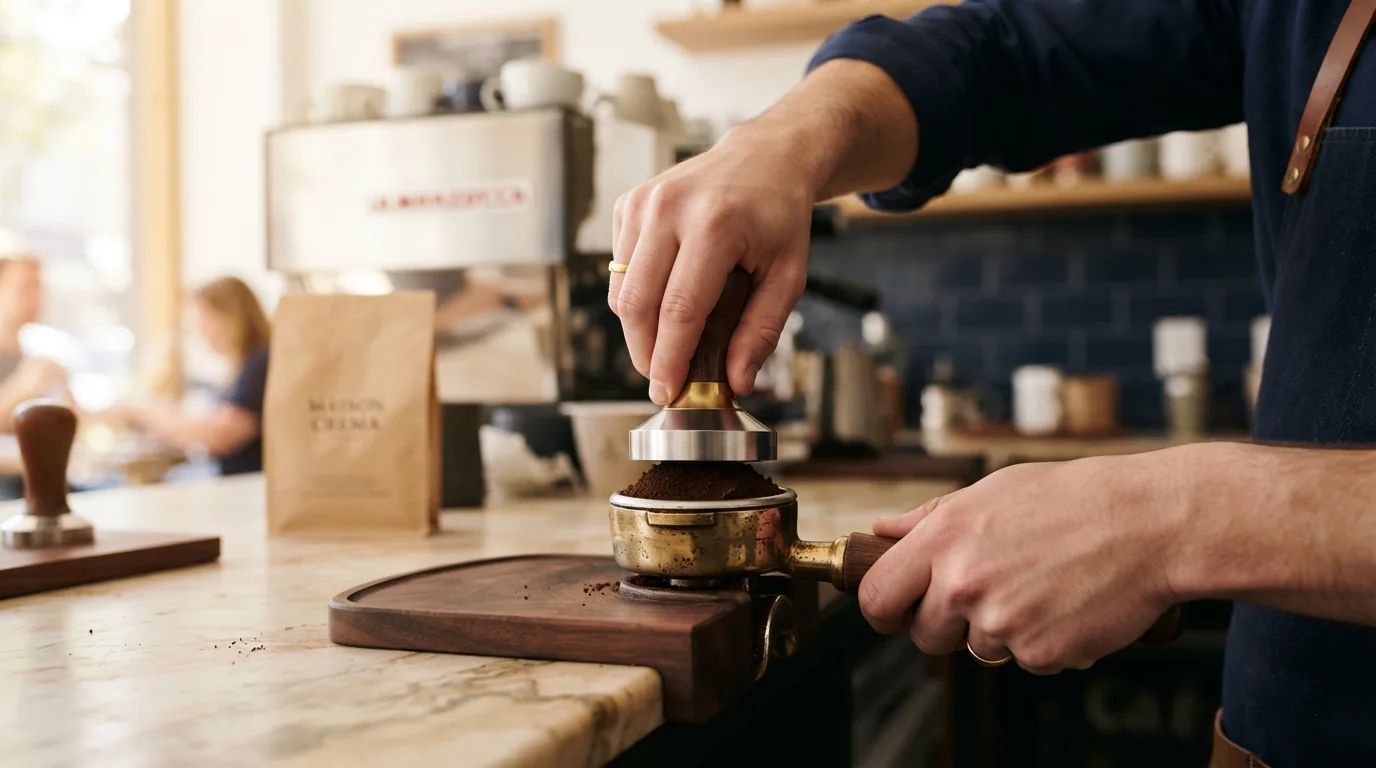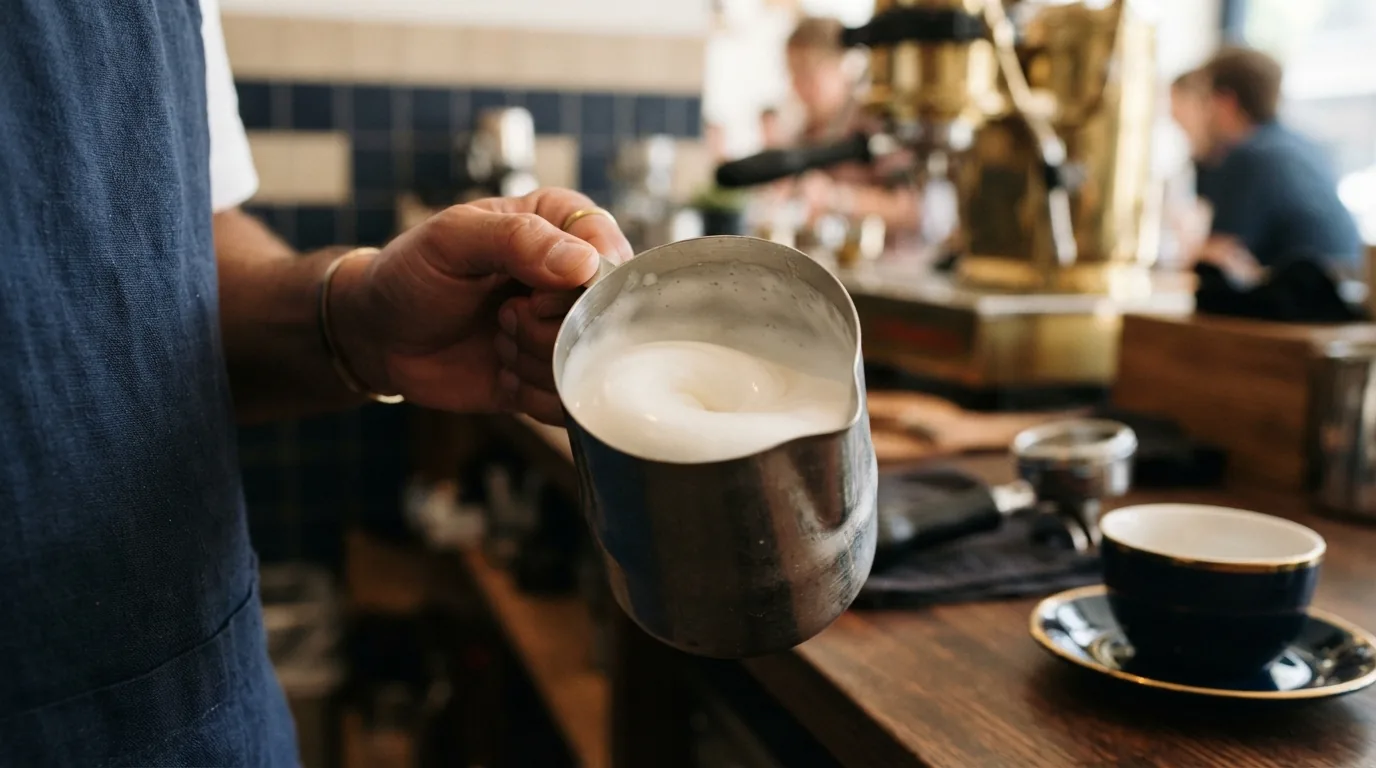
Latte art lives or dies on the milk, and the milk lives or dies on the steam wand. A machine can pull a technically perfect shot and still produce latte art that looks amateurish if its steam wand can't texture milk into the tight, glossy microfoam that pours cleanly into a rosetta or heart. This list ranks machines specifically on steam wand performance, power, control, and how forgiving they are while you're still building technique, not on espresso quality alone.
None of this is meant to suggest espresso quality doesn't matter for a good latte. It does, since a thin or bitter shot shows through milk just as clearly as a bad pour shows through foam. But the espresso side of that equation is covered in depth in our best espresso machines 2026 ranking; this list is specifically about the wand.
What Actually Makes Milk Texture Well
Microfoam, bubbles small enough to be nearly invisible, giving milk a glossy, paint-like consistency, comes from introducing air into cold milk early in the steaming process, then using the wand's turbulence to break remaining bubbles down as the milk heats toward roughly 150–155°F. A powerful wand does this faster and more forgivingly; a weak one forces you to work harder for the same result and punishes small technique errors more severely. Whole milk or a higher-fat oat alternative holds microfoam longer than skim, which matters as much for a clean pour as the machine itself.
Best Espresso Machines for Latte Art 2026: The Rankings
1. ECM Synchronika ($3,249): Best Steam Wand
A commercial-grade rotary pump and dual-boiler system give the Synchronika steam power that texturizes a full pitcher of milk in seconds, with the kind of fine control that lets an experienced hand dial in exactly the microfoam consistency a given pour needs. This is the wand baristas who compete in latte art actually train on.
ECM Synchronika
Commercial-grade rotary pump, dual boiler for simultaneous brew and steam, $3,249
2. Profitec Pro 600 ($2,399): Best for Precision Pours
Beyond strong, consistent steam output, the Pro 600's optional flow control paddle carries over into the pour itself once you're plating a design. The same comfort with fine manual adjustment that helps with flow profiling tends to translate directly into steadier hands during the pour.
Profitec Pro 600
Dual boiler, E61 group head, optional flow control, $2,399
“A great steam wand doesn't make your latte art better by itself. But a weak one will cap how good it can ever get, no matter how much you practice.”
3. Rancilio Silvia Pro X ($1,999): Best Value Steam Wand
The Silvia Pro X carries a genuinely commercial-grade steam wand into the most affordable true dual-boiler on the market, producing microfoam quality that machines twice its price don't meaningfully improve on. For most home baristas serious about latte art, this is the realistic ceiling worth paying for.
Rancilio Silvia Pro X
Commercial-grade steam wand on an affordable dual boiler, $1,999
4. Breville Barista Express Impress ($699.95): Best for Learning
You don't need a $2,000 machine to start learning latte art, and the Impress's manual steam wand, while not commercial-grade, is genuinely capable once you build technique on it. It's the most sensible place to actually start practicing before deciding whether to upgrade.
Breville Barista Express Impress
Manual steam wand paired with a built-in grinder, $699.95
Steam Pressure vs. Steam Power
It's worth separating two things that get conflated: boiler pressure (usually measured in bar) and actual steam output at the tip of the wand. A machine can have a high-pressure boiler and still produce underwhelming steam if the wand's internal tip design restricts flow. This is part of why commercial-derived machines like the Synchronika and Pro 600 outperform machines with technically similar boiler specs. The wand geometry itself, refined over decades of café use, matters as much as the number on the spec sheet.
Technique Matters More Than the Machine, to a Point
A prosumer steam wand raises your ceiling; it doesn't replace practice. Whole milk or a high-fat oat alternative, a cold pitcher, and a consistent pour angle will improve your latte art more than any single equipment upgrade below the $1,999 dual-boiler tier. Above that tier, the wand itself becomes the limiting factor.
Pitcher choice matters more than most beginners expect, too. A pitcher with a sharp, narrow spout gives far more control over the final pour than a wide-mouth one, independent of how good the microfoam underneath it is. If your pours look muddy despite good foam, the pitcher is worth checking before blaming the machine.
Building Up to It
Nobody pours a rosetta on their first attempt, regardless of which machine is behind them. Start by practicing texture alone, steaming milk to a glossy, paint-like consistency without worrying about the pour at all, before introducing any pattern work. Once that texture is repeatable, free-pouring a simple heart is a more realistic first pattern than a rosetta, which asks for wrist control most beginners haven't built yet.
See our milk frother guide if you don't yet have a steam wand at all, or browse the full machine collection for every format we cover.