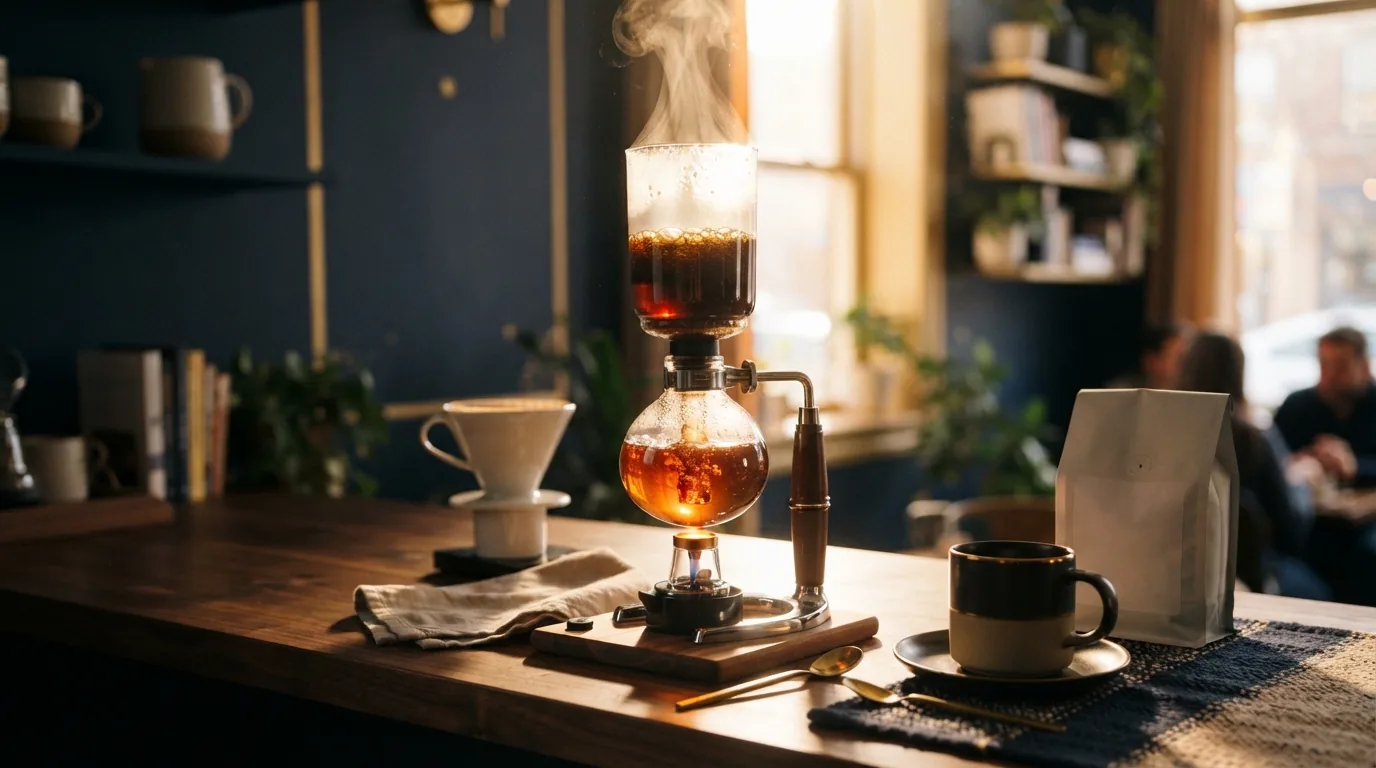
A vacuum siphon brewer looks like laboratory glassware for a reason: it uses vapor pressure and a vacuum, not gravity or a pump, to move water through coffee and back again. It's one of the most theatrical brewing methods still in regular use, and underneath the show, it produces a genuinely clean, full-flavored cup that paper-filtered methods and immersion methods each only partly replicate.
How Siphon Brewing Actually Works
Water heats in a lower glass chamber until building vapor pressure forces it up a tube into an upper chamber holding the coffee grounds. Once most of the water has risen and steeped with the grounds for a set time, removing the heat source causes the vapor in the lower chamber to cool and contract, pulling the brewed coffee back down through a filter and leaving the spent grounds behind in the upper chamber. The entire cycle is visible through the glass, which is a large part of the format's appeal beyond the cup itself.
Why the Cup Tastes Different
Siphon brewing combines full immersion, the grounds steep fully submerged like a French press, with a genuine filtered finish, since the coffee passes through a cloth or metal filter on its way back down. That combination produces a cup with more body than a paper-filtered pour-over but noticeably cleaner than a French press, since the filter catches sediment a metal mesh simply can't. The consistent, controlled brewing temperature throughout the steep also produces a notably even extraction compared to methods where temperature drifts as the brew progresses.
Best Vacuum Siphon Brewers 2026: The Rankings
1. Hario Technica Syphon, 600ml ($92.50): Best Overall
Hario's Technica line is the modern reference point for the format, using heat-resistant borosilicate glass and a stable, well-engineered stand that holds up to repeated use without the wobble cheaper siphons develop over time. Its 600ml capacity brews roughly five cups per batch, and the classic alcohol burner heat source gives you direct, visible control over brewing intensity.
Hario Technica Coffee Syphon, 600ml
Heat-resistant borosilicate glass, stable stand, alcohol burner, brews roughly 5 cups, $92.50
2. Yama Glass 8-Cup Stovetop Siphon ($68.00): Best Value / Stovetop-Compatible
The Yama skips the separate burner entirely and is designed to sit directly on a gas or electric stovetop burner, which simplifies the setup and removes a consumable, the alcohol burner's fuel, from the ongoing cost of using it. Its 24oz capacity produces roughly eight smaller 3 to 4oz servings per batch, and it ships with a reusable cloth filter and measuring spoon included.
Yama Glass 8-Cup Stovetop Siphon Coffee Maker
Stovetop-compatible, heat-resistant borosilicate glass, includes reusable cloth filter, $68.00
“A siphon brewer isn't a gimmick that happens to make coffee. The vacuum-pull mechanism is doing real extraction work, and the visible process is a genuine bonus on top of that, not the whole reason it exists.”
Alcohol Burner vs Direct Stovetop
An alcohol burner gives more precise, adjustable heat and works anywhere a flame is safe to use, including a table setting away from the kitchen, part of why the Hario remains popular for tableside brewing. A direct stovetop design like the Yama is simpler and cheaper to run long-term, no burner fuel to buy, but it ties the brewer to the kitchen and gives you less fine control over heat intensity than an adjustable burner flame does.
Grind Size and Filter Type
Siphon brewing uses a medium-fine grind, similar to what you'd use for a standard drip machine, coarser than espresso but finer than French press. Cloth filters, standard on both brewers here, produce a fuller-bodied cup than a paper filter would and are reusable with regular rinsing, though they need periodic replacement, roughly every few months of regular use, once they stop rinsing clean. Our grinder guides cover options capable of hitting this grind size consistently, which matters more for siphon brewing than the brewing theatrics might suggest.
Is a Siphon Brewer Worth the Extra Steps
Siphon brewing takes longer and demands more attention than a standard drip machine or even a manual pour-over, watching the vapor cycle, timing the steep, managing a live flame throughout. That's a genuine tradeoff, not a flaw, and it's exactly why the format has stayed a deliberate, occasional ritual rather than an everyday brewer for most owners. If you want daily convenience instead, our best drip coffee makers 2026 guide covers the SCA-certified alternative, and our home coffee bar setup guide covers where a siphon actually fits as a centerpiece on a working countertop.
Safety Basics Worth Taking Seriously
Both brewers involve genuine heat and, for the Hario, an open flame sitting directly beneath glassware, which deserves a bit more care than a standard drip machine. Brew on a stable, heat-resistant surface away from anything flammable, never leave an active siphon unattended mid-brew, and let both chambers cool fully before handling or cleaning them. None of this is complicated, but it's worth internalizing before your first brew rather than learning it the hard way.
Cleaning and Long-Term Care
Borosilicate glass on both brewers is durable against thermal shock but not immune to it, so avoid dunking a hot chamber directly into cold water for cleaning; let it cool most of the way first. Cloth filters should be rinsed immediately after each use and stored damp in the refrigerator between brews to prevent them from drying out and cracking, a small habit that meaningfully extends how long a single filter lasts before needing replacement.