"Iced coffee" gets used as a catch-all for two genuinely different brewing techniques that happen to end up cold. Cold brew steeps coffee in cold water for many hours. Japanese iced coffee, also called flash brew, pours hot coffee directly over ice in a matter of minutes. They taste noticeably different for real chemical reasons, and picking between them is really picking between two different flavor profiles, not just two recipes for the same drink.
Cold Brew: Long Steep, No Heat
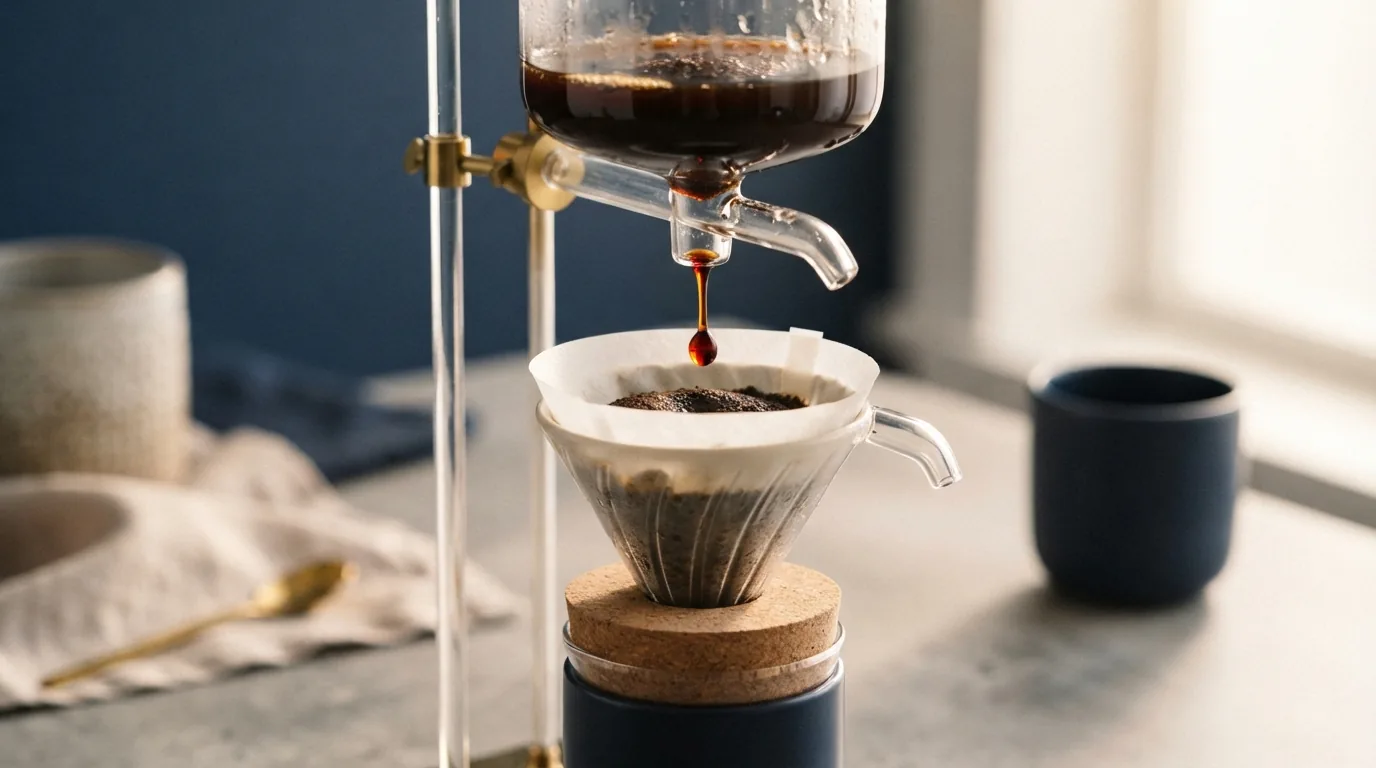
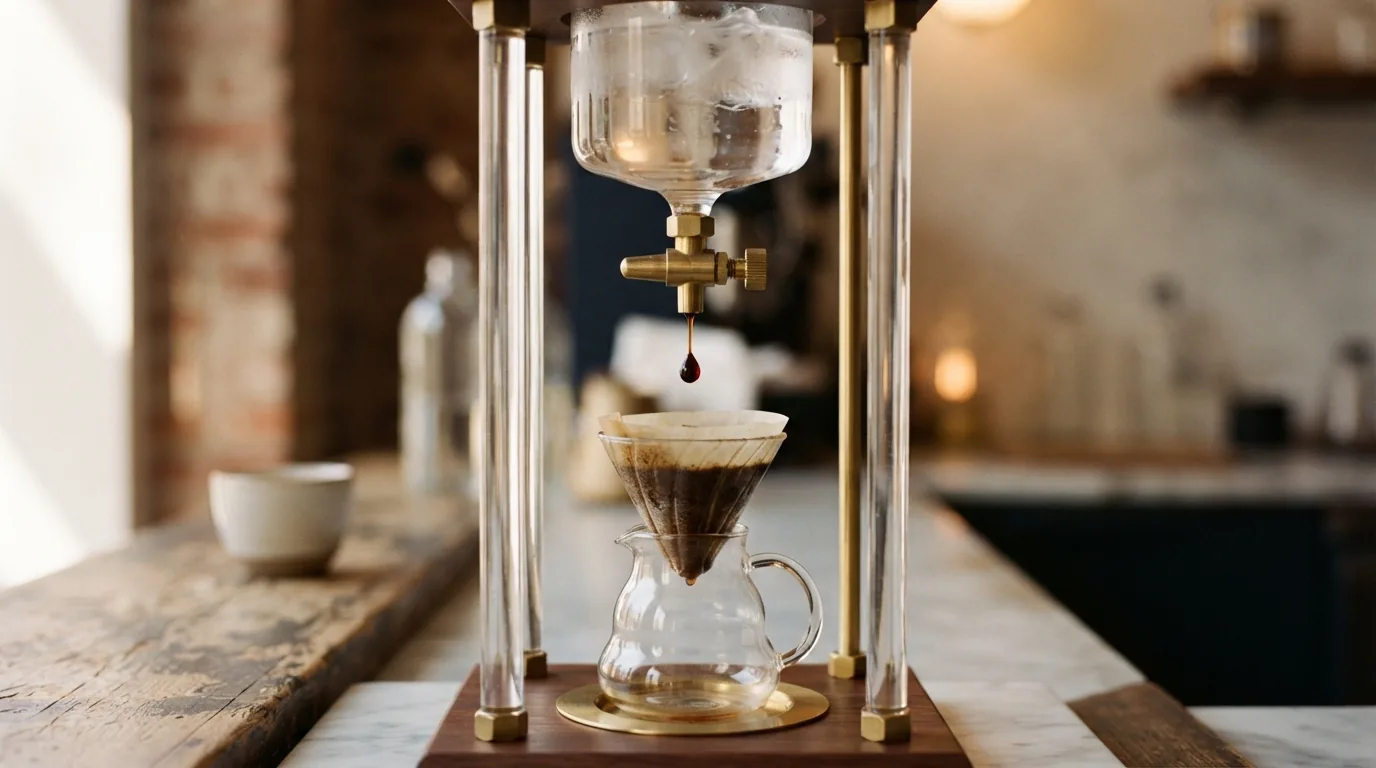
Cold brew steeps coarsely ground coffee in room-temperature or cold water for 12 to 24 hours, then gets filtered before serving, usually as a concentrate diluted with water or milk. Because cold water extracts more slowly and selectively than hot water, cold brew pulls fewer acids and aromatic compounds out of the grounds, producing a smoother, lower-acid, chocolatey cup. That smoothness is the entire appeal, and it's also why cold brew can taste comparatively flat or muted next to a fresher, more aromatic method.
Japanese Iced Coffee: Hot Extraction, Instant Chill
Flash brew works in the opposite direction entirely. You brew a concentrated pour-over hot, as normal, except roughly half the total water in the recipe is replaced with ice sitting in the receiving vessel. The hot, concentrated coffee hits that ice immediately as it drips through, chilling on contact while the melting ice supplies the rest of the water the recipe needs. The whole process takes about four minutes start to finish, using nothing beyond a standard pour-over dripper.
Why They Taste So Different
Hot water extracts a meaningfully wider range of compounds than cold water, including the volatile aromatic compounds responsible for a coffee's brighter fruit, floral and tea-like notes. Cold brew's long, cold steep never accesses most of those compounds in the first place. Flash brew does, since it's a genuine hot extraction, and then the rapid temperature drop from hitting ice locks those aromatics into the cup before they can evaporate off, the same way a shocked-in-ice-water technique preserves color and texture in cooking. The result is a cup that's vivid and aromatic in a way cold brew structurally can't be, while cold brew wins on smoothness and low acidity in a way flash brew can't fully match.
Step by Step: Japanese Iced Coffee
- Fill your carafe with ice up to roughly the halfway point of your total target recipe volume.
- Set up a pour-over dripper on top, and use a grind slightly finer than your normal hot pour-over setting, since you'll want a genuinely concentrated brew.
- Use your normal coffee dose but only the water volume that isn't already accounted for by the ice.
- Bloom and pour as you normally would for a hot pour-over, aiming for a total brew time close to your usual routine.
- Let the hot coffee drip directly onto the ice rather than into an empty carafe. The ice melts as it's hit, finishing the recipe's water and chilling the cup simultaneously.
- Stir once and serve immediately over fresh ice if the original ice has fully melted.
Hario V60 Ceramic Dripper
The reference pour-over dripper for spiral-groove extraction control, ideal for flash brew, $26
“Cold brew and flash brew aren't two recipes for the same drink. They're two different chemical processes that happen to both end up cold.”
Comparison Table
| Method | Brew Time | Extraction | Flavor Profile |
|---|---|---|---|
| Cold Brew | 12 to 24 hours | Cold, slow, selective | Smooth, low-acid, chocolatey |
| Japanese Iced (Flash Brew) | ~4 minutes | Hot, fast, broad | Bright, aromatic, vivid |
Which One Should You Actually Make
If you want something to batch on a Sunday and drink all week with minimal daily effort, cold brew's long unattended steep fits that routine far better. If you want a genuinely bright, aromatic iced coffee made fresh in the time it takes to brew a normal cup, flash brew is the better technique, and it requires no special equipment beyond what a pour-over drinker already owns. Neither is the objectively "better" iced coffee; they're built around different mornings. For the equipment side of scaling this up, including nitro infusion for cold brew specifically, see our nitro cold brew guide, and our manual brewing comparison if you're still deciding which hot method to base a flash brew on in the first place.
Can You Batch Flash Brew Ahead of Time
Flash brew is designed to be made fresh, and batching it ahead of time defeats much of its purpose. Once the ice has fully melted and the coffee sits at a stable cold temperature for a while, the aromatic edge that separates it from a diluted hot coffee fades noticeably within a few hours. If you want something to prep in advance and drink over several days, cold brew concentrate is the far better fit, precisely because it was never relying on a burst of trapped aromatics in the first place.
A Note on Origins
Flash brew is commonly credited to Japan's kissaten coffee houses, which refined the technique in the postwar era specifically to serve genuinely good iced coffee without the flat, diluted result of simply pouring hot coffee over ice after the fact. That distinction, brewing directly onto ice rather than chilling a finished cup, is the entire method in one sentence, and it's a large part of why the technique has spread well beyond Japan into specialty cafés worldwide over the past decade.