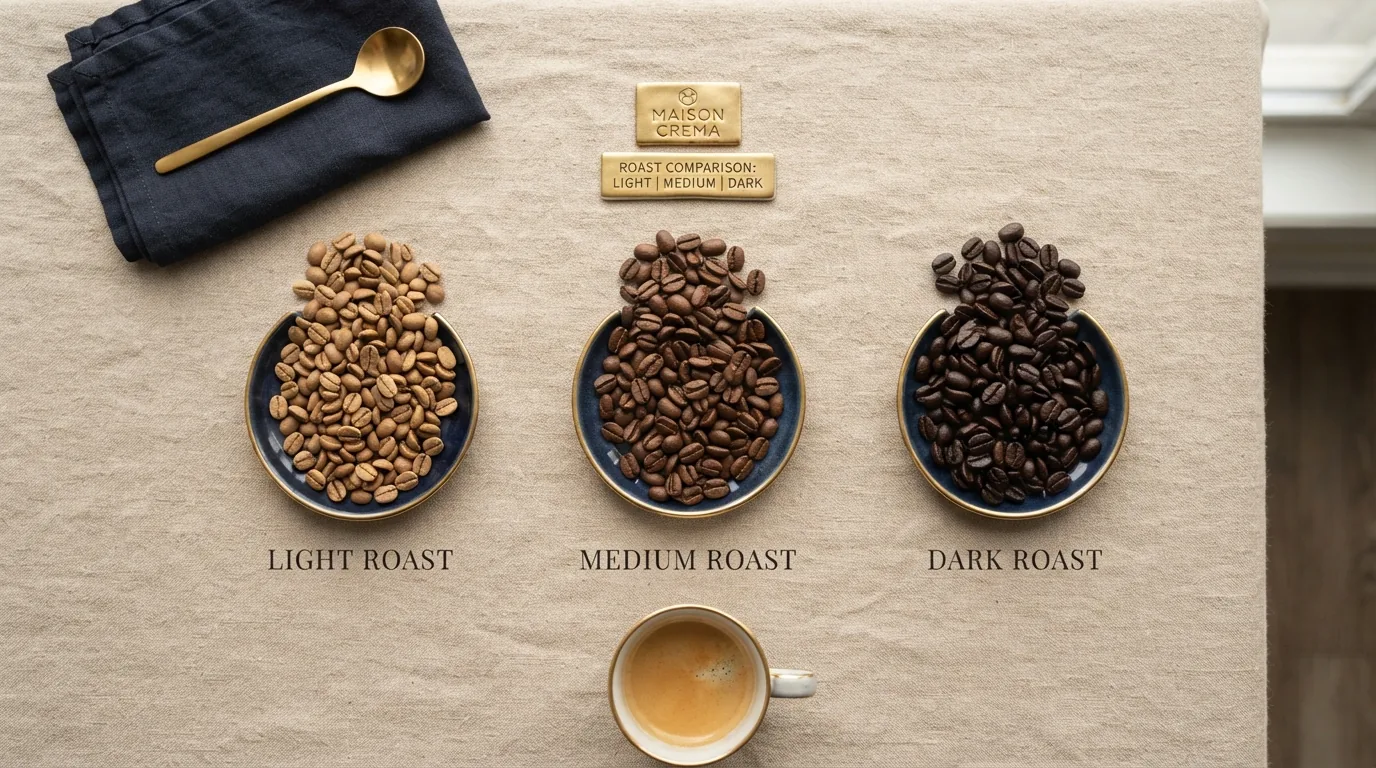
Roast level gets most of the attention on a bag of coffee, but processing, what happens to the coffee cherry between picking and drying, shapes flavor more fundamentally than roast ever does. Two beans from the same farm, same variety, same elevation, can taste like genuinely different coffees depending only on whether they were washed, dried whole, or left to ferment before drying. It's the step most casual coffee drinkers have never heard of and the one specialty roasters increasingly print right on the bag.
Washed Process: Clean, Bright, Predictable
In washed processing, the cherry's skin and fruit pulp are removed by machine before the beans ever dry, then the beans ferment briefly in water to strip a remaining sticky layer called mucilage, and finally dry on raised beds or patios. Because the fruit is removed early, almost none of its sugars or flavors transfer into the bean, producing a clean, bright cup where the origin's own inherent characteristics, not the processing, drive the flavor. It's the most controllable and consistent method, and the reason washed coffees are the default at most specialty roasters who want a predictable baseline.
Natural Process: Fruit-Forward and Wild
Natural processing skips the pulping step entirely. The whole cherry, fruit and all, dries in the sun for two to four weeks before the dried husk is milled off the bean. That extended contact with the fruit's sugars and juices during drying transfers real fruit character directly into the bean, producing cups with pronounced berry, wine-like, or fermented notes that a washed process from the same farm simply won't have. It's a riskier method, more prone to inconsistency and defect if drying isn't managed carefully, which is part of why natural coffees carry a reputation for being either spectacular or genuinely flawed, with less middle ground than washed coffee.
Honey Process: The Middle Ground
Honey processing removes the cherry's skin like washed processing does, but leaves some or all of the sticky mucilage layer on the bean during drying instead of washing it away. The amount of mucilage left, described as yellow, red or black honey depending on how much remains, controls how much of that fruit-adjacent sweetness transfers into the cup. It sits deliberately between washed and natural in both process and flavor, sweeter and fuller-bodied than washed, cleaner and more controlled than natural.
Coffee Variety Sampler Pack, Whole Bean, 4-Roast Set
Four distinct roasts in one box, a low-commitment way to taste how processing and origin change flavor before committing to a full bag, $29.99
“Two beans from the same farm, same variety, same harvest, can taste like different coffees depending only on what happened to them before they ever hit a roaster. That's processing, and it matters more than roast level does.”
Anaerobic Process: The New Frontier
Anaerobic processing is the newest method to reach mainstream specialty shelves, and it borrows directly from winemaking and brewing. Cherries ferment in sealed, oxygen-free tanks, sometimes with added yeast strains, for a controlled period before drying, producing intensely fruity, sometimes downright funky flavors, think overripe tropical fruit or light booziness, that neither washed nor standard natural processing produces. It's also the most expensive and labor-intensive method here, which shows up directly in the price of anaerobic-processed bags.
How to Actually Taste the Difference
The clearest way to understand processing is a side-by-side cup: brew a washed and a natural coffee from the same origin and roast level using the same method and ratio, and the difference becomes obvious within the first sip, in a way that reading about it never quite communicates. Our best whole bean coffee for espresso 2026 guide covers specific bags worth trying, and processing notes are increasingly printed right on specialty bags if you know to look for the words "washed," "natural," "honey," or "anaerobic" near the origin information.
Does Processing Matter for Espresso the Same Way
Processing's fruit-forward or clean-cup effects show up more distinctly in filter brewing, where nothing is masking the bean's inherent character. Espresso's concentration and body can flatten some of those subtler differences, though a natural or anaerobic-processed espresso still typically reads noticeably sweeter and more fruit-forward than a washed one from the same origin. If you're roasting your own beans to control this variable more directly, our home coffee roasting guide and best home coffee roasting machines 2026 guide cover what it takes to buy green, unprocessed-by-roast beans and take that last step yourself.
Why Processing Information Is Getting Easier to Find
A decade ago, processing method rarely appeared on a retail bag at all, buried instead in a roaster's internal sourcing notes if it was recorded anywhere. That's changed as direct-trade relationships between roasters and individual farms have become more common, giving roasters the specific harvest and processing detail to print rather than a vague country-of-origin label. It's a genuinely useful side effect of that shift: a shopper who understands processing can now predict roughly what a bag will taste like before opening it, based on three or four words printed near the origin.
Does Processing Affect Caffeine Content
Not meaningfully. Caffeine content is driven almost entirely by bean variety, primarily whether it's arabica or the more caffeinated robusta, and roast level, not by what happened to the cherry before drying. A natural-processed and washed-processed bean from the same tree will contain essentially identical caffeine levels despite tasting noticeably different, since processing changes what compounds transfer from the fruit into the bean, not the bean's own inherent caffeine content. Our caffeine in espresso vs coffee guide covers what actually does move that number.