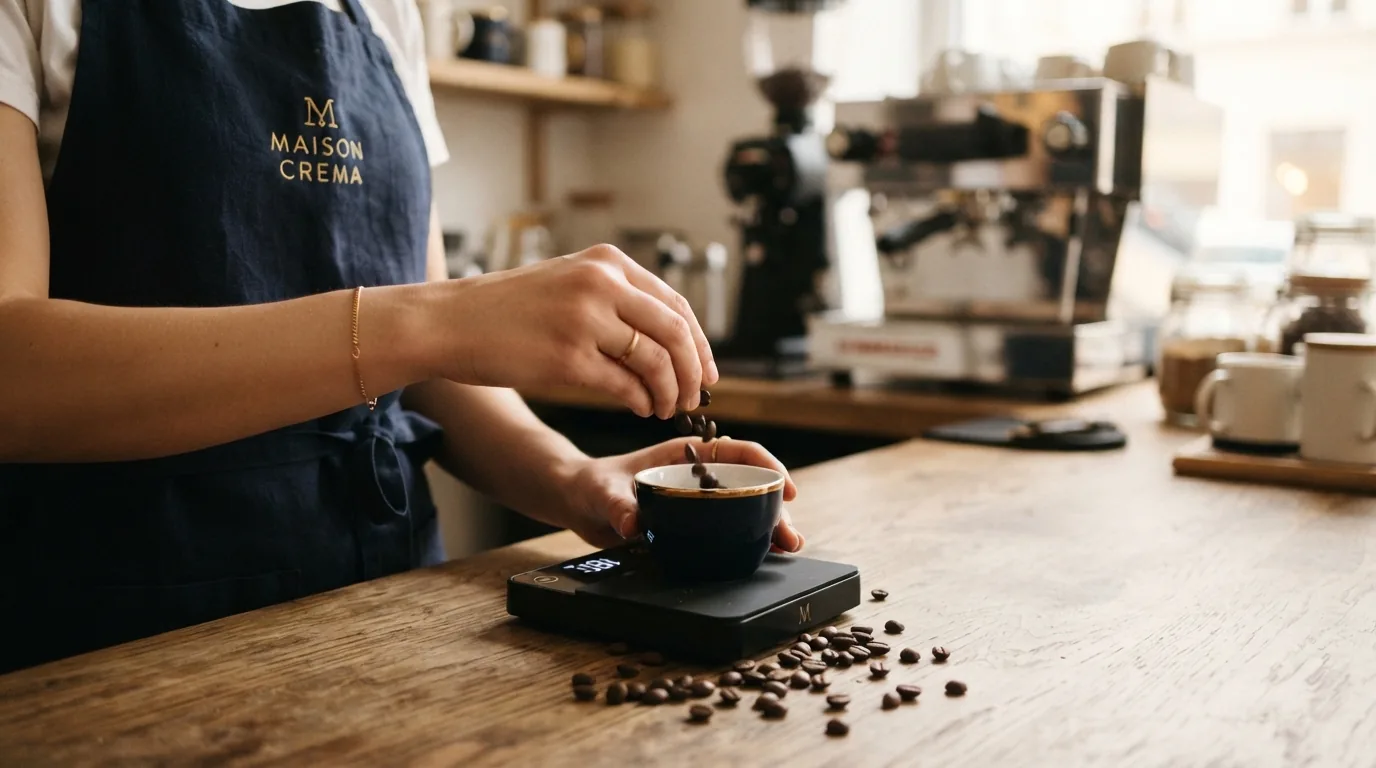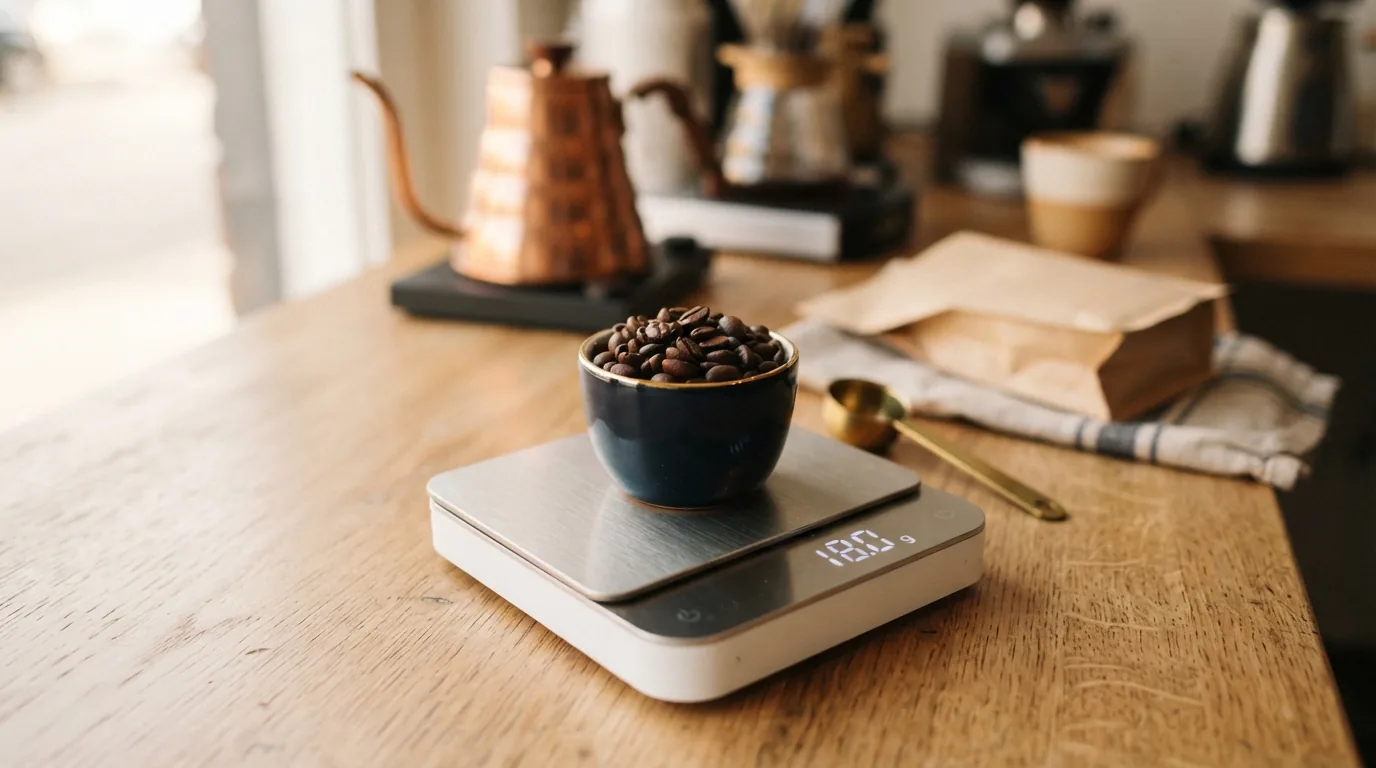
Brewing by weight instead of volume is one of the cheapest, highest-impact upgrades available to anyone serious about consistency, and it's one that a surprising number of home baristas skip entirely. A tablespoon of coffee grounds can vary meaningfully in weight depending on grind size and roast density, but a gram is always a gram, which is the entire reason a scale changes results more than most equipment purchases twice its price.
Why Volume Measurements Actually Fail
Ground coffee's density changes with roast level, grind size and even humidity, so a level scoop doesn't reliably deliver the same amount of coffee shot to shot or brew to brew. That inconsistency compounds every other variable in your routine, meaning a technique that produced a great cup yesterday can produce a noticeably different one today for no obvious reason. Weighing dose and, for pour-over, weighing water as it's poured removes that variable entirely and makes every other adjustment you make actually mean something.
Best Coffee Scales 2026: The Rankings
1. Acaia Pearl ($200.00): Best Overall
The scale most competition baristas actually use, with 0.1g precision, a built-in auto-timer, and Bluetooth connectivity to Acaia's companion app for logging and reviewing your brews over time. It's a genuine step up in build quality and responsiveness over budget scales, and its combined timer-plus-scale design removes a second device from your counter entirely.
Acaia Pearl Coffee Scale
0.1g precision, built-in auto-timer, Bluetooth app connectivity, $200.00
2. Timemore Black Mirror Basic ($54.90): Best Value
A genuinely capable budget scale that still hits 0.1g precision and includes a basic built-in timer, without the Bluetooth connectivity or app ecosystem of the Acaia. For anyone who wants accurate dosing without paying for features they won't actually use, this covers the fundamentals at less than a third of the price.
Timemore Black Mirror Basic Coffee Scale
0.1g precision, built-in timer, compact low-profile design, $54.90
“A scale doesn't make your technique better. It makes your technique repeatable, which is the actual prerequisite for improving it at all.”
What Precision Level You Actually Need
0.1g precision is the practical standard for espresso, where a gram or two of dose genuinely changes the shot. For drip or pour-over brewing, where doses run larger and the ratio is more forgiving, 1g precision is generally sufficient, though a 0.1g scale still works fine and simply offers more precision than that method strictly requires.
Tare Function: The Feature That Actually Matters Day to Day
Beyond raw precision, the single most-used feature on any coffee scale is tare, the button that zeroes the display back out with a container already sitting on it. Both scales above support it, and it's what makes weighing dose into a portafilter, or weighing water in stages during a pour-over, fast enough to actually use every single day rather than becoming a chore you eventually skip. A scale without a fast, reliable tare button, even one with excellent raw precision, tends to get abandoned within a few weeks.
Battery Life and Charging
The Acaia Pearl charges via USB and typically runs for weeks of normal daily use between charges, with a low-battery indicator that gives fair warning before it dies mid-brew. The Timemore runs on a removable battery instead, which trades the convenience of USB charging for the ability to swap in a fresh battery instantly rather than waiting out a charge cycle. Neither approach is clearly better, it's a matter of which inconvenience you'd rather deal with occasionally.
Espresso Dosing vs Pour-Over Timing
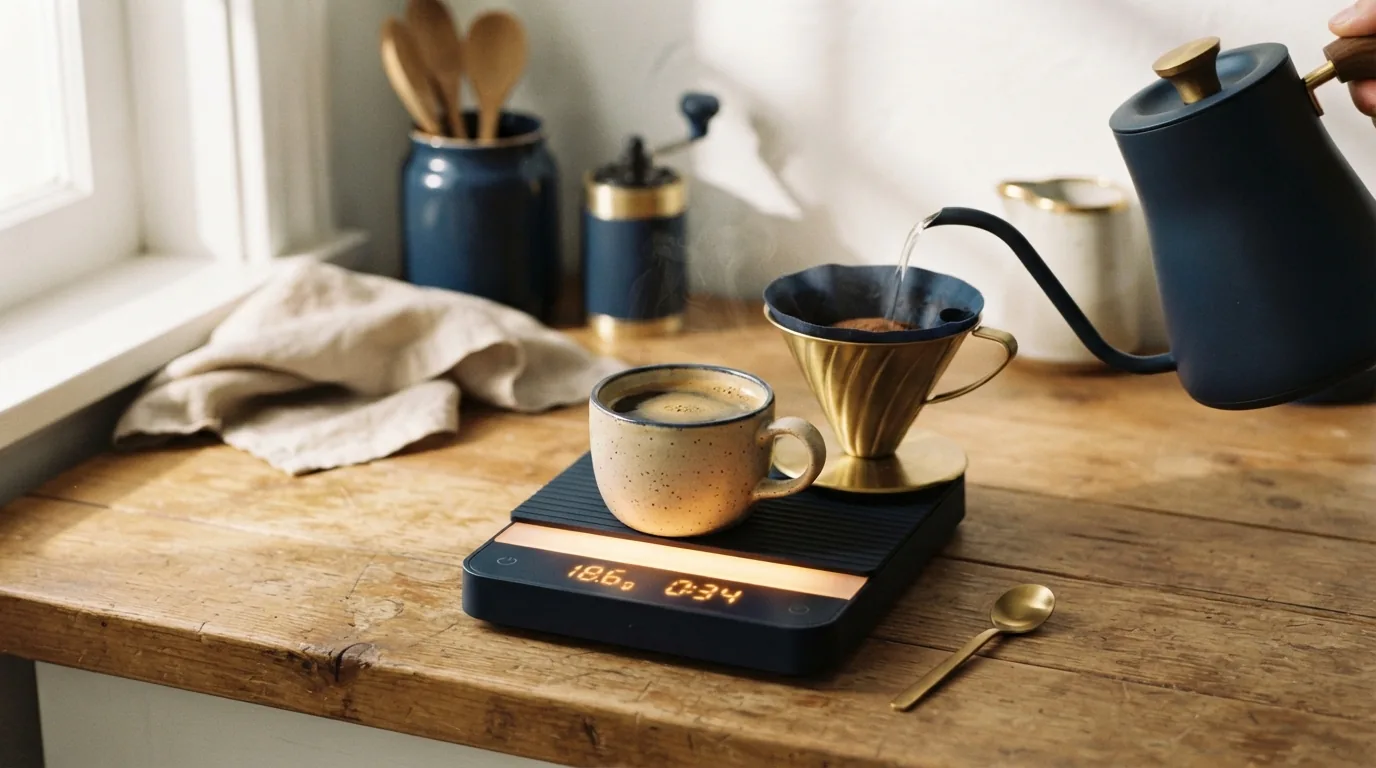
For espresso, a scale's main job is confirming dose in and yield out, the two numbers that define your brew ratio and let you diagnose an off-tasting shot with actual data instead of guessing. For pour-over, a scale paired with a timer additionally tracks pour rate and total brew time, both of which shape extraction just as much as dose does. Either scale above handles both use cases well, the difference is really whether you want the app-based brew logging the Acaia offers or a simpler, cheaper version of the same core function.
Pairing a Scale With the Rest of Your Setup
A scale is most useful alongside a grinder that can actually hit a consistent, repeatable setting, since dialing in by weight only works if the grind itself isn't drifting between sessions. See our best coffee grinders 2026 guide for options at every price point, and our science of espresso extraction guide for how dose, grind and water temperature work together once you're actually measuring all three.
Where to Put It So You Actually Use It
A scale that lives in a drawer gets used a fraction as often as one that sits directly on your counter or coffee station, ready to go without a retrieval step standing between you and weighing your dose. Both models above are compact and low-profile enough to leave out permanently without dominating counter space, which matters more for actual daily use than any spec sheet number does. If you're setting up a dedicated station for it, our home coffee bar setup guide covers exactly this kind of small-tool placement.