Roasting your own beans sounds like an intimidating leap, but the equipment side of it has gotten genuinely approachable. A dedicated home roasting machine handles the temperature curve and timing that used to require a converted popcorn popper and a lot of guesswork, and understanding the two main mechanisms, fluid bed and drum, is most of what you need to pick the right one.
Fluid Bed vs Drum Roasting
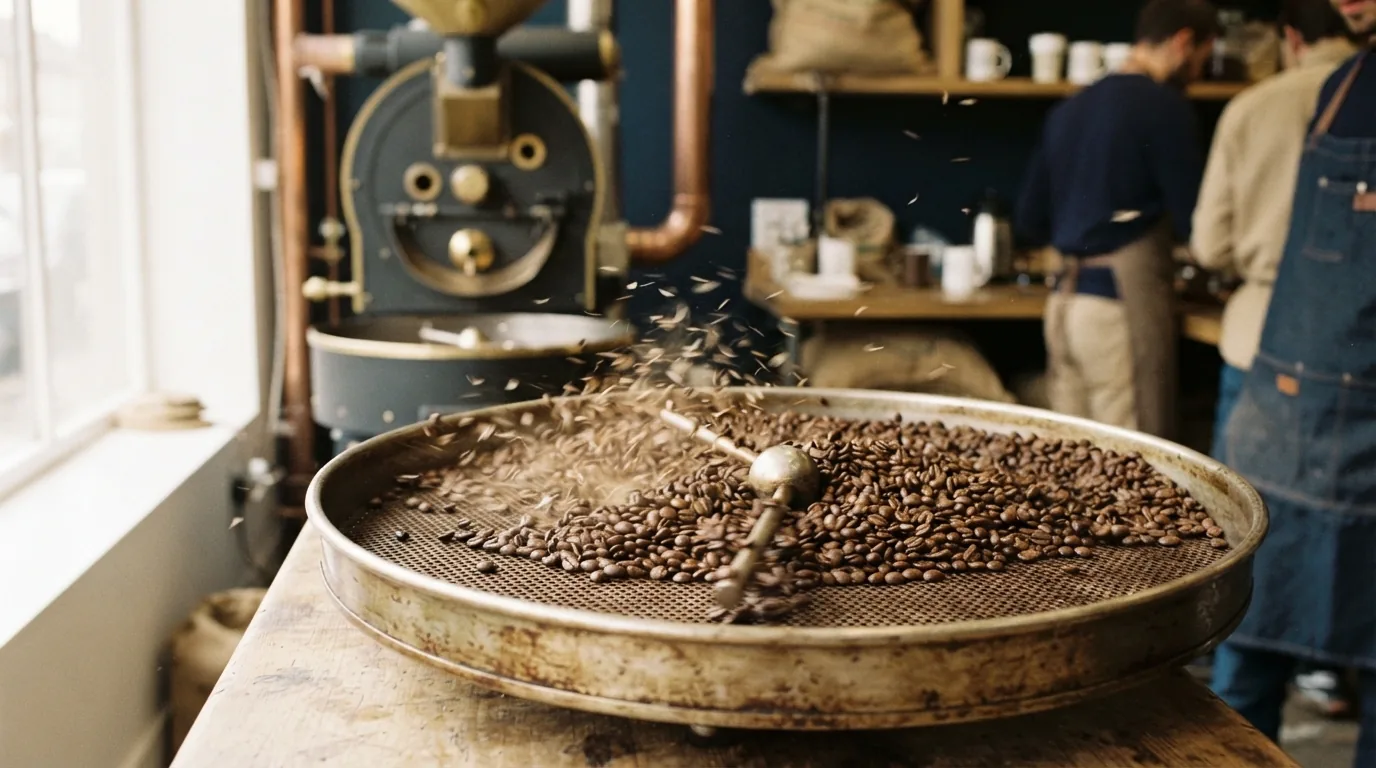
Fluid bed roasters use a column of hot air to keep beans suspended and tumbling as they roast, similar in principle to a popcorn popper, which roasts quickly and evenly with minimal moving parts to maintain. Drum roasters instead tumble beans inside a rotating heated chamber, closer to how commercial roasters work at a larger scale, generally producing a slightly different flavor development and supporting larger batch sizes, at the cost of a bigger footprint and a higher price.
Best Home Roasting Machines 2026: The Rankings
1. Fresh Roast SR540 ($219.95): Best for Beginners
A fluid bed roaster that roasts a 4oz batch in roughly 8 to 9 minutes, with manual controls for airflow and heat that let you shape the roast curve directly rather than relying on fixed presets. Its small batch size is actually an advantage for beginners, since it keeps mistakes cheap and lets you dial in technique on a few ounces at a time before committing to larger batches.
Fresh Roast SR540 Home Coffee Roaster
Fluid bed roasting, manual heat and fan control, roasts a 4oz batch in 8 to 9 minutes, $219.95
2. Behmor 1600 Plus ($369.00): Best for Larger Batches
A drum roaster capable of handling up to a full pound of green beans per batch, roughly four times the Fresh Roast's capacity, with programmable roast profiles that repeat a saved curve automatically. The larger capacity and drum mechanism make it a genuinely practical choice for anyone roasting enough to supply their own daily coffee rather than roasting small test batches.
Behmor 1600 Plus Drum Coffee Roaster
Drum roasting, up to 1lb batch capacity, programmable and repeatable roast profiles, $369.00
“Roast date is the single biggest freshness lever in coffee. Owning a roaster is really just owning the ability to reset that date whenever you want.”
Listening for First Crack and Second Crack
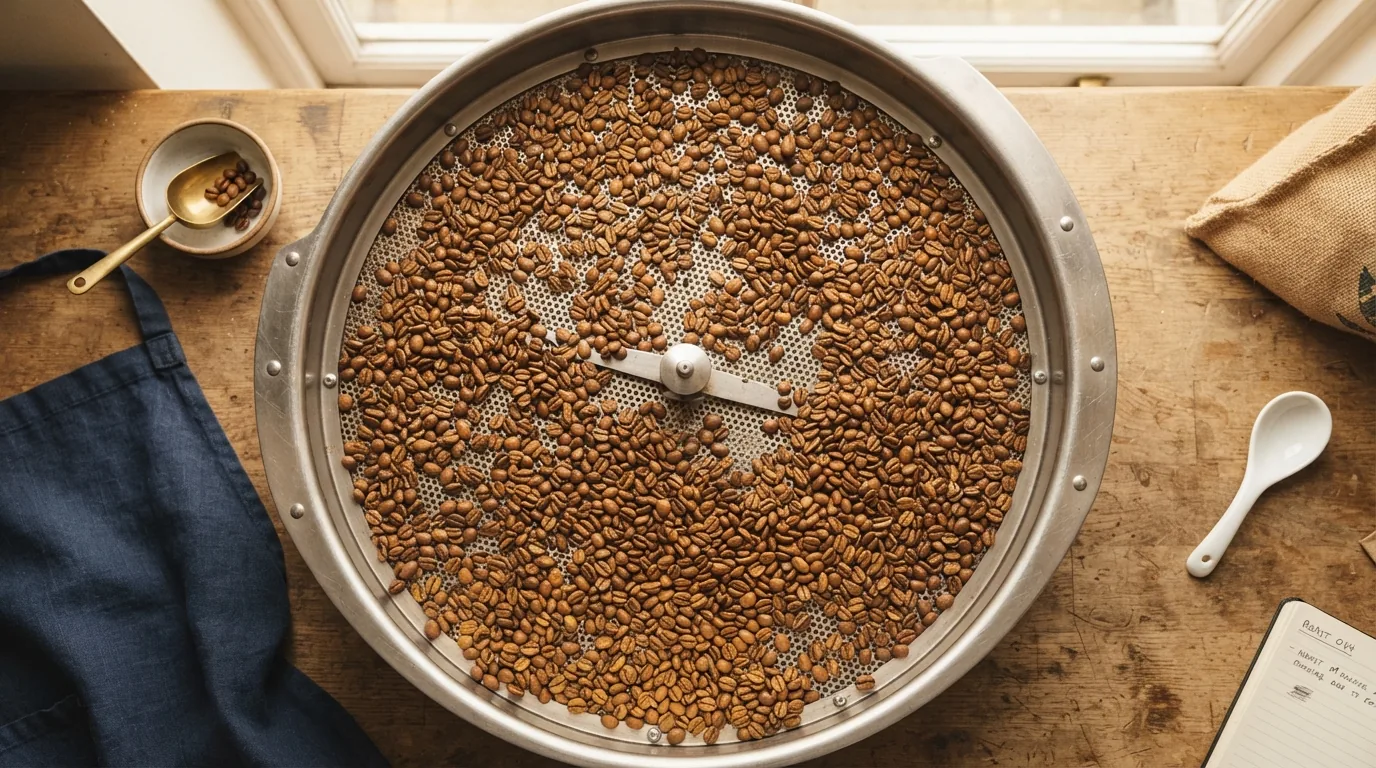
Both machines above let you track roast progress by ear, not just by timer, using two audible milestones every roaster learns to listen for. First crack is a distinct popping sound, similar to popcorn, that happens as trapped moisture and pressure inside the bean rapidly release, and it marks the start of what's technically drinkable coffee, a light roast. Second crack, a quieter, higher-pitched crackling that follows several minutes later if you keep roasting, signals the bean's cell structure breaking down further as oils migrate to the surface, the territory of medium-dark to dark roasts. Learning to stop at the exact point between those two sounds, rather than relying purely on a timer, is most of what separates a roast you dialed in from one you got lucky with.
What Green Beans Actually Cost
Unroasted green coffee is meaningfully cheaper than roasted retail bags, commonly in the $6 to $10 per pound range from specialty green bean suppliers, before you factor in the roasting equipment itself. For anyone roasting regularly, that per-pound savings adds up quickly enough to offset a roaster's upfront cost within a year or two of consistent use, on top of the freshness advantage.
Ventilation and Chaff: The Part Nobody Warns You About
Roasting produces real smoke and a papery byproduct called chaff that separates from the bean as it roasts, and both machines above need to be run somewhere ventilated, ideally near an open window or under a range hood, not in a closed room. It's a genuinely messier hobby than brewing, worth knowing before buying in, though nothing that a few minutes of cleanup after each batch doesn't fully handle.
The Learning Curve Is Real, and Worth It
Your first several roasts will likely be inconsistent, too light, too dark, or unevenly roasted, while you learn how your specific machine and the beans you're using behave together. That's a normal part of the process, not a sign the equipment is wrong for you. For the deeper mechanics of what roast level actually changes in the bean, our home coffee roasting guide covers the fundamentals, and our bean storage guide covers how to protect that fresh roast date once you've got beans you're proud of.
Resting Beans After Roasting
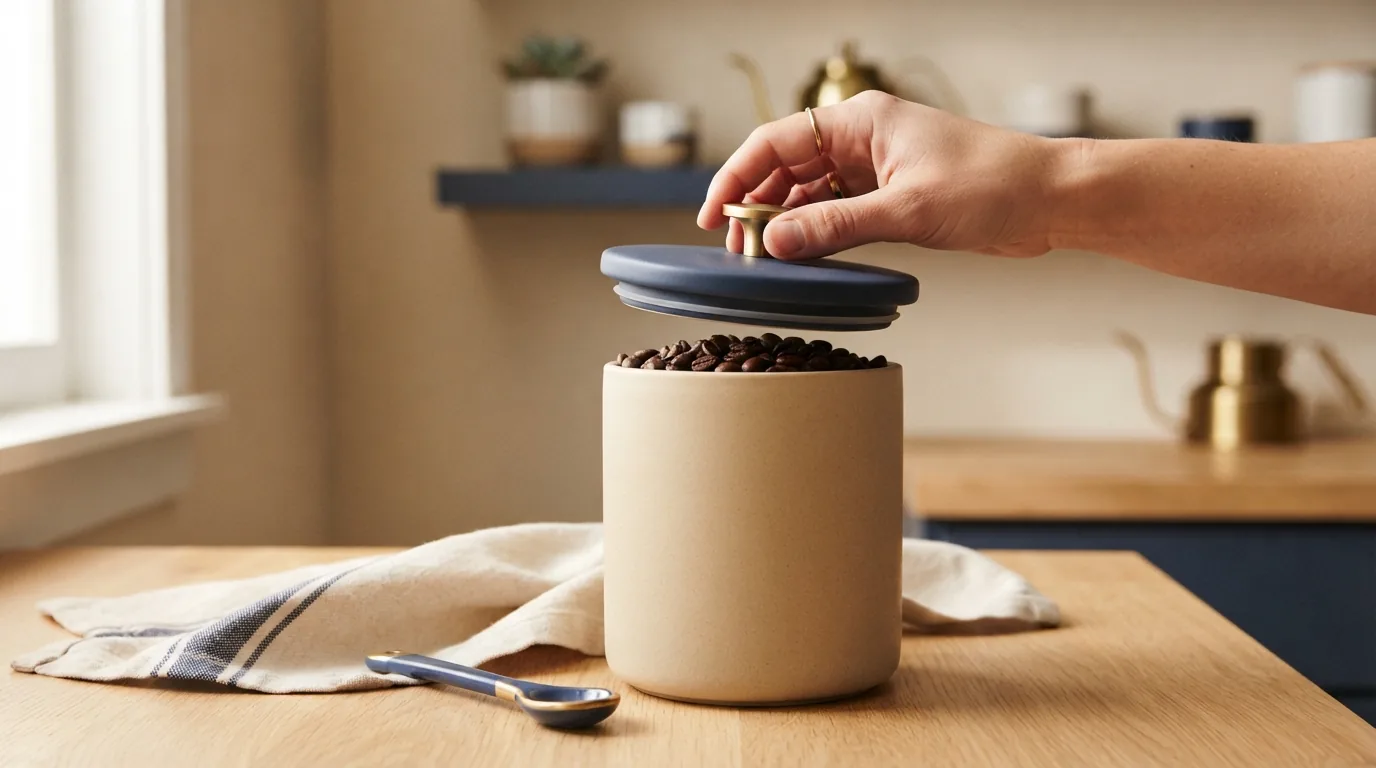
Freshly roasted beans aren't actually at their best the moment they finish, they need a rest period first. Roasting releases trapped carbon dioxide inside the bean, a process called degassing, and beans brewed within the first day or two of roasting can taste sharp or unevenly extracted as that gas escapes unevenly during brewing. Most home roasters find a rest of 24 to 48 hours in a loosely sealed container, so gas can escape without much oxygen getting in, produces a noticeably more balanced cup than one brewed straight out of the roaster.