Drip coffee has quietly gone through its own specialty-grade upgrade over the past decade, largely thanks to a certification most casual buyers have never heard of. A genuinely good drip machine isn't just about convenience anymore. It's about a brewer that holds the right water temperature for the entire cycle, which turns out to be the single biggest thing separating a bright, balanced pot from a flat, underwhelming one.
The Certification That Actually Matters
The Specialty Coffee Association runs a Certified Home Brewer program that tests machines against its Golden Cup Standard: water held between roughly 195°F and 205°F for the full brew cycle, with a brew time proportional to batch size, generally in the 4-to-8-minute range for a full carafe. Machines that pass earn SCA certification, and it's a genuinely useful shortcut when comparing brewers, since a machine that can't sustain that temperature range under-extracts coffee no matter how good the beans are.
Best Drip Coffee Makers 2026: The Rankings
1. Technivorm Moccamaster KBGV Select ($369.00): Best Overall
Hand-assembled in the Netherlands and SCA certified, the Moccamaster is the reference point the rest of this category gets measured against. A copper boiler element brings water to temperature quickly and holds it there through the entire brew, and the company's reputation for durability, some units run for a decade or more of daily use, is a genuinely rare thing in kitchen appliances at any price.
Technivorm Moccamaster KBGV Select
SCA certified, copper boiler element, hand-assembled in the Netherlands, $369.00
2. Bonavita BV1900TS ($199.99): Best Value
The Bonavita is also SCA certified and brews to the same Golden Cup temperature standard, at less than half the Moccamaster's price. It skips the design flourishes and the decades-long reputation, but the actual water-temperature performance that determines cup quality is genuinely comparable, which makes it the clear pick for anyone who wants certified brewing without the flagship price tag.
Bonavita BV1900TS 8-Cup Coffee Maker
SCA certified, stainless steel conical shower head, flat-bottom filter basket, $199.99
“A drip machine that can't hold temperature isn't a lesser version of a good one. It's under-extracting every single pot, regardless of how good the beans are.”
Showerhead Design: Why It's Not Just About Looks
Beyond temperature, how evenly water disperses over the grounds changes extraction consistency across the bed of coffee. A wide, evenly-perforated showerhead, the kind both machines above use, saturates the grounds more uniformly than a single-stream spout common on cheaper machines, which tend to channel water through one section of the grounds while leaving the rest under-extracted. It's a small mechanical detail with an outsized effect on the finished cup.
Flat-Bottom vs Cone Filters
Both machines above use flat-bottom filter baskets rather than cone-shaped ones, which changes the brew bed's depth and, in turn, how long water stays in contact with the grounds. Flat-bottom baskets generally produce a fuller-bodied cup, while cone filters, closer to a pour-over geometry, tend toward a brighter, cleaner result. Neither is objectively better, it's a matter of preference, but it's worth knowing which style you're buying into.
Thermal Carafe vs Glass Carafe
Both machines above are available in glass-carafe versions, which sit on a warming plate to stay hot after brewing, and that warming plate is worth understanding before you buy. Leaving coffee on continuous heat for an hour or more slowly cooks it, flattening flavor and pushing it toward a burnt, bitter edge the longer it sits. A thermal carafe version, sold for both the Moccamaster and the Bonavita, avoids that problem entirely by insulating the coffee instead of reheating it, holding a stable serving temperature for hours without ever touching a hot plate. If you rarely finish a pot within the first twenty minutes of brewing, the thermal version is worth the small added cost.
Grind and Ratio Still Matter
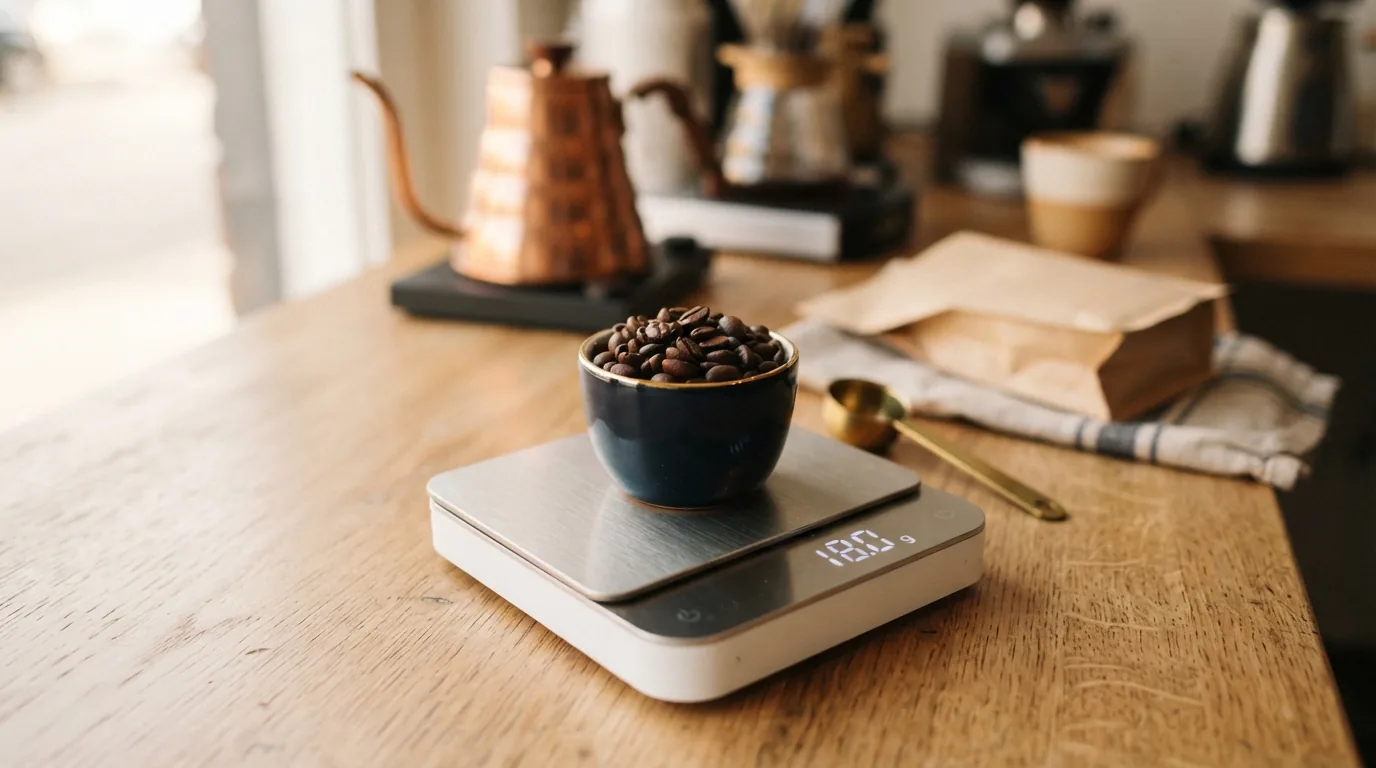
Even a certified brewer can't fix an overly fine or overly coarse grind, or a badly measured ratio. A medium grind, similar in texture to coarse sand, and a ratio around 1 gram of coffee per 16 to 17 grams of water is a solid starting point for either machine above. Our best coffee grinders 2026 guide covers grinders that can hit a consistent drip grind, and our coffee scales guide covers the tool that makes hitting that ratio repeatable instead of a guess.
Water Quality Changes the Result, Too
Since drip coffee is roughly 98% water, what's actually in your tap water shapes the cup as much as the beans do. Heavily chlorinated or very hard water can dull flavor or leave mineral buildup inside a machine over time. Our water quality guide covers what to filter for and why, a detail that matters just as much for a $369 SCA-certified brewer as it does for the cheapest machine on a shelf.
Descaling Keeps Either Machine Performing Like New
Mineral buildup from hard water gradually narrows the internal tubing both machines rely on to hold temperature and flow rate consistent, which is why a regular descaling routine matters even for a certified brewer. A simple monthly-to-quarterly cycle with a food-safe descaling solution, running it through an empty brew cycle and then flushing with plain water, keeps either machine performing at its rated temperature range for years rather than slowly drifting out of spec the way an unmaintained machine does.