"Just pull a better shot" is the least useful advice in espresso, because it doesn't tell you what to change. A shot that tastes sour, hollow, or harshly bitter is the downstream result of a small number of measurable variables interacting, grind size, dose, water temperature, and time, and understanding what's chemically happening during extraction is the fastest way to stop guessing and start correcting.
Extraction is, at its core, a solubility problem. Hot water passing through ground coffee dissolves compounds out of the grounds in a predictable order: acids and lighter aromatic compounds dissolve first, followed by sugars, and finally the heavier, bitter compounds. Pull a shot too fast and you stop before enough sugar has dissolved, leaving an acidic, sour cup. Pull it too slow and you over-extract into the bitter compounds, producing a harsh, astringent one. Every adjustment you make to grind, dose or temperature is really just an adjustment to where you land on that dissolution curve.
Grind Size and Surface Area
Grind size controls extraction rate by controlling surface area. Finer grounds expose more surface area to the water passing through them, which increases resistance and slows the shot. Extracting more per second of contact time. Coarser grounds do the opposite: less surface area, less resistance, faster flow, less extraction per second.
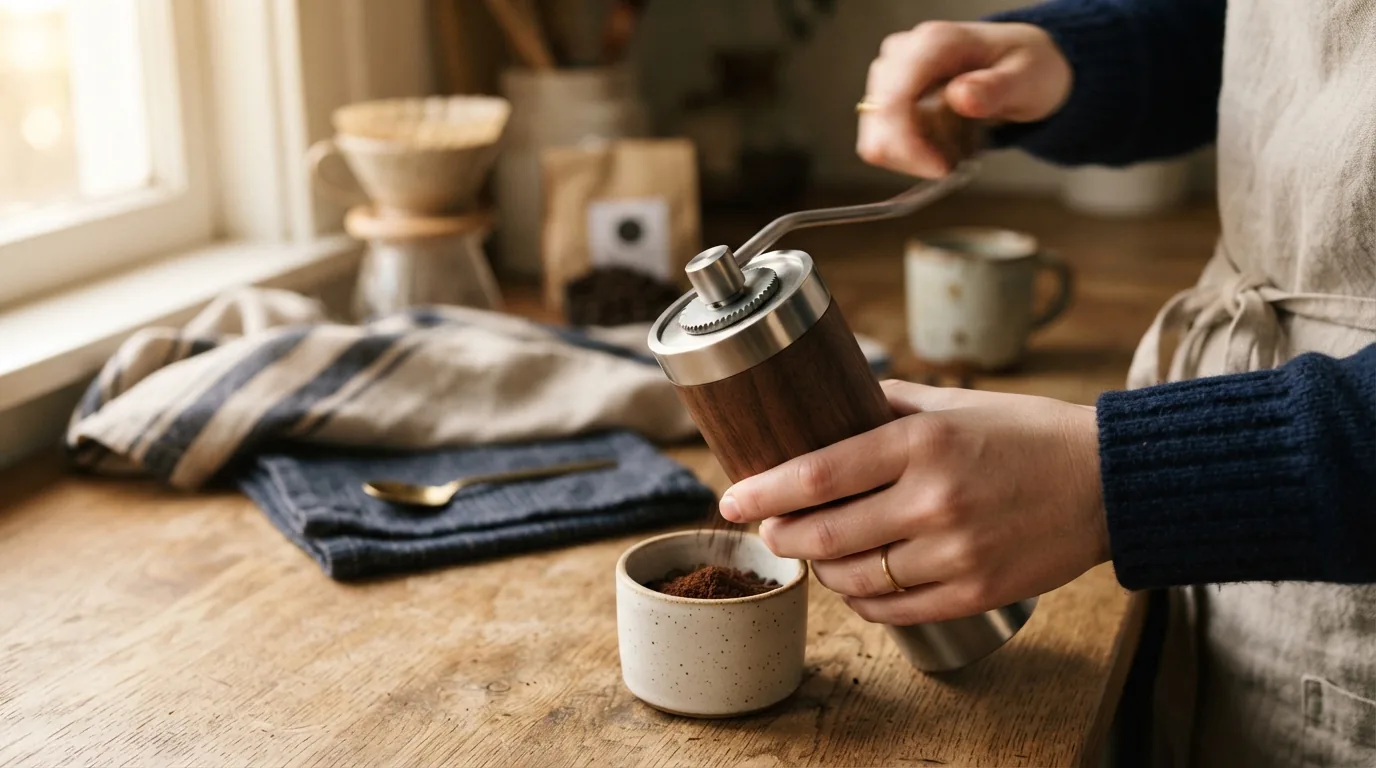
But grind size alone isn't the whole story. Grind consistency matters just as much, arguably more. A grinder that produces a wide range of particle sizes in the same dose creates a puck with both over-extracted fines and under-extracted boulders sitting side by side. The water finds the path of least resistance through the coarser particles, channeling through them rather than flowing evenly across the whole puck, which is why an inconsistent grind can taste simultaneously sour and bitter in the same sip. This is the real argument for a quality burr grinder over a blade grinder or a cheap conical unit: it isn't about convenience, it's about eliminating the particle-size variance that makes a shot fundamentally uneven no matter how carefully you dial in everything else.
Niche Zero
Single-dose conical burr with near-zero retention and exceptional particle consistency, $629
Water Temperature and Chemistry
The generally accepted extraction range for espresso sits between roughly 195–205°F (90–96°C). Below that range, extraction slows and shots tend to taste sour and underdeveloped, since the water lacks the energy to pull sugars and heavier compounds out of the grounds efficiently. Above it, extraction accelerates into bitterness and can scorch delicate aromatic compounds entirely, producing a burnt, flat cup regardless of how good the beans were.
Water chemistry matters just as much as temperature, and it's the variable home baristas most often ignore. Water with very low mineral content extracts poorly because there's nothing for flavor compounds to bind to as they dissolve; water that's too hard can over-extract and impart a chalky, mineral taste of its own. See our water quality guide for what to actually filter for. This is also why some machines seem to produce inconsistent shots despite a stable temperature setting. If the machine's boiler can't hold that temperature steady under the thermal demand of a shot, the water hitting the puck fluctuates by several degrees over the course of extraction, and your grind and dose adjustments are fighting a moving target.
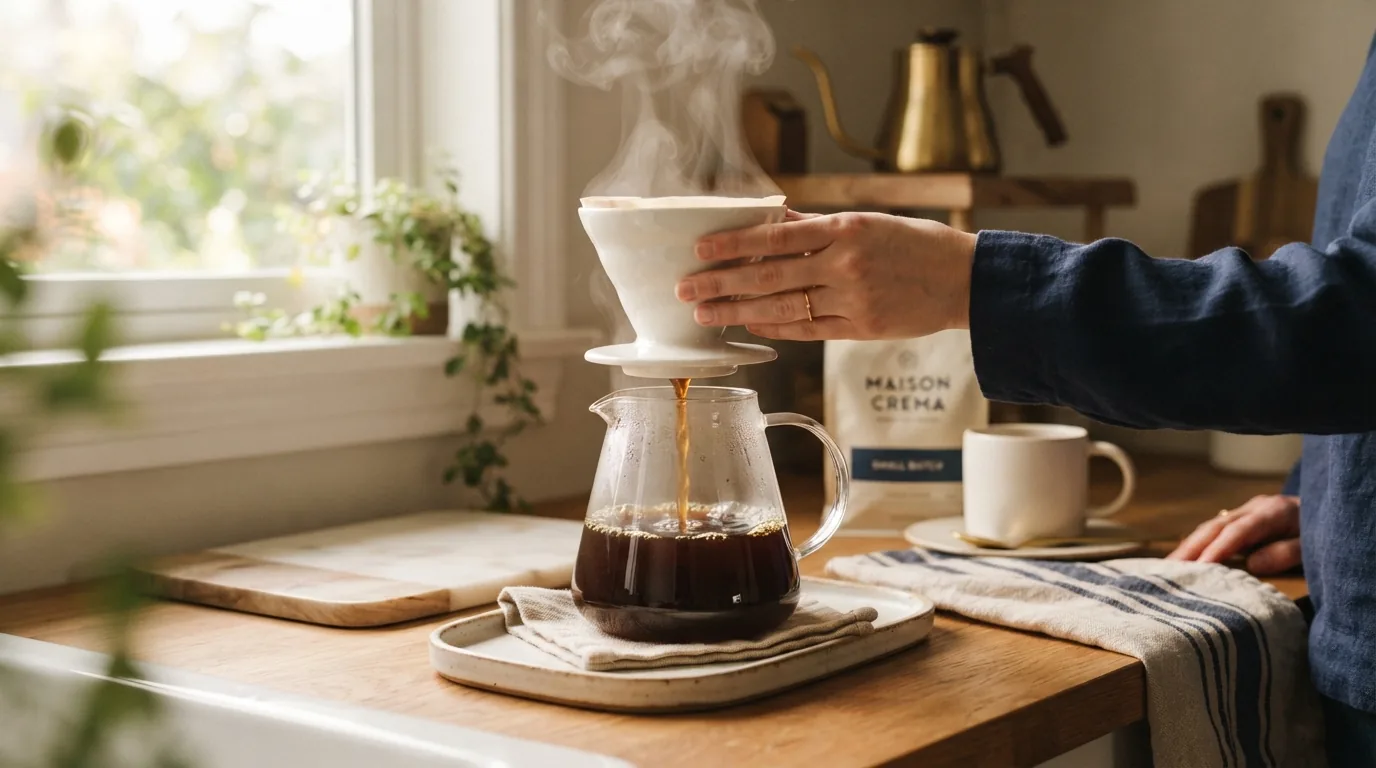
Fellow Stagg EKG Kettle
Variable-temperature gooseneck kettle for consistent, repeatable water temperature, $195
“Shot time without a scale is a guess dressed up as a measurement. Weigh your dose, weigh your yield, and time becomes a diagnostic instead of a target.”
Dose, Tamp, and Ratio
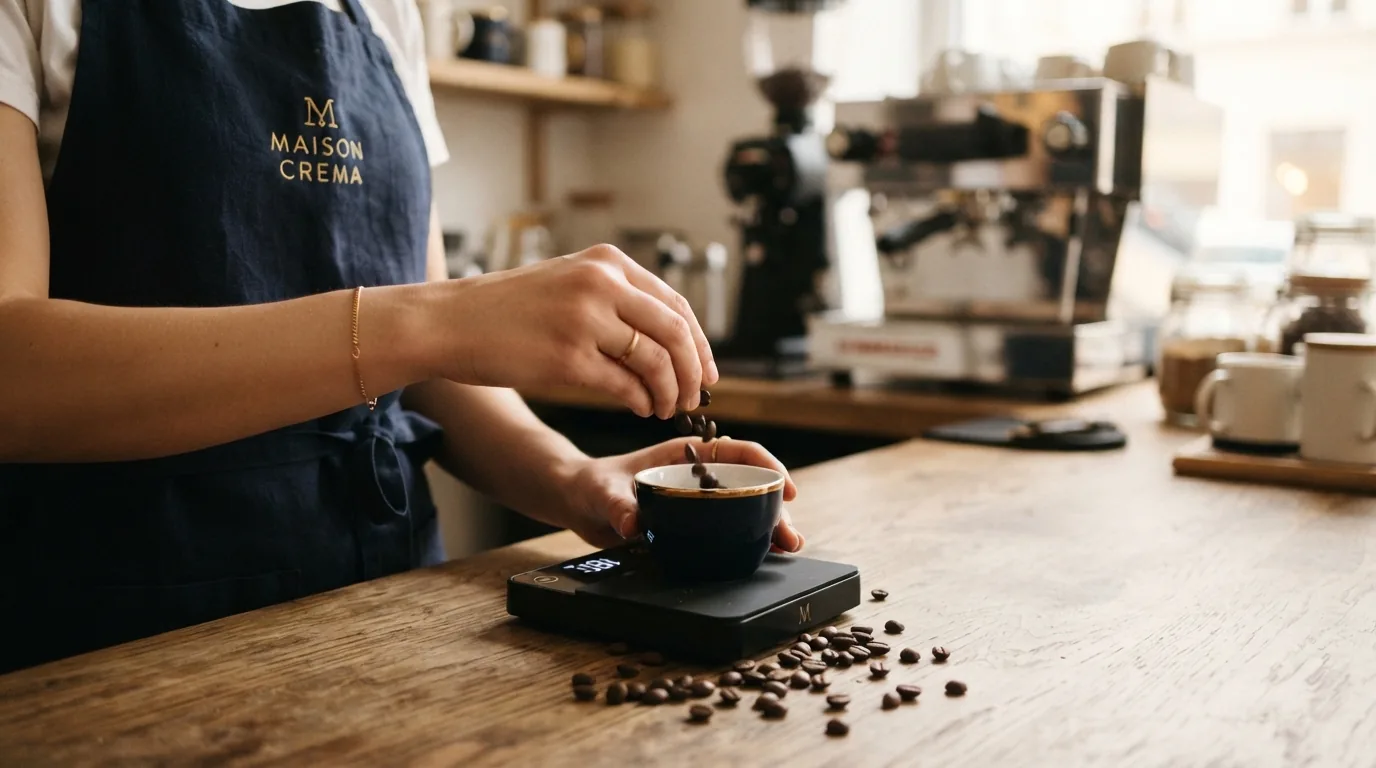
Consistent dose, the weight of ground coffee in the portafilter, matters more than tamp pressure. A good scale that reads the same dose to within a tenth of a gram, shot after shot, removes an entire axis of variability before you've even touched the tamper. Tamp pressure, by contrast, matters mostly in that it should be consistent and firm enough to create an even, level bed; beyond that baseline, additional pressure has a smaller effect on extraction than most home baristas assume.
The most common brew ratio for espresso is roughly 1:2. One gram of ground coffee to two grams of liquid espresso in the cup, though ratios anywhere from 1:1.5 to 1:2.5 are common depending on roast and taste preference. Distribution tools, which level and break up clumps in the grounds before tamping, reduce channeling by ensuring water meets a uniformly dense bed rather than pockets of varying resistance.
Normcore Bottomless Portafilter (54mm, fits Breville)
Naked portafilter to diagnose channeling in real time, $59.99
Time and Yield
Shot time is one of the most misused numbers in home espresso. A 28-second shot tells you almost nothing on its own. It only becomes useful information when paired with the dose that went in and the yield that came out. Two shots can both run 28 seconds and taste completely different if one yielded 36 grams and the other yielded 44. Time is a diagnostic you check against a target ratio, not a target in itself.
To dial in a genuinely new bag of beans, weigh both the dose and the yield on every test shot, and treat the stopwatch as a secondary check rather than the primary one. If the ratio and taste are right but the shot ran unusually fast or slow, that's your signal to grind finer or coarser next time, not a sign to change anything else.
Putting It Together: A Simple Dial-In Process
- Start with the manufacturer's suggested dose for your portafilter basket, usually printed on the basket itself or in the machine's manual.
- Set a target ratio, typically 1:2, and calculate your target yield from the dose.
- Pull a shot at a medium-fine grind setting and weigh the yield as you go, stopping the shot at your target weight rather than at a fixed time.
- Taste it. Sour or thin means grind finer next time; bitter or harsh means grind coarser.
- Adjust grind size only, one step at a time, and repeat until the shot tastes balanced at your target ratio.
- Note the settings once you land on a good shot, grind size, dose and yield, so you can return to them the next time you open a similar bag.
None of this requires expensive equipment to get right, but it does require treating each variable as something you can isolate and test, rather than adjusting three things at once and hoping. For a deeper look at how grind consistency interacts with machine choice, visit our full craft & science collection, and see our grinder reviews if inconsistent grind is the variable holding your shots back.