Under $500 is where home espresso stops being a compromise and starts being a real hobby, but only if you spend the money in the right proportion. The machines below all genuinely pull good espresso. The mistake almost everyone makes at this budget is putting all of it into the machine and none into the grinder, which is the single decision that does most to determine what ends up in the cup.
Three machines cover this tier properly, and they're aimed at genuinely different buyers: someone who wants it to just work, someone who wants to modify and learn, and someone who wants the lowest honest entry price.
Best Espresso Machines Under $500 2026: The Rankings
1. Breville Bambino Plus ($499.95): Best Overall
The Bambino Plus is the most capable machine you can buy at this price and the most convenient, which is an unusual combination. Its ThermoJet heating system reaches brewing temperature in roughly three seconds rather than the several minutes a traditional boiler takes, it includes PID temperature control for shot-to-shot consistency, and its automatic milk texturing steams to a set temperature and foam level without technique. It has no grinder, which at this budget is a feature rather than an omission: it leaves room to buy a real one.
Breville Bambino Plus
ThermoJet heat-up in about 3 seconds, PID temperature control, automatic milk texturing, compact footprint, $499.95
2. Gaggia Classic Pro (around $449): Best for Tinkerers and Upgraders
The Classic Pro is the machine people keep for a decade, and the reason is its 58mm commercial-standard portafilter. That single spec puts it inside the largest accessory ecosystem in espresso: bottomless portafilters, precision baskets, quality tampers and replacement gaskets are all widely available and cheap, and a deep modification community exists around the machine. It asks more of you than the Bambino Plus, with a manual steam wand and a longer warm-up, and it rewards that with a higher ceiling and genuine longevity.
Gaggia Classic Pro Espresso Machine
58mm commercial-standard portafilter, manual steam wand, a deep accessory and modification ecosystem, around $449
“At this budget the grinder decides more than the machine does. A $300 machine with a real burr grinder beats a $500 machine fed pre-ground coffee, every single morning.”
3. De'Longhi Dedica EC685M (around $249): Best Budget
The Dedica's argument is width: it's one of the narrowest real espresso machines sold, which makes it the answer for a kitchen where counter space is the binding constraint rather than budget. It's a pump machine with a stainless body and an integrated frothing attachment, and at around $249 it leaves meaningful room in a $500 total budget for a grinder, which is exactly the right way to spend at this level.
De'Longhi Dedica EC685M Espresso Machine
One of the narrowest real espresso machines sold, stainless steel body, integrated frothing attachment, around $249
The Budget Split That Actually Works
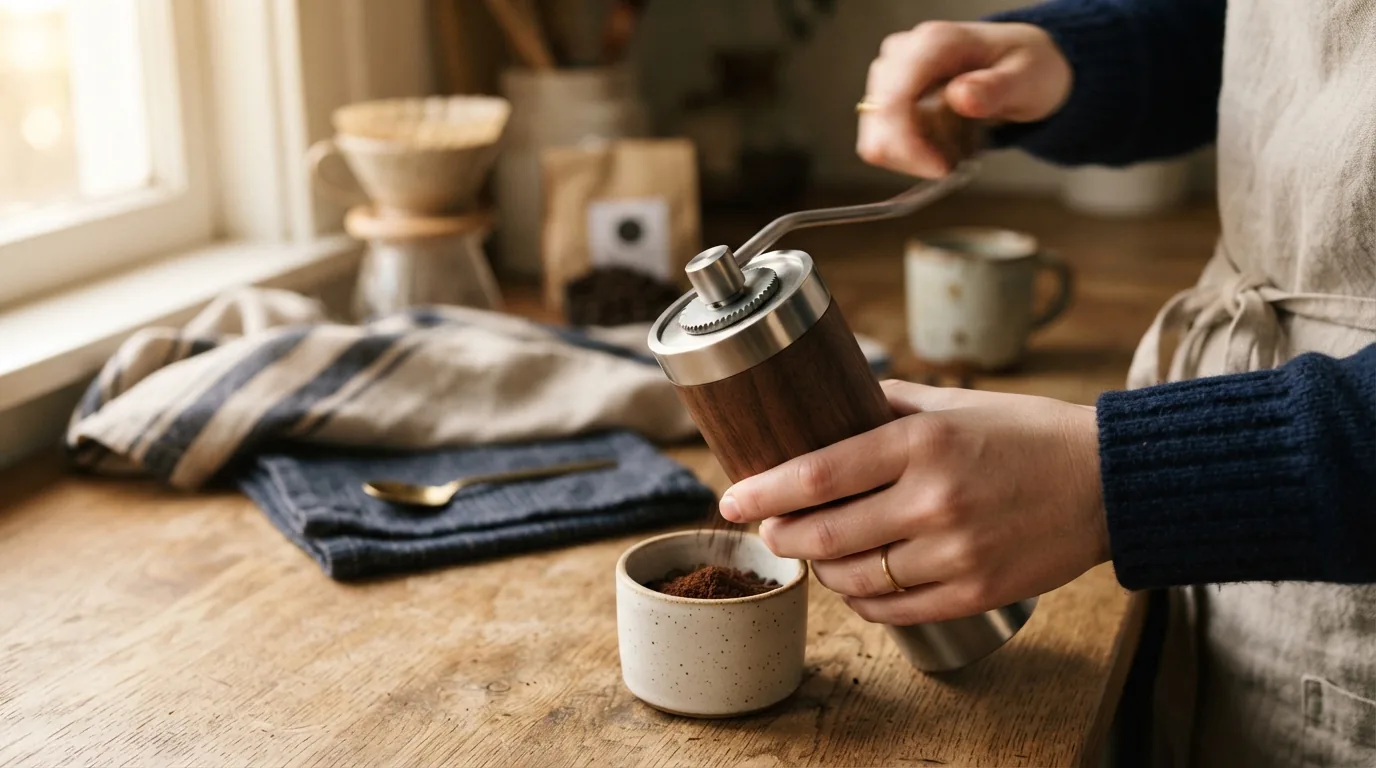
If your total is $500, the best espresso in that budget almost never comes from a $500 machine. A $250 machine paired with a $250 burr grinder will out-perform a $500 machine fed supermarket pre-ground coffee on every measure that matters, because grind consistency and freshness determine extraction more than any feature on a machine's spec sheet. Ground coffee also stales within days rather than weeks once its surface area is exposed. Our best coffee grinders guide covers options that fit alongside every machine here.
Pressurized vs Non-Pressurized Baskets
Most machines at this price ship with pressurized baskets, which use a restricted outlet to generate artificial back-pressure and produce a crema-like foam almost regardless of grind quality. They're genuinely useful while you're learning or if you're stuck with pre-ground coffee, and they're a hard ceiling once you have a real grinder, because they mask exactly the variables you'd want to start adjusting. Switching to a non-pressurized basket is usually the first upgrade worth making, and it costs very little.
What You're Actually Giving Up Below $500
Mostly two things: thermal stability under back-to-back shots, and steam power. A single small boiler or thermoblock needs recovery time between brewing and steaming, so making four milk drinks in a row is slower and less consistent than on a machine with a heat exchanger or dual boiler. That's a real limit for entertaining and almost irrelevant for one or two drinks a morning. Our how much to spend on an espresso machine guide covers exactly what each tier above this one adds.
Where to Spend the Next $100
Once the machine and grinder are settled, the highest-return additions are unglamorous: a scale that reads to 0.1g so your dose and yield stop drifting, and a proper tamper if your machine's included one is plastic. Both cost far less than a machine upgrade and remove more inconsistency than one. Our best coffee scales guide and our science of espresso extraction guide cover how those two pieces fit into an actual dial-in routine.