Coffee beans start losing flavor the moment they're roasted, and how you store them at home has a bigger effect on how fast that happens than almost any other decision you'll make after buying a bag. Understanding what actually stales coffee, and what doesn't, is the difference between beans that still taste vibrant three weeks in and beans that go flat and dull after one.
The Four Enemies of Fresh Coffee
Coffee staling comes down to four environmental factors, and every good storage decision is really just minimizing exposure to these. Oxygen reacts with the aromatic oils in roasted beans, the same oxidation process that turns cut fruit brown, gradually dulling flavor. Light, especially direct sunlight, accelerates that same oxidative breakdown and degrades flavor compounds directly. Moisture both dilutes flavor and creates conditions for mold if beans absorb enough of it. And heat speeds up every one of the other three reactions, which is why a spot near a stove or a sunny windowsill is one of the worst places to keep a bag of beans, however good it looks in the kitchen.
Why the Original Bag Isn't Always Ideal
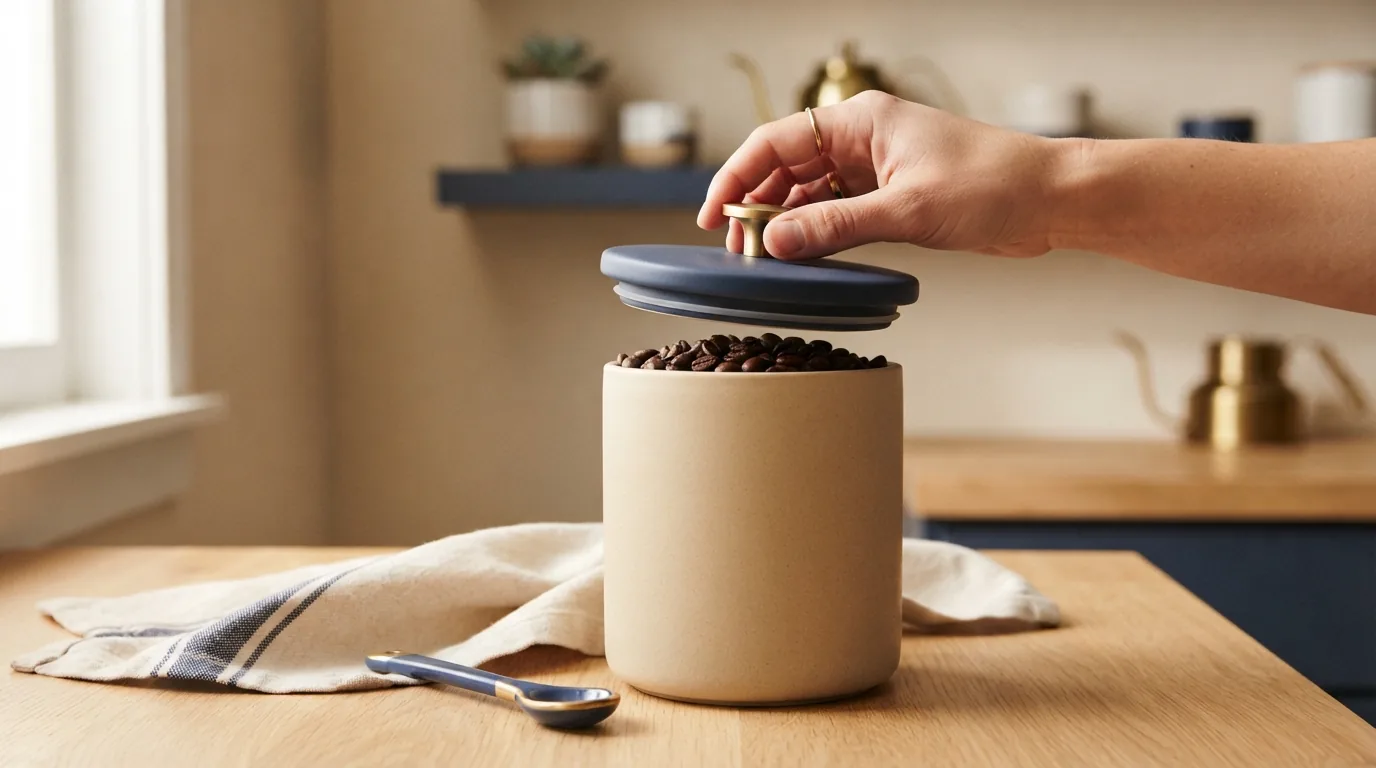
Most specialty coffee ships in a bag with a one-way degassing valve, which is a genuinely good short-term storage solution. It lets CO2 escape without letting oxygen back in, as long as the bag stays sealed. The problem is what happens after you open it: every time the bag is opened and re-closed, a fresh dose of oxygen gets trapped inside, and most consumer bag closures (folds, clips, or a loosely rolled top) don't reseal nearly as well as the original factory seal. For beans you're working through daily, transferring them to a dedicated airtight, opaque canister after opening protects them far better than repeatedly reopening the original bag.
Airscape Stainless Steel Coffee Canister, Medium
Patented inner plunger lid pushes out excess air on close, opaque body blocks light, $44.00
Should You Freeze Beans?
This is genuinely debated among coffee enthusiasts, and the honest answer is: it depends on how you do it. Freezing whole beans in a truly airtight container can meaningfully slow staling for beans you won't finish within the next two to three weeks. The cold dramatically slows the same oxidative reactions that cause staling at room temperature. The real risk isn't the freezing itself, it's condensation: repeatedly pulling a container in and out of the freezer introduces moisture each time, which can damage beans over multiple freeze-thaw cycles. The practical fix is portioning beans into smaller airtight amounts before freezing, a week's worth at a time, say, so you're only ever thawing what you'll use immediately, rather than repeatedly exposing your entire supply to condensation. Freezing already-ground coffee is a different story and worth avoiding; ground coffee has far more surface area exposed to both moisture and oxygen, and it stales too quickly for freezing to meaningfully help.
“A bag that says 'best by' a year from now isn't lying, exactly. It's just answering a food-safety question, not a flavor question. Roast date is the number that actually matters.”
How Long Do Beans Actually Stay Fresh?
Roast date, not the printed best-by date, is what determines flavor freshness. Most specialty coffee tastes best in roughly the 4-to-14-day window after roasting, once initial degassing has settled, and stays genuinely good for another couple of weeks past that before noticeably flattening out. Beans are still safe to drink well beyond that window, staling is a flavor problem, not a safety one, but the bright, distinct character that made you buy a specific origin in the first place fades steadily the longer beans sit. For more on how roast date and freshness interact, see our home coffee roasting guide, which covers the full freshness curve from roast to cup in more depth.
A Simple Storage Routine
- Buy only what you'll use in two to three weeks rather than stocking up on a large bag that will sit for months.
- Keep beans in an opaque, airtight canister once opened, away from direct sunlight and away from heat sources like a stove or oven.
- Don't store beans in the refrigerator. The fridge exposes beans to moisture and food odors every time the door opens, which is worse than simply keeping them at stable room temperature.
- Only freeze what you can't finish in two to three weeks, and portion it into smaller airtight amounts before freezing to avoid repeated condensation exposure.
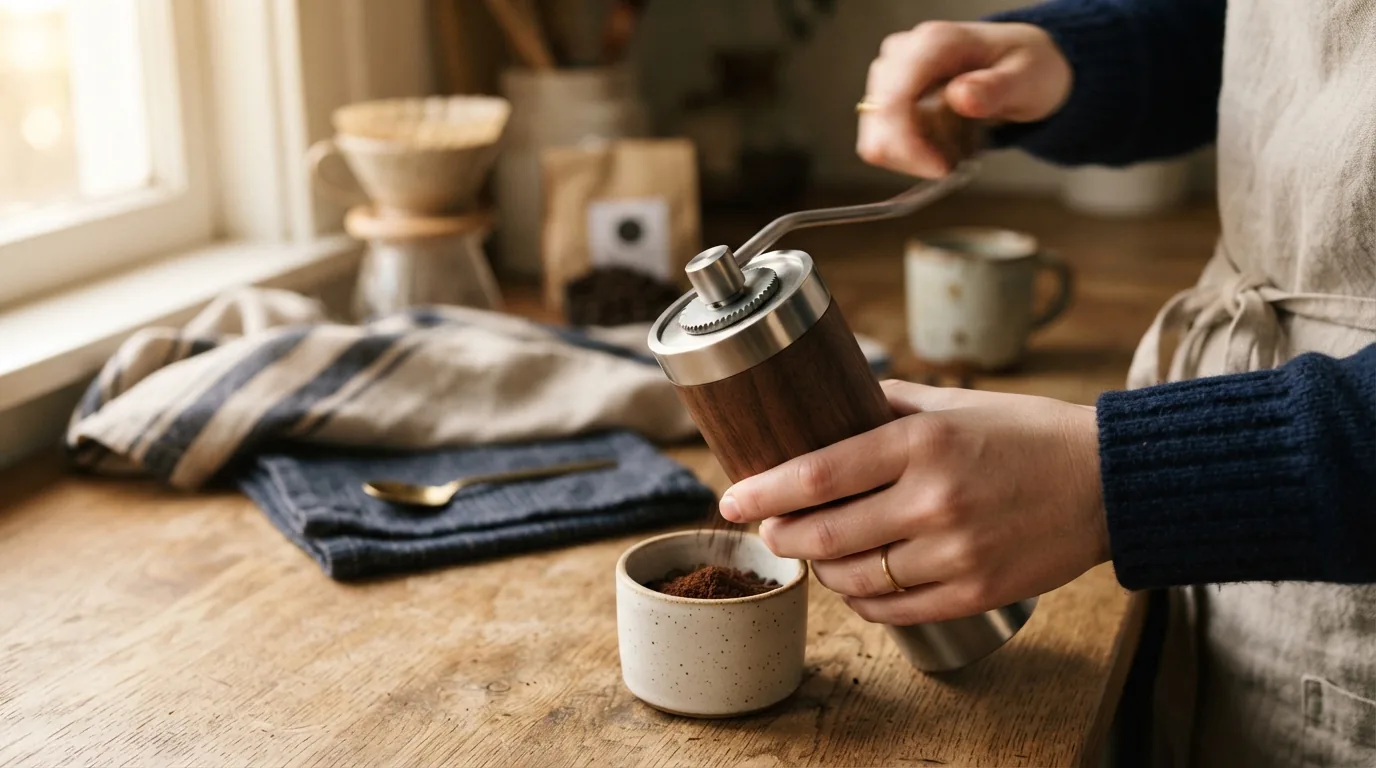
- Grind only what you need for each brew, rather than grinding a large batch ahead of time. Ground coffee stales dramatically faster than whole beans, since grinding exposes far more surface area to oxygen.
None of this requires expensive equipment. A good airtight canister and buying in smaller, more frequent quantities covers most of the benefit. For the grinder side of freshness, see our best coffee grinders 2026 guide, and our science of espresso extraction guide for how staled versus fresh beans actually behave differently during brewing.
How to Tell If Your Beans Have Gone Stale
You don't need special equipment to check. Your nose and a cup of hot water are enough. Fresh beans have a noticeable, distinct aroma the moment a bag is opened; stale beans smell faint or flat by comparison, even before you brew them. In the cup, staling shows up as a loss of brightness and complexity rather than an obviously "bad" taste. A stale coffee usually isn't unpleasant so much as dull, muted, and one-dimensional next to how it tasted a few weeks earlier. If a cup that used to taste vibrant now just tastes like generic brown coffee, staling is almost always the reason, not a change in the beans themselves.