The home coffee bar has become one of the most visible trends in the coffee world over the past couple of years, entire feeds dedicated to tiered trays, open shelving and matching canisters. Underneath the styling, though, a genuinely good coffee station is a functional design problem first and an aesthetic one second. Get the layout right and the pretty version tends to follow naturally. Get it backwards and you end up with a beautiful shelf that's a pain to actually use every morning.
Start With the Water Source, Not the Aesthetic
The single biggest factor in whether a coffee station stays tidy is how far it sits from a water source. A setup more than a few steps from a sink means filling a kettle or reservoir becomes a small chore instead of a non-event, and small chores are exactly what get skipped on busy mornings, leading to instant coffee or a skipped cup instead. If a station can't realistically sit near your kitchen sink, a dedicated water filter pitcher kept on the station itself removes most of that friction, so refilling never requires leaving the spot.
The Three Working Zones
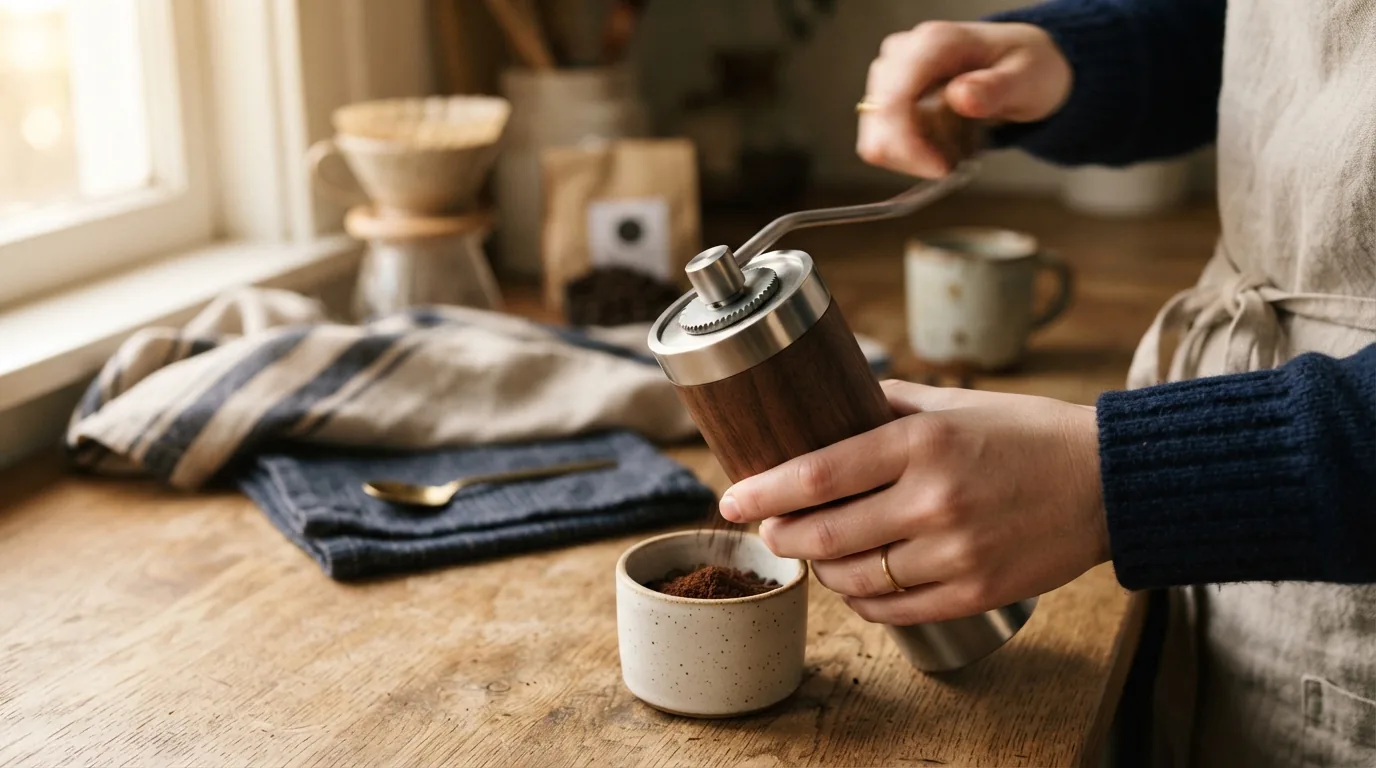
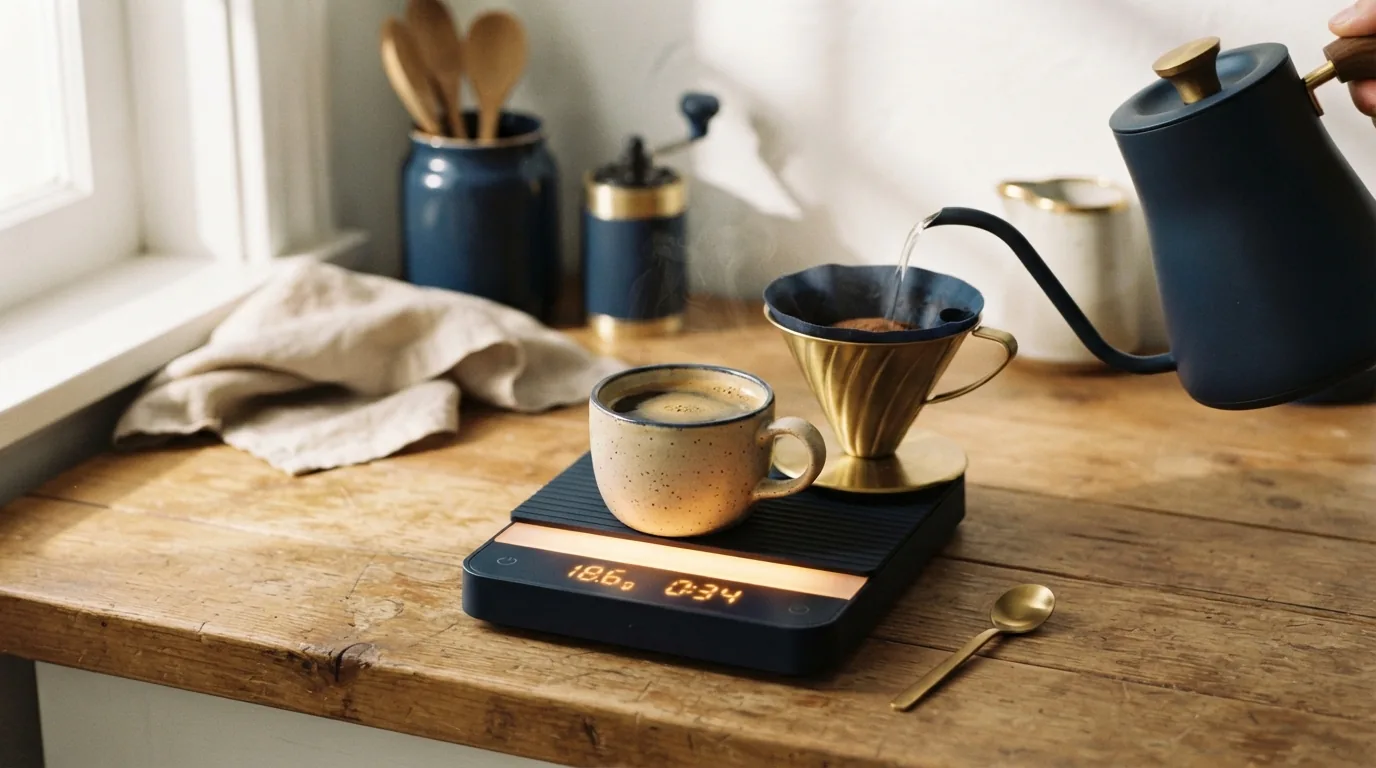
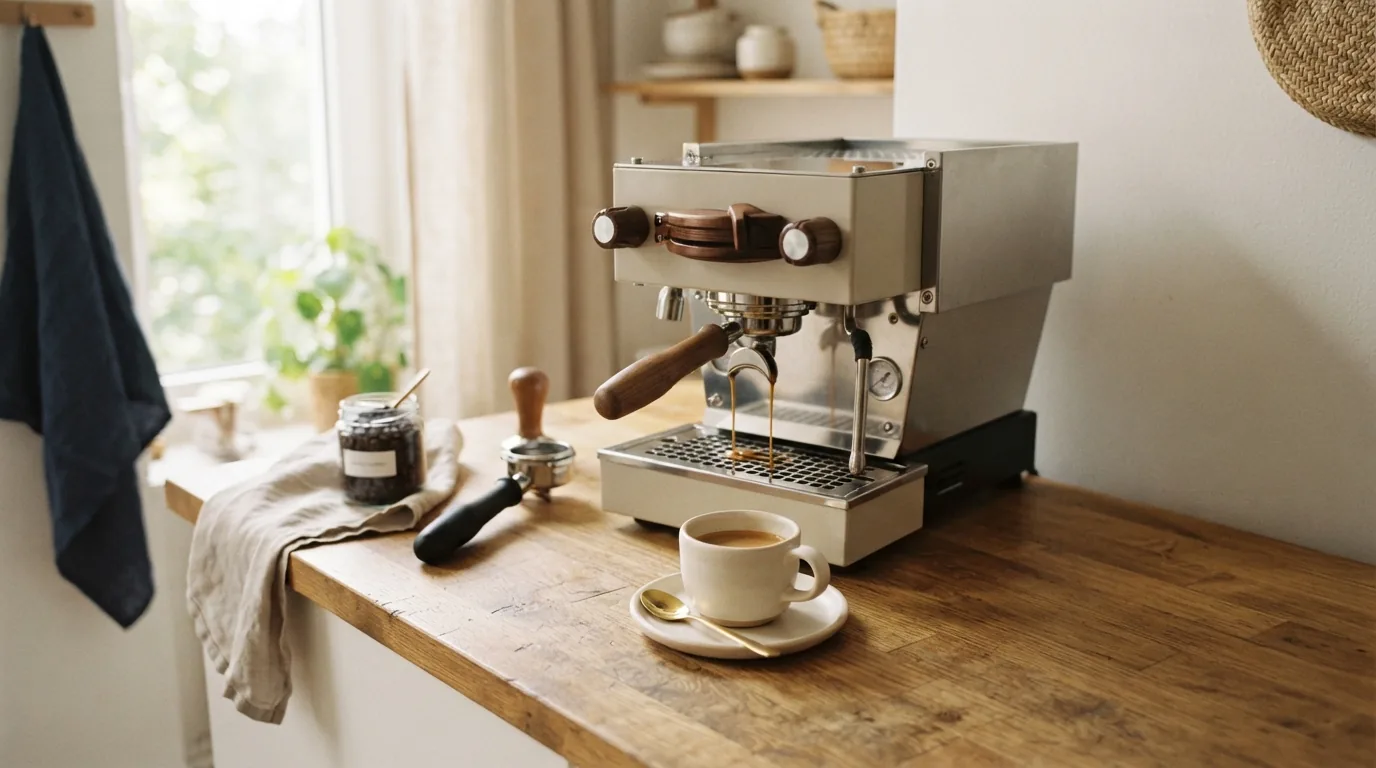
A coffee station that actually gets used every day is really three small zones, not one shelf of gear. A grinding zone for beans and the grinder itself, ideally with a small tray to catch stray grounds. A brewing zone for the machine, kettle or pour-over gear, positioned near an outlet if anything is electric. And a cleanup zone, even a small one, for a rag, a knock box or a spent-grounds container, so mess gets handled in place instead of trailing across the counter. Separating these three functions, even within a single small shelf, is what keeps a station from turning into a pile of gear by the second week.
Mind Reader Coffee Station Organizer with Mug Rack
Tiered wood-and-metal rack with a built-in mug tree and canister shelf, $34.99
Vertical Storage Keeps Beans Fresher, Too
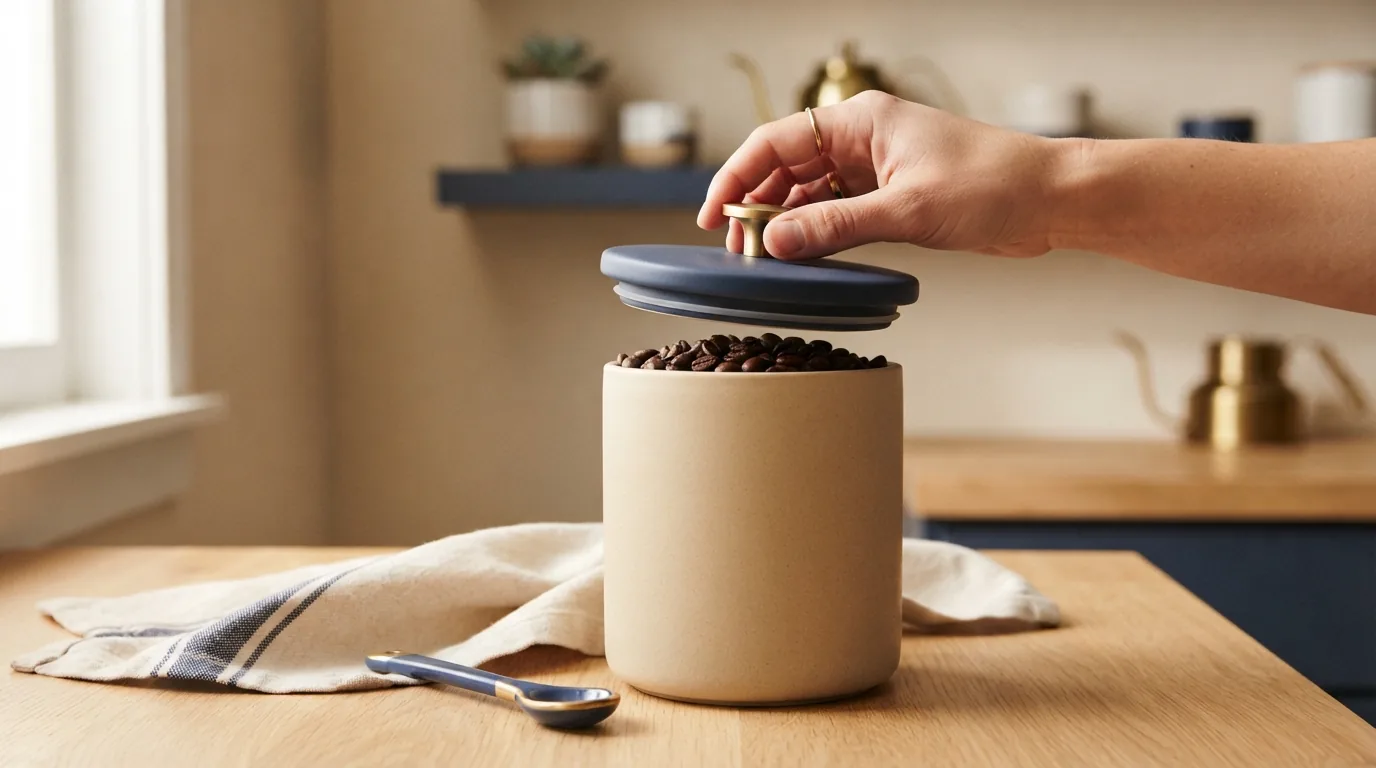
A tiered organizer isn't just about looking tidy. Keeping bean canisters, filters and cups on labeled, separate levels means beans spend less time sitting open on a countertop while you dig around for a scoop. For the actual mechanics of what keeps beans fresh once they're in a canister, our coffee bean storage guide covers oxygen, light and heat in more depth. In short: an opaque, airtight canister belongs on the station itself, not the original bag shoved in a cabinet.
“A coffee station doesn't need to be big to work. It needs the three things you touch every morning within arm's reach of each other.”
Cord and Clutter Management
Electric kettles, grinders and machines all mean cords, and a tangle of them is the fastest way for a good-looking station to start feeling chaotic. A simple adhesive cord clip or a small cable box keeps cords running flat along the back of the counter rather than looping across the front. It's a five-minute fix that makes a bigger visual difference than most people expect, and it also keeps cords out of the way of a knock box or a full kettle being lifted.
A Rolling Cart for Small Kitchens
If counter space is genuinely limited, a small bar cart solves the problem differently, by adding a station rather than carving space out of an existing counter. A two- or three-tier cart on wheels can be rolled next to an outlet for brewing and tucked against a wall the rest of the day, which makes it a realistic option for apartments and smaller kitchens where a fixed station simply isn't possible.
3-Tier Rolling Bar Cart
Wheeled metal-and-wood cart, doubles as a coffee station or bar cart, $79.99
Lighting Matters More Than You'd Think
A station tucked into a dim corner of the kitchen gets used less than one with decent light, for the simple reason that it's harder to see grind settings, water lines and dose weights clearly. A small battery or plug-in puck light under a cabinet, or even relocating the station a foot closer to a window, makes the daily routine noticeably easier without any real cost.
Comparison: Fixed Station vs Rolling Cart
| Setup | Best For | Footprint | Approx. Cost |
|---|---|---|---|
| Fixed shelf organizer | Kitchens with spare counter space near an outlet and water | Small, stationary | $25 to $50 |
| Rolling bar cart | Apartments and small kitchens needing flexible space | Movable, slightly larger | $60 to $150 |
Renting? A No-Drill Setup Still Works
None of the above requires a permanent fixture or drilled shelving. A freestanding tiered organizer sits on an existing counter with zero installation, and adhesive hooks rated for kitchen use can hold a towel, a small utensil or a scale strap without leaving marks on cabinets when it's time to move. A rolling cart solves the same problem even more completely, since the entire station packs up and relocates in one trip if you move apartments. The three-zone principle still applies either way. It's really about arrangement, not about how permanent the fixtures are.
Cleaning Habits That Keep It From Sliding Back Into Clutter
The gap between an aesthetic coffee station and a cluttered counter is usually a thirty-second daily habit, not a bigger cleaning project. Wiping down the grind zone after each use, emptying a knock box before it's overflowing, and returning the scoop to the same spot every time are what actually keep a station photo-ready without ever scheduling a deep clean for it. If you're building out the actual gear that lives on the station, our best coffee grinders 2026 and smart coffee gadgets guides cover the equipment side, while this guide is really about the layout that keeps whatever you own easy to use every single day.