Decaf carries an outdated reputation, flat, bitter, an afterthought brewed for whoever couldn't drink real coffee. That reputation is mostly a leftover from decaffeination methods that dominated decades ago. Modern decaf, made through gentler, more selective processes, can taste remarkably close to its caffeinated counterpart, and understanding how it's actually made explains why some decaf is genuinely excellent while other bags still taste like the old stereotype.
How Decaffeination Actually Works
All decaffeination happens on green, unroasted beans, before roasting, and every method is doing the same basic job: pulling caffeine out of the bean while disturbing as few of the flavor compounds as possible. The coffee industry's long-standing benchmark for calling a coffee "decaffeinated," though it isn't a specific figure written into FDA regulation, is at least 97% of the original caffeine removed, which is why even a "decaf" cup still carries a small trace amount, typically a few milligrams per cup rather than the roughly 63mg in a standard shot of espresso. For the full caffeine breakdown across drink types, see our caffeine in espresso vs coffee guide.
The Swiss Water Process
This is the method most specialty roasters point to as the gold standard, and for good reason: it's entirely chemical-free. Green beans are soaked in a caffeine-saturated water solution, and because the solution is already saturated with caffeine, only the beans' caffeine migrates out through osmosis while flavor compounds are largely retained. The extracted water then passes through a carbon filter that catches caffeine molecules by size, and the process repeats until roughly 99.9% of caffeine is removed. No solvents ever touch the beans.
The CO2 Process
Large-scale commercial decaf frequently uses pressurized liquid carbon dioxide, which selectively binds to caffeine molecules without stripping out as many flavor compounds as older bulk methods. It's considered one of the more flavor-preserving industrial methods, and because CO2 evaporates cleanly afterward, it leaves no residue on the finished beans.
The Solvent Method
The oldest and still most common industrial method uses a solvent, commonly ethyl acetate, to draw caffeine out of steamed beans. Some brands market this as a "natural process" specifically when the ethyl acetate is derived from fruit or sugarcane rather than synthesized, which is accurate but worth knowing, since the term can sound more dramatic than the actual chemistry. This method is generally the least expensive to produce, which is part of why lower-cost decaf on grocery shelves often uses it, and why flavor results vary more widely across brands than with Swiss Water or CO2 processing.
Best Decaf Beans 2026: The Rankings
1. Kicking Horse Coffee, Decaf, Swiss Water Process ($16.99): Best Overall
Dark roast, Swiss Water processed, and one of the most consistently well-reviewed decaf options on the market for actually tasting like coffee rather than an apology for it. A reliable pick if flavor retention is the priority.
Kicking Horse Coffee, Decaf, Dark Roast, Swiss Water Process
Whole bean, chemical-free Swiss Water decaffeination, $16.99
2. Lavazza Dek, Ground Espresso ($12.99): Best for Espresso
An Italian espresso roast built specifically for pulling shots rather than drip brewing, a useful pick if your main use case is decaf espresso drinks like a decaf cortado or latte rather than a straight cup of black coffee.
Lavazza Dek Ground Espresso Coffee, Medium Roast
Pre-ground for espresso machines and moka pots, $12.99
“Decaf isn't a downgrade from real coffee. It's real coffee that's been through one extra step, and the quality of that step is the entire story.”
Does Decaf Taste Different, and Why
Even the gentlest decaffeination process alters the bean's cell structure slightly, since pulling caffeine out necessarily disturbs some of the surrounding compounds too. This is why decaf, even excellent decaf, tends to taste a shade softer and less bright than the same bean caffeinated, rather than identical. It's a real, physical difference, not a placebo effect, and it's worth knowing so a good decaf isn't judged against an impossible standard.
Who Actually Reaches for Decaf
Decaf isn't just for people who dislike caffeine's effects entirely. It's a common choice during pregnancy, when many doctors recommend limiting caffeine intake. It shows up regularly among people managing anxiety, heart conditions or sleep disorders where even moderate caffeine is genuinely disruptive. And it's an increasingly normal choice simply for an evening cup, someone who wants the ritual and flavor of coffee after dinner without the wired, wide-awake feeling that a caffeinated cup would bring at that hour.
Half-Caf: A Practical Middle Ground
Blending regular and decaf beans in your grinder, commonly a 50/50 split, is a longstanding, simple way to cut caffeine intake without giving it up entirely, useful for an afternoon cup or for easing into fully decaf. Since both are just beans, this works with any grinder and any brew method without special equipment.
Storage Still Matters
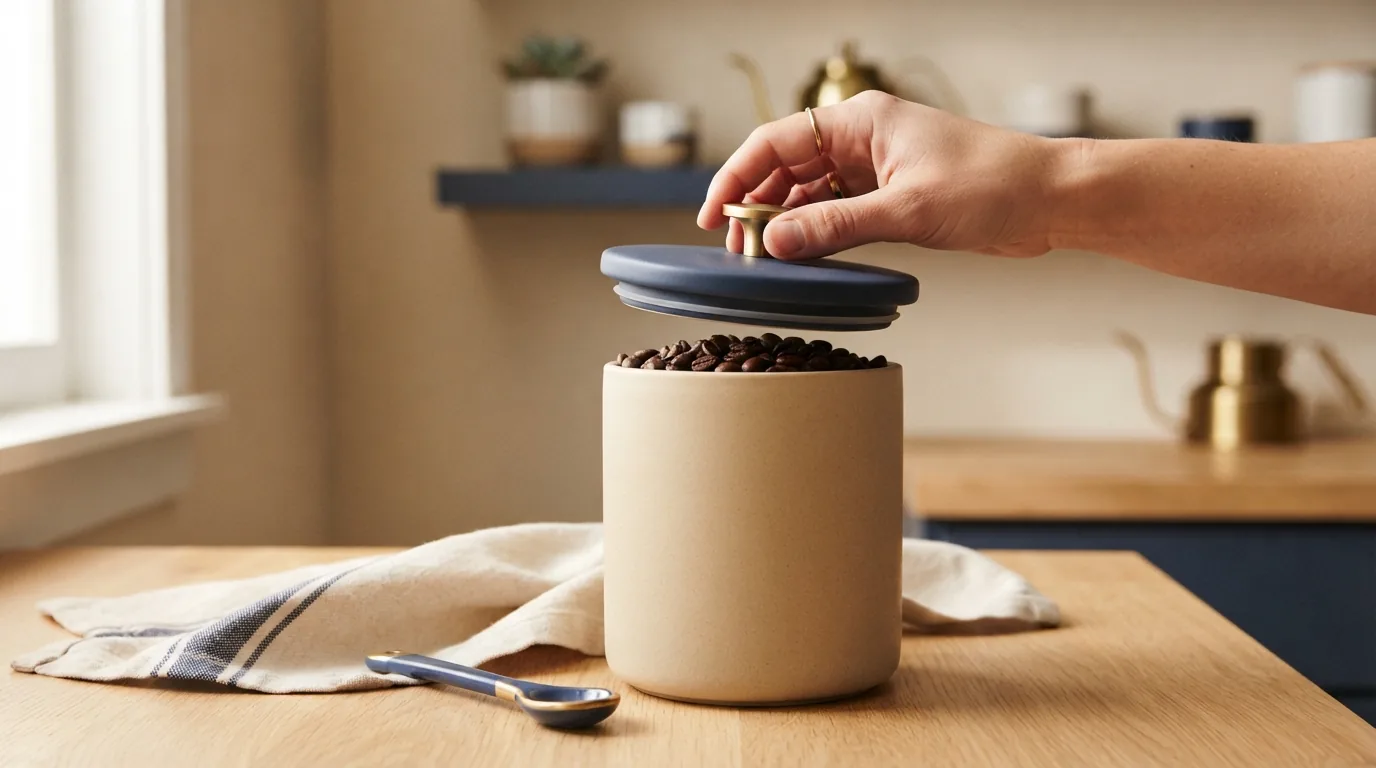
Decaf beans stale on the same timeline as regular beans, and the same rules apply: buy what you'll use in two to three weeks, keep beans in an airtight, opaque container, and grind only what you need per brew. Our coffee bean storage guide covers the full routine in more depth.
Decaf Process Comparison
| Process | Chemicals Used | Caffeine Removed | Flavor Impact |
|---|---|---|---|
| Swiss Water | None (water and carbon filtration) | ~99.9% | Lowest, considered the gold standard |
| CO2 Process | Pressurized liquid CO2 | ~97 to 99% | Low, common for large-scale specialty decaf |
| Solvent (Ethyl Acetate) | Ethyl acetate | ~97%+ | Varies more widely by producer |