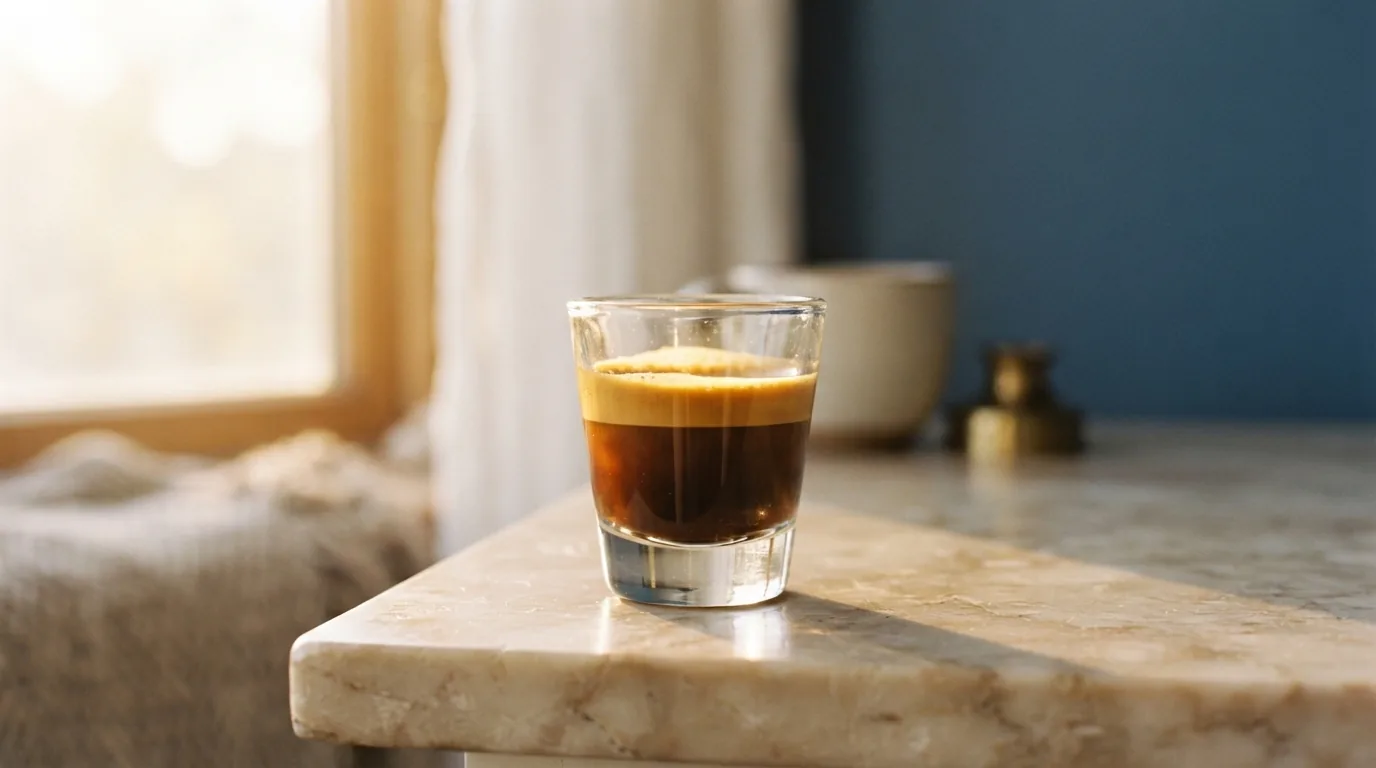
Almost every bad shot of espresso is one of three problems, and the reason home baristas struggle to fix them isn't that the problems are subtle. It's that sour and bitter get treated as vague complaints about taste rather than as specific, readable symptoms of what the water did inside the puck. They aren't opinions. They're data.
Sour means the water didn't pull enough out of the coffee. Bitter means it pulled too much. Tasting both at once means the water found a shortcut and did both things in different parts of the same puck. Once you can tell those three apart, fixing them is mechanical.
Sour Means Under-Extraction
A sour shot tastes sharp, thin and lemony, and it usually runs fast, finishing well before you expected it to. What's happening is that the water passed through the coffee without dissolving enough of it. The acids in coffee are the first compounds to extract, and the sugars and the rounder, sweeter compounds come later, so a shot that ends early gives you the acids without the balance that normally hides them.
The fix is to slow the water down or give it more to work with. Grind finer first, since grind size changes flow rate more than any other variable available to you. If that isn't enough, raise the dose slightly, or raise your brew temperature if your machine allows it.
Bitter Means Over-Extraction
A bitter shot tastes harsh, dry and ashy, often with a lingering astringency that sits at the back of your tongue, and it usually runs slow, dripping rather than flowing. Here the water spent too long in contact with the coffee and dissolved compounds that are better left in the puck. Past a certain point, extraction stops adding sweetness and starts adding the harsh, woody notes nobody wants.
The fix is the mirror image: grind coarser to speed the flow up, reduce the dose slightly, or lower the brew temperature. Change one at a time, because changing two at once tells you nothing about which one worked.
Sour and Bitter at the Same Time Means Channeling
This is the one that confuses people, because it feels like a contradiction. It isn't. If water finds a low-resistance path through the coffee bed, it races through that channel while barely touching the rest of the puck. The coffee along the channel is over-extracted and bitter; the coffee the water never properly reached is under-extracted and sour. You're tasting both, because both happened, in different parts of the same basket.
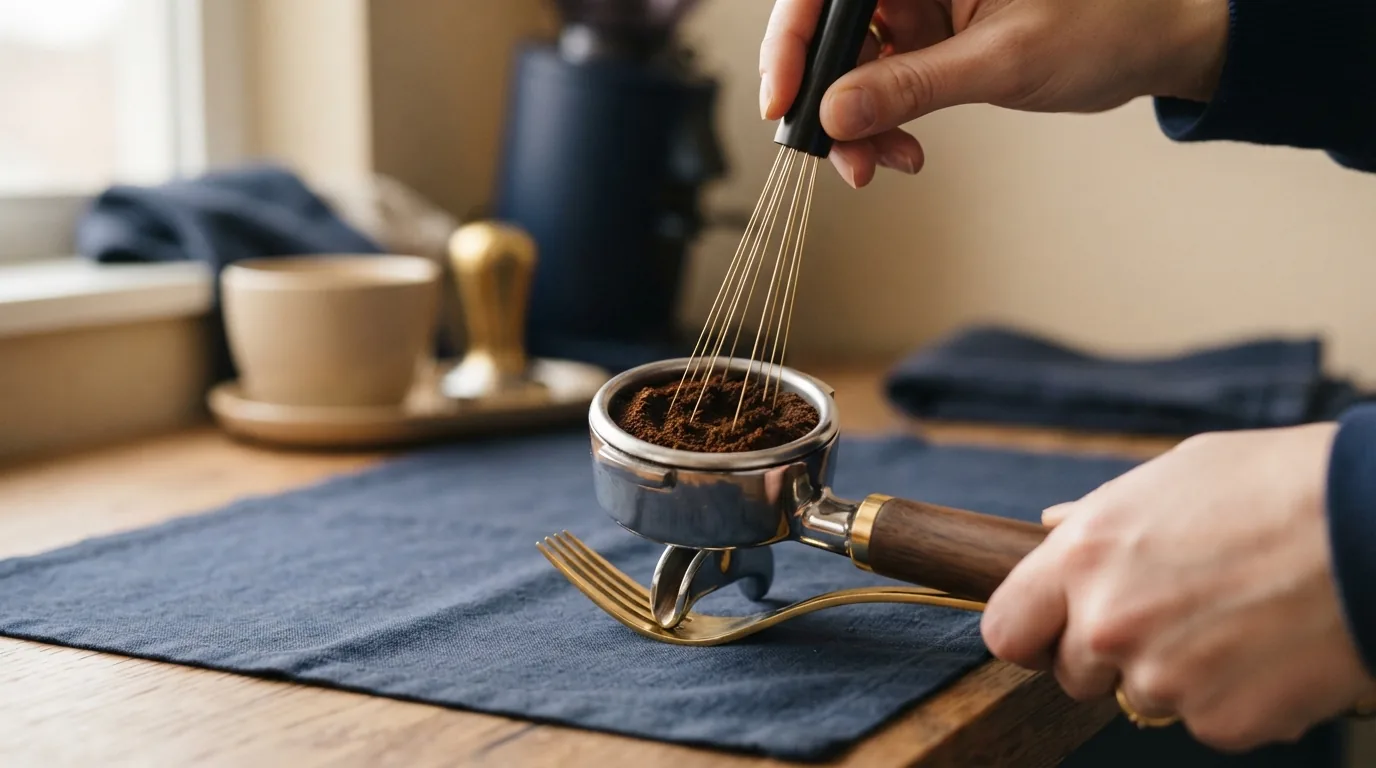
Grinding finer will not fix this, and it usually makes it worse. Channeling is a puck preparation problem, not a grind problem, and the fix is distribution and tamping rather than anything on your grinder dial. Our espresso puck prep guide covers the full routine that eliminates it.
| Symptom | What It Means | First Thing to Change |
|---|---|---|
| Sour, thin, fast shot | Under-extraction | Grind finer |
| Bitter, harsh, slow shot | Over-extraction | Grind coarser |
| Sour and bitter together | Channeling | Fix distribution, not grind |
| Thin body, pale, no crema | Stale beans | Check the roast date |
| Results change day to day | Inconsistent dosing | Weigh dose and yield |
“Sour and bitter aren't opinions about a shot. They're readings. One says the water left too early, the other says it stayed too long, and both tell you exactly which direction to turn the grinder.”
Why You Should Buy a Bottomless Portafilter Before Anything Else
A standard spouted portafilter hides the single most useful piece of diagnostic information available to you. Underneath a bottomless portafilter, channeling is immediately visible: you'll see thin jets of espresso spraying sideways out of the puck, or one side of the basket running noticeably faster and lighter than the other. A well-prepared puck instead produces a single centered stream that converges smoothly.
It's also the cheapest real upgrade in home espresso. It doesn't change the coffee, it just stops the spouts from concealing what's going wrong.
Normcore 58mm Bottomless Portafilter with Walnut Handle
Unibody stainless construction with a built-in precision basket, makes channeling immediately visible, fits standard E61 and 58mm group heads, $69.99
Before You Blame the Machine: Check the Beans
A pale shot with almost no crema, thin body and a flat, papery taste usually isn't an extraction problem at all. It's stale coffee. Roasted beans release carbon dioxide for days after roasting and keep oxidizing for weeks after that, and crema depends substantially on that dissolved CO2. Beans well past their window produce a shot that looks and tastes deflated regardless of how carefully you dial it in.
Coffee generally tastes best somewhere between roughly 4 and 14 days after roasting, and pre-ground coffee stales dramatically faster than whole beans once its surface area is exposed to air. If a bag has no roast date printed at all, that absence is itself information. Our bean storage guide covers protecting that window once a bag is open.
Change One Variable at a Time
The most common reason people can't fix their espresso isn't that they don't know which direction to move. It's that they move three things at once, taste something different, and have no idea which change caused it. A dial-in is an experiment, and an experiment with three simultaneous changes produces no usable information.
Pick the one variable with the largest effect, which is almost always grind size, move it in one direction, and pull another shot. Keep the dose and the target yield fixed while you do it. Our science of espresso extraction guide covers why grind moves extraction more than dose or temperature, and our coffee scales guide covers the tool that makes holding the other variables steady actually possible.
The Numbers Worth Holding Steady
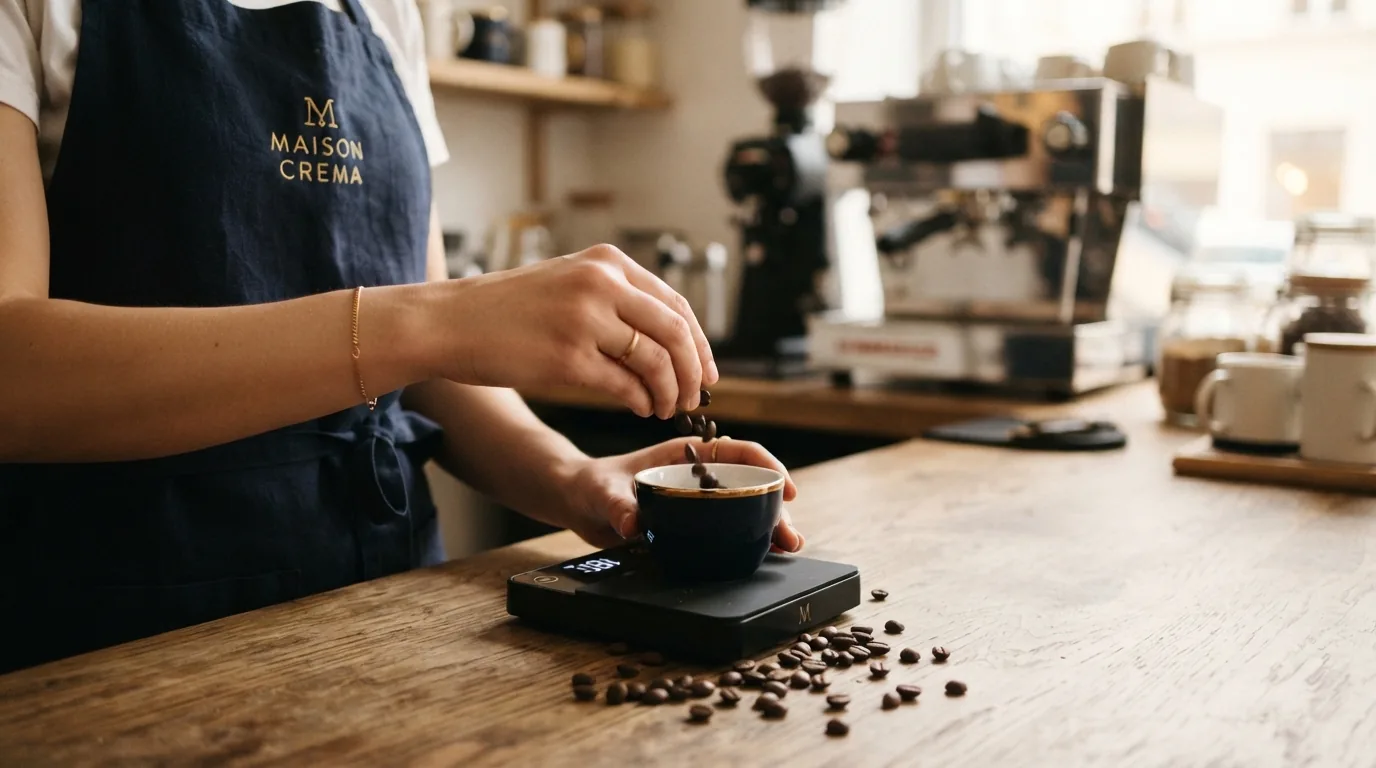
You can't diagnose a moving target. Fix your dose, fix your target yield, and time the shot, so that grind size becomes the only thing changing between attempts. Weighing both the coffee going in and the espresso coming out turns a vague impression into a repeatable measurement, and it's the difference between chasing a shot and actually dialing one in. Our coffee to water ratio guide covers the brew ratios worth starting from.
When It's Genuinely the Machine
Occasionally the problem really is hardware. A machine that has scaled up internally will struggle to hold brew temperature, and temperature instability produces shots that vary unpredictably no matter how consistent your technique is. If your results drift over weeks rather than varying shot to shot, and you can't remember your last descaling cycle, that's the likely cause. Our descaling guide covers the routine, and our water quality guide covers preventing the buildup in the first place.